
iPhone 16e vs Motorola Edge 30 Fusion

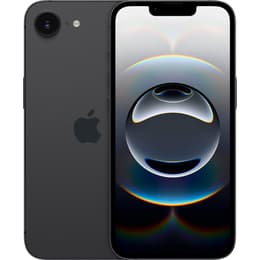
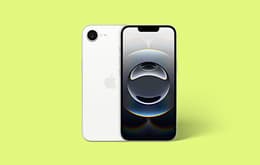
iPhone 16e
iPhone 16e
Starting at

Refurbished price:A$794.00

Versus A$999.00 new

See options
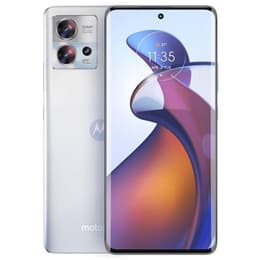
Motorola Edge 30 Fusion
Starting at

Refurbished price:A$257.46

Versus A$1,352.00 new

See options

The iPhone 16E, released in February 2025, and the Motorola Edge 30 Fusion, launched in September 2022, represent distinct approaches to smartphone design and functionality. While the iPhone 16E offers Apple's integrated iOS ecosystem and a focus on long-term software support, the Motorola Edge 30 Fusion provides a high refresh rate display and a customizable Android experience. These devices cater to different user preferences, with key differentiators in their operating systems, display technology, and overall longevity expectations.

Scores

Durability

When considering the practical lifespan of these devices, their release timelines and software support policies are primary factors. The iPhone 16E, being a more recent release, benefits from Apple's extended software support, while the Motorola Edge 30 Fusion, released earlier, has a shorter expected update window.

  • Software Longevity: The iPhone 16E, launched in February 2025, is expected to receive major iOS updates for approximately five to seven years, with security patches extending even longer. This means users can anticipate software support well into the early 2030s. In contrast, the Motorola Edge 30 Fusion, released in September 2022, typically receives two to three major Android OS updates and around three years of security updates, suggesting its software support will conclude sooner.
  • Physical Durability: The iPhone 16E features a Ceramic Shield front cover and an IP68 rating, indicating robust dust and water resistance, capable of submersion up to 6 meters for 30 minutes. The Motorola Edge 30 Fusion offers an IP52 rating, providing splash and dust resistance, but it is not designed for submersion. Both devices utilize glass for their construction, with the Edge 30 Fusion featuring Corning Gorilla Glass 5 on the front and back for some variants.
  • Repairability: While specific repairability scores can vary, Apple generally provides hardware support for five to seven years after a product's last sale date, ensuring parts and service are available. The availability of parts and authorized service for the Motorola Edge 30 Fusion may be more limited over time due to its earlier release and typical Android manufacturer support cycles.

Release year

2025

2022

Operating system

iOS

Android

Foldable

No

No

Performance

The performance of a smartphone is largely determined by its internal components, influencing how smoothly applications run and how efficiently the device handles demanding tasks. Both devices offer capable performance for everyday use, but their underlying architectures differ.

  • Processing Power: The iPhone 16E is equipped with an A18 chip, which provides efficient performance for a wide range of applications, from daily tasks to more intensive gaming and creative work. The Motorola Edge 30 Fusion utilizes the Snapdragon 888+ 5G processor, a powerful chip from its release year, capable of handling demanding apps and multitasking smoothly.
  • Multitasking and Storage: The iPhone 16E comes with 8GB of RAM and offers storage options up to 512GB, providing ample space for apps and media. The Motorola Edge 30 Fusion is available with 8GB or 12GB of RAM and storage options up to 512GB, also without expandable storage. Both configurations are well-suited for managing multiple applications simultaneously and storing a substantial amount of data.
  • Battery Behavior: The iPhone 16E features a 4005 mAh equivalent battery, with Apple claiming improved battery performance due to a larger battery and efficient chipset. The Motorola Edge 30 Fusion has a 4400 mAh battery, which users report can last through a full day of moderate use, though heavy use, especially with the high refresh rate display, may require more frequent charging.

Memory (GB)

8 GB

8 GB

Screen quality

The display is a primary interface for smartphone interaction, and both devices offer vibrant viewing experiences with distinct characteristics.

  • Display Technology and Clarity: The iPhone 16E features a 6.1-inch OLED display with a 2532x1170 resolution, providing deep blacks and vibrant colors. The Motorola Edge 30 Fusion sports a slightly larger 6.55-inch pOLED display with a 1080x2400 (FHD+) resolution, also delivering rich colors and good contrast.
  • Refresh Rate and Smoothness: A notable difference lies in the refresh rates. The iPhone 16E has a standard 60Hz refresh rate. The Motorola Edge 30 Fusion offers a higher 144Hz refresh rate, which results in noticeably smoother scrolling and more fluid animations, particularly beneficial for gaming and fast-paced content.
  • Brightness and Viewing Experience: The Motorola Edge 30 Fusion can reach a peak brightness of 1100 nits, ensuring good visibility even in bright outdoor conditions and supporting HDR10+ content. While specific peak brightness for the iPhone 16E is not detailed in the provided information, Apple's OLED displays are generally known for excellent outdoor visibility and HDR support. The Edge 30 Fusion also features curved edges, which some users find enhances the immersive viewing experience.

Resolution

2532x1170

1080 x 2400

Audiovisual

Camera capabilities are a significant consideration for many smartphone users, and both the iPhone 16E and Motorola Edge 30 Fusion offer competent systems for capturing photos and videos.

  • Rear Camera System: The iPhone 16E is equipped with a 48MP main rear camera with an f/1.6 aperture, designed for capturing detailed images with good low-light performance. The Motorola Edge 30 Fusion features a triple-camera setup, including a 50MP main sensor with optical image stabilization (OIS) and PDAF, a 13MP ultrawide lens that also functions for macro photography, and a 2MP depth sensor.
  • Photography Performance: The iPhone 16E benefits from Apple's computational photography, which enhances image quality across various conditions. The Motorola Edge 30 Fusion's main camera is praised for good daylight photos with natural colors, and its Night Vision mode is effective in low-light scenarios, though some users note occasional inconsistencies in processing and color temperature with the ultrawide lens.
  • Video Recording and Front Camera: Both devices offer strong video capabilities. The iPhone 16E has a 12MP front camera. The Motorola Edge 30 Fusion can record up to 8K at 30fps with its main camera and 4K at 30fps or 60fps, with OIS on the main sensor. Its 32MP front camera is capable of 4K video recording and delivers detailed selfies, even in lower light conditions due to pixel binning.

Front camera

TrueDepth 12MP

32 megapixels

Miscellaneous

Beyond core features, several practical elements contribute to the overall user experience and differentiate these two smartphones.

  • Connectivity and Ports: Both devices support 5G connectivity and Wi-Fi 6 (802.11ax). The iPhone 16E features a USB-C port, aligning with modern standards, though it operates at USB 2.0 speeds. The Motorola Edge 30 Fusion also uses a USB-C port, supporting USB 3.1 speeds, and includes Bluetooth 5.2. Neither device includes a 3.5mm headphone jack.
  • Biometrics and Sensors: The iPhone 16E relies on Face ID for secure authentication. The Motorola Edge 30 Fusion offers an in-display optical fingerprint sensor and face unlock. Both phones include standard sensors like accelerometers, gyroscopes, and compasses.
  • Design and Handling: The iPhone 16E has dimensions of 146.7 × 71.5 × 7.8 mm and weighs 167g, featuring an aluminum frame with squared-off edges. The Motorola Edge 30 Fusion measures 158.48 x 71.99 x 7.45 mm and weighs around 175g (some variants 168g), with a slim profile and a design that incorporates a metal frame and glass back, with some variants offering a vegan leather finish.

Weight

167 oz

168 oz

Screen size (in)

6.1

6,55

Network

5G

5G

SIM card

Physical SIM + eSIM

Dual Physical SIM

Carrier compatibility

Unlocked

Unlocked

User feedback for the Motorola Edge 30 Fusion often highlights its appealing design, vibrant 144Hz pOLED display, and capable performance for its release period. Common praise points include its smooth user interface and fast charging capabilities. Some criticisms have been directed at its battery life under heavy use, particularly with the high refresh rate enabled, and occasional inconsistencies in camera processing, especially with the ultrawide lens. The iPhone 16E, as a more recent entry, is praised for bringing a modern design, a larger OLED display, and the powerful A18 chip to a more accessible iPhone model, along with Apple's robust software ecosystem and long-term support. Users appreciate the integration of Face ID and the shift to USB-C. Potential considerations for the iPhone 16E might include its 60Hz display refresh rate, which is lower than many Android counterparts, and the USB 2.0 speeds of its USB-C port.

Users prioritizing an extended software support timeline, a highly integrated ecosystem, and robust water resistance will find the iPhone 16E well-suited to their needs. Its consistent performance and Face ID authentication offer a streamlined experience. Conversely, users who value a high refresh rate display for smoother visuals, faster wired charging, and a more customizable Android operating system may lean towards the Motorola Edge 30 Fusion. Its design and overall performance were considered strong for its release. Both devices offer distinct advantages, and choosing between them depends on individual priorities. For those considering either device, exploring quality-assured refurbished options can be an eco-friendly alternative to extend their lifecycle.
See all articles

Our recent comparisons