
iPhone 16 Plus vs Motorola Moto G14

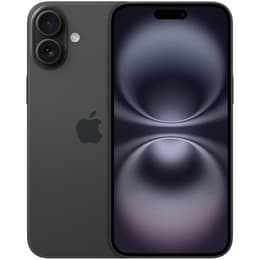
iPhone 16 Plus
iPhone 16 Plus
Starting at

Refurbished price:A$942.00

Versus A$1,599.00 new

See options
Motorola Moto G14
Motorola Moto G14
Starting at

Refurbished price:A$182.00

Versus A$271.00 new

See options

Ratings

The iPhone 16 Plus, released in September 2024, and the Motorola Moto G14, launched in August 2023, represent distinct approaches to smartphone design and functionality. While both devices offer a large display experience, they cater to different user expectations regarding performance, camera capabilities, and software ecosystem. The iPhone 16 Plus operates on Apple's iOS, known for its integrated services and long-term software support, whereas the Moto G14 runs on Android, offering a more open and customizable platform.

Scores

Durability

The longevity and support for these two smartphones differ significantly, primarily due to their respective ecosystems and release timelines. The iPhone 16 Plus, being a newer device from Apple, benefits from an extended period of software updates and security patches, typically spanning five to seven years for major iOS versions and even longer for security. This suggests a practical lifespan that could extend well into the next decade.

  • Software Support: The iPhone 16 Plus launched with iOS 18 and has already received updates to iOS 26, with continued support expected for many years. The Motorola Moto G14, released with Android 13, was promised an upgrade to Android 14 and three years of security updates, indicating a shorter official support window.
  • Build Quality: The iPhone 16 Plus features a robust construction with an aluminum frame, Ceramic Shield front, and glass back, contributing to its durability and IP68 dust and water resistance, allowing submersion up to 6 meters for 30 minutes. The Moto G14 utilizes an all-plastic body with a textured finish and offers IP52 dust and splash resistance, providing protection against light exposure to water.
  • Expected Lifespan: Users prioritizing long-term software updates and a more resilient physical build will find the iPhone 16 Plus designed for extended use, while the Moto G14 offers a functional lifespan suitable for users who typically upgrade their devices more frequently or have less demanding longevity requirements.

Release year

2024

2023

Compatible with latest Update

Yes

Yes

Foldable

No

No

Performance

When evaluating performance, the iPhone 16 Plus and Motorola Moto G14 are designed for different tiers of user experience, reflecting their respective hardware capabilities. The iPhone 16 Plus is equipped with a current-generation processor engineered for demanding applications and efficient multitasking, while the Moto G14 features hardware suited for everyday tasks.

  • Processing Power: The iPhone 16 Plus incorporates Apple's A18 chip, which delivers substantial performance improvements, enabling smooth operation for graphically intensive games, complex applications, and seamless multitasking. The Moto G14 is powered by the Unisoc T616 processor, which capably handles general smartphone functions such as web browsing, social media, and light applications.
  • Multitasking and Storage: The iPhone 16 Plus typically offers higher RAM configurations, contributing to its ability to manage numerous applications simultaneously without slowdowns. It comes with internal storage options up to 512GB. The Moto G14 is available with 4GB or 8GB of RAM and 128GB or 256GB of internal storage, with the added flexibility of a microSD card slot for expandable storage.
  • Battery Behavior: Both devices are designed to offer a full day of use under typical conditions. The iPhone 16 Plus features a large battery capacity (4674 mAh) optimized for its powerful components, ensuring efficient power delivery. The Moto G14 includes a substantial 5000 mAh battery, which, combined with its less power-intensive hardware, contributes to extended usage times.

Memory (GB)

8 GB

4 GB

Screen quality

The visual experience offered by the iPhone 16 Plus and the Motorola Moto G14 varies significantly due to differences in display technology and specifications. Both provide large screens, but the quality of content display and outdoor visibility differ.

  • Display Technology and Clarity: The iPhone 16 Plus features a 6.7-inch Super Retina XDR OLED display, providing deep blacks, vibrant colors, and high contrast. Its resolution of 2796 x 1290 pixels results in a sharp image quality of approximately 460 pixels per inch. The Moto G14 comes with a 6.5-inch IPS LCD panel with a Full HD+ resolution of 1080 x 2400 pixels, offering clear visuals suitable for everyday media consumption.
  • Brightness and Refresh Rate: The iPhone 16 Plus offers superior brightness, reaching up to 1000 nits typical and 2000 nits peak brightness outdoors, ensuring excellent visibility even in bright sunlight. It also likely features a higher refresh rate (e.g., 120Hz), contributing to smoother scrolling and more fluid animations. The Moto G14 has a standard 60Hz refresh rate and typical LCD brightness levels, which are adequate for indoor use but may be less visible in direct sunlight.
  • Viewing Experience: Users prioritizing a premium visual experience with exceptional color accuracy, contrast, and fluidity, especially for high-definition content and gaming, will find the iPhone 16 Plus display more suitable. The Moto G14 provides a good viewing experience for general use, including browsing and video streaming, with the added protection of Panda Glass.

Resolution

1290 x 2796

1080 x 2400

Screen type

Super Retina XDR OLED

IPS LCD

Audiovisual

The camera systems on the iPhone 16 Plus and Motorola Moto G14 are designed with different photographic priorities, leading to distinct capabilities in various shooting conditions. The iPhone 16 Plus offers an advanced multi-lens setup, while the Moto G14 provides a capable system for general photography.

  • Rear Camera System: The iPhone 16 Plus features an advanced dual-camera system, including a 48MP Fusion Main camera with a wide f/1.6 aperture and sensor-shift optical image stabilization, alongside a 12MP Ultra Wide camera. It supports 2x optical zoom in and out, and up to 10x digital zoom. The Moto G14 is equipped with a dual-camera setup comprising a 50MP main sensor with an f/1.8 aperture and a 2MP macro lens.
  • Photography Performance: The iPhone 16 Plus excels in various lighting conditions, offering features like Photonic Engine, Deep Fusion, and Smart HDR 5 for detailed and well-exposed images, particularly in low light and for advanced portraiture. The Moto G14 performs well in good lighting, capturing clear images with its 50MP main sensor, but its low-light performance and detail retention may be less refined compared to the iPhone.
  • Video and Audio: The iPhone 16 Plus supports high-quality video recording up to 4K Dolby Vision at 60 frames per second, with advanced stabilization and audio recording capabilities. The Moto G14 records video at Full HD (1080p) at 30 frames per second. For audio, the Moto G14 includes stereo speakers with Dolby Atmos support, enhancing media consumption. The iPhone 16 Plus also features stereo speakers and advanced audio processing.

Main camera

48 megapixels

50 megapixels

Front camera

12 megapixels

8 megapixels

Miscellaneous

Beyond core performance and display, several practical elements differentiate the iPhone 16 Plus and Motorola Moto G14, impacting daily usability and connectivity options.

  • Connectivity Standards: The iPhone 16 Plus supports the latest wireless technologies, including 5G cellular connectivity, Wi-Fi 7, and Bluetooth 5.3, ensuring fast and reliable connections. The Moto G14 offers 4G LTE connectivity, Wi-Fi 5, and Bluetooth 5.0, which are suitable for most current wireless needs.
  • Ports and Biometrics: The iPhone 16 Plus features a USB-C port for charging and data transfer, and relies on Face ID for secure facial recognition. The Moto G14 includes a USB-C port and retains a 3.5mm headphone jack, a feature appreciated by users with wired audio accessories. It uses a side-mounted fingerprint sensor for biometric authentication.
  • Design and Handling: The iPhone 16 Plus, with its aluminum frame and glass construction, weighs 199 grams and measures 160.9 x 77.8 x 7.8 mm. The Moto G14, with its plastic build, is slightly lighter at 177 grams and measures 161.5 x 73.8 x 8.0 mm, offering a comfortable grip.

Weight

199 oz

177 oz

Screen size (in)

6.7

6.5

Network

5G

4G

SIM card

Physical SIM + eSIM

Dual Physical SIM

Carrier compatibility

Unlocked

Unlocked

Connector

USB-C (USB 2)

USB-C + Jack 3.5mm

The iPhone 16 Plus and Motorola Moto G14 cater to distinct user needs and preferences, reflecting their different market positions. User feedback for devices in the iPhone's category often praises the seamless ecosystem, consistent performance, and high-quality camera output, while criticisms might occasionally point to the closed nature of its operating system. Conversely, devices like the Moto G14 are frequently lauded for their practical features, such as long battery life and the inclusion of a headphone jack, with common observations noting their suitability for essential smartphone functions.

Users prioritizing cutting-edge performance, an advanced camera system for diverse photographic scenarios, and a long-term commitment to software updates will find the iPhone 16 Plus well-suited to their requirements. Its robust build and premium display also appeal to those seeking a refined user experience. On the other hand, individuals who value a straightforward smartphone experience for everyday communication, media consumption, and extended battery life, along with the flexibility of expandable storage and a traditional headphone jack, may lean towards the Motorola Moto G14. Both devices offer reliable functionality within their intended segments, and for those seeking a more sustainable choice, quality-assured refurbished options are available for both models, providing an eco-friendly alternative.


See all articles

Our recent comparisons