
Compare models
Google Pixel 9a vs Motorola Razr 40 Ultra
- 1-year warranty
- Free standard shipping
- Free 30-day returns
Differences at a glance
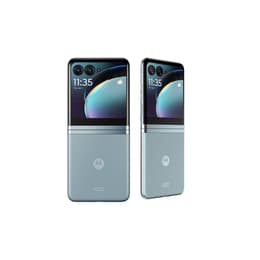
The Google Pixel 9a (2025) and the Motorola Razr 40 Ultra (2023) represent two entirely different approaches to modern smartphone design, contrasting a traditional flat form factor with a flexible clamshell foldable build. While the Pixel 9a focuses on long-term software support and a sturdy everyday structure, the Motorola Razr 40 Ultra offers a unique folding mechanism headlined by a large exterior cover screen. Both devices run on Android, though they deliver distinct user experiences shaped by their hardware architecture and release timelines.
Available Models
Colour
Storage
Scores
Durability
When evaluating structural longevity and software support, both devices approach hardware lifespan from different angles, with the Google Pixel series prioritizing extended operating system updates while the Motorola Razr 40 Ultra relies on its flexible engineering design.
- Software Support Duration: The Google Pixel 9a receives extended operating system updates spanning several years from its release date, whereas the Motorola Razr 40 Ultra features a shorter official update window due to its earlier launch year.
- Repairability and Build: Standard slate smartphones like the Pixel 9a generally present simpler repair paths for common components, while folding devices like the Motorola model require specialized maintenance for internal hinges and flexible screen layers.
- Expected Practical Lifespan: Users selecting quality-assured refurbished options find that both models maintain reliable daily functionality over multi-year cycles, provided that folding screens receive careful handling.
Release year
2025
2023
Operating system
Android
Android
Foldable
No
Yes
Performance
Daily execution speeds and multitasking capabilities differ between these two models based on their hardware configuration, thermal design, and memory allocations.
- App Loading and Multitasking: Both devices handle standard web browsing, messaging, and media streaming smoothly, though demanding mobile games or resource-heavy applications run with distinct thermal management behaviors.
- Battery Behavior: The Pixel 9a utilizes a larger capacity power cell to sustain full-day usage under heavy workloads, while the compact housing of the Motorola Razr 40 Ultra requires more frequent recharging during intensive screen-on sessions.
- Storage and System Responsiveness: Offering standard configurations with generous internal storage, both smartphones switch between background tasks efficiently without noticeable system stutter.
Screen quality
Display characteristics form a major dividing line between these devices, contrasting a conventional high-brightness panel with an expansive folding visual setup.
- Display Technology: The Pixel 9a features a flat OLED panel with deep contrast and high peak brightness levels for clear outdoor visibility, whereas the Motorola Razr 40 Ultra deploys a folding plastic-substrate display paired with a prominent external cover screen.
- Refresh Rate and Smoothness: Both screens support elevated refresh rates that ensure fluid scrolling through menus, web pages, and user interfaces.
- Viewing Experience: Users preferring a traditional rigid glass feel will find the Pixel 9a familiar, while those drawn to compact pocketability benefit from the Motorola's dual-screen layout that allows quick interactions without opening the main display.
Resolution
1080x2424
1080 x 2640
Screen type
P-OLED
Foldable LTPO AMOLED
Audiovisual
Media creation and consumption hardware vary significantly, reflecting different design priorities for photography and audio output.
- Camera System Capabilities: The Pixel 9a relies on computational photography algorithms paired with a reliable dual-sensor rear array to produce balanced images in varied lighting conditions, while the Motorola Razr 40 Ultra utilizes its folding design to enable versatile angles and tabletop tripod-style shooting.
- Video and Low-Light Performance: Google's processing excels at stabilizing handheld video and capturing balanced dynamic range in dim environments, whereas Motorola handles standard everyday recording reliably.
- Audio and Media Output: Stereo speakers on both devices deliver adequate volume for casual media playback, hands-free calls, and podcasts.
Miscellaneous
Practical day-to-day usability elements, including connectivity standards, physical dimensions, and handling characteristics, define how each phone fits into daily routines.
- Connectivity and Ports: Both models support modern 5G networks, Wi-Fi standards, and Bluetooth pairing, utilizing reversible USB-C ports for charging and data transfer.
- Physical Dimensions and Weight: The Pixel 9a offers a lightweight, traditional slab footprint that rests comfortably in pockets, while the Motorola Razr 40 Ultra folds in half to occupy minimal vertical space when carried.
- Durability Features: The Pixel 9a incorporates standard dust and water resistance ratings alongside a rigid frame, whereas the Motorola model requires mindfulness regarding dust particles near its mechanical hinge mechanism.
Weight
186 oz
192 oz
Screen size (in)
6.3
6,9
Network
5G
5G
SIM card
Physical SIM + eSIM
Dual Physical SIM
Carrier compatibility
Unlocked
Unlocked
What the community thinks
User feedback highlights distinct preferences for each device across community forums and review platforms. Owners of the Google Pixel 9a frequently praise its dependable battery longevity, clean software interface, and reliable camera output in everyday scenarios. Conversely, users of the Motorola Razr 40 Ultra express enthusiasm for its compact folded footprint and the practical utility of the outer cover screen for checking notifications on the go. Common criticisms for the Pixel involve its conventional candy-bar form factor, while Motorola users occasionally note the shorter battery endurance and the physical crease inherent to folding displays.
Users prioritizing long-term software updates, straightforward durability, and reliable daily battery endurance may prefer the Google Pixel 9a. Meanwhile, users prioritizing a compact pocket-friendly form factor and innovative dual-screen usability may lean toward the Motorola Razr 40 Ultra. Exploring quality-assured refurbished models provides a sustainable choice for acquiring either device while reducing electronic waste. Ultimately, the decision rests on whether a traditional rigid design or a flexible folding configuration better matches your daily mobile habits.