
iPhone 16 Plus vs Motorola Edge 30 Neo

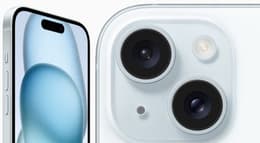
iPhone 16 Plus
iPhone 16 Plus
Starting at

Refurbished price:A$942.00

Versus A$1,599.00 new

See options
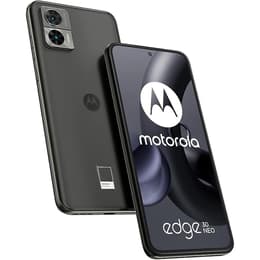
Motorola Edge 30 Neo
Starting at

Refurbished price:A$306.00

Versus A$414.00 new

See options

Ratings

The iPhone 16 Plus, released in September 2024, and the Motorola Edge 30 Neo, launched in September 2022, represent distinct approaches to smartphone design and functionality. While both devices offer a modern smartphone experience, they cater to different user priorities through their respective operating systems and hardware philosophies. The iPhone 16 Plus operates on Apple's iOS, emphasizing a cohesive ecosystem and advanced computational features, whereas the Motorola Edge 30 Neo runs on Android, offering a customizable interface and a focus on core user needs. This comparison will explore their practical differences to help consumers make an informed decision, including considering quality-assured refurbished options as an eco-friendly alternative.

Scores

Durability

When considering the long-term usability of a smartphone, factors like software support and physical resilience are key. The iPhone 16 Plus and Motorola Edge 30 Neo offer different trajectories in these areas.

  • Release Timeline and Software Support: The iPhone 16 Plus, being a 2024 release, benefits from Apple's extensive software support, typically receiving major iOS updates for five to seven years. It launched with iOS 18 and is currently running iOS 26.4, with support for iOS 26 confirmed. In contrast, the Motorola Edge 30 Neo, released in 2022, originally shipped with Android 12. While it has received updates, Motorola's update policy generally provides fewer major OS upgrades compared to Apple, with a planned upgrade to Android 15 mentioned. This difference means the iPhone 16 Plus is likely to remain current with the latest software features and security patches for a longer duration.
  • Physical Durability and Repairability: The iPhone 16 Plus features a Ceramic Shield front and an aluminum design with a color-infused glass back, contributing to its robust build. It also boasts an IP68 rating for dust and water resistance, allowing submersion up to 6 meters for 30 minutes. The Motorola Edge 30 Neo is constructed with plastic materials and features a water-repellent design, offering splash resistance rather than full submersion protection. While both devices are designed for everyday use, the iPhone 16 Plus offers a higher degree of protection against environmental elements.
  • Expected Practical Lifespan: Users can expect the iPhone 16 Plus to maintain optimal performance and software compatibility for a longer period due to its newer release and Apple's consistent long-term support. The Motorola Edge 30 Neo, while a capable device, may see its software support diminish sooner, potentially impacting its practical lifespan for users who prioritize the latest features and security.

Release year

2024

2022

Compatible with latest Update

Yes

Yes

Foldable

No

No

Performance

The performance of a smartphone is largely dictated by its internal processing capabilities, affecting everything from app responsiveness to multitasking efficiency. The iPhone 16 Plus and Motorola Edge 30 Neo utilize different hardware architectures.

  • Processing Power: The iPhone 16 Plus is equipped with Apple's A18 chip, which includes a 6-core CPU, a 5-core GPU, and a 16-core Neural Engine. This processor is optimized for demanding applications and generative artificial intelligence tasks, providing smooth performance for complex operations and advanced features. The Motorola Edge 30 Neo is powered by a Qualcomm Snapdragon 695 processor, built on a 6nm architecture. This chipset handles daily tasks and moderate gaming efficiently, offering a responsive experience for general use.
  • Multitasking and Storage: The iPhone 16 Plus comes with 8GB of RAM, facilitating seamless multitasking and efficient handling of multiple applications simultaneously. It offers storage options of 128GB, 256GB, or 512GB. The Motorola Edge 30 Neo is available with 6GB or 8GB of RAM and storage options of 128GB or 256GB. Its storage is not expandable. For users who frequently switch between many apps or require substantial local storage for media and files, the iPhone 16 Plus provides more headroom and higher maximum storage capacity.
  • Battery Behavior: The iPhone 16 Plus houses a 4674 mAh battery, rated for up to 27 hours of video playback and 24 hours of streamed video. It supports fast charging via USB-C up to 45W and wireless charging. The Motorola Edge 30 Neo features a 4020 mAh battery, which users report provides good autonomy for its size, typically lasting a full day of use. It supports 68W TurboPower wired charging and 5W wireless charging. While the iPhone 16 Plus offers a larger battery capacity and longer rated usage times, the Motorola Edge 30 Neo provides significantly faster wired charging speeds.

Memory (GB)

8 GB

8 GB

Screen quality

The display is a primary interface for smartphone interaction, and both devices offer vibrant viewing experiences with distinct characteristics.

  • Display Technology and Clarity: Both the iPhone 16 Plus and the Motorola Edge 30 Neo feature OLED display technology, known for deep blacks and vibrant colors. The iPhone 16 Plus utilizes a 6.7-inch Super Retina XDR OLED display with a resolution of 2796 x 1290 pixels, resulting in a pixel density of approximately 460 ppi. The Motorola Edge 30 Neo has a slightly smaller 6.28-inch pOLED display with a 1080 x 2400 pixel (FHD+) resolution and a pixel density of 419 ppi. Both provide clear and detailed visuals for everyday content consumption.
  • Brightness and Refresh Rate: The iPhone 16 Plus offers impressive brightness levels, with a typical maximum of 1000 nits, peaking at 1600 nits for HDR content and up to 2000 nits for outdoor visibility. However, it maintains a standard 60Hz refresh rate. The Motorola Edge 30 Neo features a 120Hz refresh rate and a 240Hz touch sampling rate, contributing to smoother scrolling and more responsive interactions. Its outdoor brightness can reach up to 923 nits. Users prioritizing fluid motion and responsiveness in their display might lean towards the Motorola, while those needing exceptional brightness for outdoor viewing or HDR content will find the iPhone 16 Plus more suitable.
  • Viewing Experience and Features: The iPhone 16 Plus includes Apple's Dynamic Island, HDR display, True Tone, and Wide Color (P3) support, enhancing the overall visual experience. It also features Ceramic Shield protection for increased durability. The Motorola Edge 30 Neo's display is a 10-bit panel with DCI-P3 color space coverage, offering rich and accurate colors. However, it does not support HDR video playback.

Resolution

1290 x 2796

1080 x 2400

Screen type

Super Retina XDR OLED

P-OLED

Audiovisual

Camera capabilities are a significant consideration for many smartphone users, and both devices offer distinct photographic and videographic strengths.

  • Rear Camera Systems: The iPhone 16 Plus features an advanced dual-camera system, including a 48 MP Fusion main camera with an f/1.6 aperture and sensor-shift optical image stabilization (OIS), capable of capturing super-high-resolution 24MP and 48MP photos. It also has a 12 MP ultra-wide camera with a 120-degree field of view. The Motorola Edge 30 Neo also has a dual-camera setup, with a 64 MP main sensor featuring OIS and an f/1.8 aperture, alongside a 13 MP ultra-wide camera that also functions for macro shots.
  • Photography Performance: The iPhone 16 Plus excels in computational photography with features like Photonic Engine, Deep Fusion, and Smart HDR 5, which contribute to detailed and well-exposed images across various lighting conditions. Its vertical camera layout also enables Spatial Video capture. The Motorola Edge 30 Neo's main camera performs well in good lighting, producing images with sufficient detail and accurate colors. Its pixel binning technology aids in improving low-light performance.
  • Video Recording and Audio: For video, the iPhone 16 Plus supports 4K Dolby Vision recording at up to 60 frames per second, Cinematic mode up to 4K 30fps, and Action mode for stabilized footage. It also offers spatial video recording. The Motorola Edge 30 Neo records video at 1080p at various frame rates, including 30, 60, and 120fps. In terms of audio, the iPhone 16 Plus provides stereo sound recording for videos. The Motorola Edge 30 Neo features stereo speakers with Dolby Atmos support, enhancing media consumption.

Main camera

48 megapixels

64 megapixels

Front camera

12 megapixels

32 megapixels

Miscellaneous

Beyond core performance and display, several practical features contribute to the overall user experience of a smartphone.

  • Connectivity and Ports: The iPhone 16 Plus supports the latest Wi-Fi 7 standard, Bluetooth 5.3, and 5G connectivity, ensuring fast and reliable wireless communication. It features a USB-C port for charging and data transfer, though at USB 2.0 speeds. The Motorola Edge 30 Neo supports Wi-Fi 5 (802.11ac), Bluetooth 5.1, and 5G. It also includes a USB-C port. Both devices offer NFC for contactless payments.
  • Biometric Security and Unique Features: The iPhone 16 Plus relies on Face ID for secure facial recognition. It also introduces an Action Button, which can be customized for quick access to various functions, and a dedicated Camera Control button for enhanced photography. The Motorola Edge 30 Neo features an in-display fingerprint sensor for biometric authentication. A unique design element is an LED band around its camera housing that lights up for notifications.
  • Physical Characteristics and Handling: The iPhone 16 Plus measures 160.9 x 77.8 x 7.8 mm and weighs 199 grams. Its larger size provides an expansive viewing area. The Motorola Edge 30 Neo is more compact and lighter, measuring 152.9 x 71.2 x 7.8 mm and weighing 155 grams, making it easier for one-handed use and carrying.

Weight

199 oz

155 oz

Screen size (in)

6.7

6.28

Network

5G

5G

SIM card

Physical SIM + eSIM

Dual Physical SIM

Carrier compatibility

Unlocked

Unlocked

The iPhone 16 Plus and Motorola Edge 30 Neo cater to different user preferences, each offering a compelling set of features. User feedback for the iPhone 16 Plus often praises its excellent battery life, swift performance, and sharp camera quality. The integration of Apple Intelligence and the new Camera Control button are also highlighted as significant advancements. A common point of discussion, however, is its 60Hz display, which some users find less fluid compared to devices with higher refresh rates. For the Motorola Edge 30 Neo, users frequently commend its bright pOLED display with a 120Hz refresh rate and its fast wired charging capabilities. Its compact and lightweight design is also a positive aspect. Some criticisms point to its camera system being less advanced than higher-end competitors and the lack of HDR video support on its display.

Users prioritizing a device with a long software support lifespan, top-tier processing power for demanding tasks, and advanced computational photography features, especially for video, will find the iPhone 16 Plus well-suited to their needs. Its robust build and high peak display brightness are also strong considerations. Conversely, individuals who value a smoother display experience with a 120Hz refresh rate, faster wired charging, and a more compact, lightweight design for comfortable handling may lean towards the Motorola Edge 30 Neo. Both devices offer reliable performance for their respective ecosystems, and for those seeking a more sustainable choice, quality-assured refurbished options for either model provide an excellent way to extend product life and reduce environmental impact.


See all articles

Our recent comparisons