
Google Pixel 9 vs iPhone 14 Pro Max

Google Pixel 9
Google Pixel 9
Starting at

Refurbished price:A$717.00

Versus A$1,349.00 new

See options
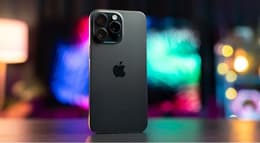
iPhone 14 Pro Max
iPhone 14 Pro Max
Starting at

Refurbished price:A$726.00

Versus A$1,899.00 new

See options

Ratings

The Google Pixel 9, released in August 2024, and the iPhone 14 Pro Max, launched in September 2022, represent distinct approaches to high-end smartphone design and functionality. While both devices offer premium experiences, they differ significantly in their operating systems, camera philosophies, and overall user interfaces. The Pixel 9 operates on Android, emphasizing Google's artificial intelligence capabilities, whereas the iPhone 14 Pro Max runs on Apple's iOS, known for its integrated ecosystem and robust performance.

Scores

Durability

The longevity of a smartphone is influenced by its release timeline, software support, and repairability. These factors determine how long a device remains functional and secure for daily use.

  • Release Timeline: The iPhone 14 Pro Max was released in September 2022, making it an older model compared to the Google Pixel 9, which launched in August 2024. This two-year difference means the Pixel 9 benefits from more recent hardware and a longer period of initial relevance.
  • Software Support: Google has committed to seven years of OS and security updates for the Pixel 9, extending support until at least August 2031. This commitment ensures the device receives new features and security patches for an extended period. The iPhone 14 Pro Max, while known for long-term iOS support, typically receives updates for approximately five to six years from its release, meaning its software support will conclude sooner than the Pixel 9's.
  • Repairability: The Google Pixel 9 has received mixed reviews regarding its repairability. While some reports indicate a relatively high score with accessible components and a replaceable charger port, other assessments, including those from iFixit and JerryRigEverything, suggest that battery removal can be particularly challenging, often requiring significant effort and specialized tools. The iPhone 14 Pro Max features an IP68 rating for dust and water resistance, contributing to its durability. Apple has also made strides in improving battery removal systems in its devices compared to some Android counterparts.

Release year

2024

2022

Compatible with latest Update

Yes

Yes

Operating system

Android

iOS

Foldable

No

No

Performance

Performance in modern smartphones is about more than just raw speed; it encompasses how smoothly the device handles daily tasks, manages power, and stores user data. Both the Pixel 9 and iPhone 14 Pro Max deliver capable performance, though with different underlying architectures.

  • Processor Capabilities: The Google Pixel 9 is powered by the Google Tensor G4, designed to optimize on-device artificial intelligence and machine learning tasks, contributing to efficient app loading and smooth multitasking. The iPhone 14 Pro Max features the Apple A16 Bionic chip, which provides robust performance for demanding applications, high-fidelity gaming, and seamless navigation within the iOS ecosystem.
  • Battery Behavior: The Pixel 9 is equipped with a battery capacity of approximately 4700 mAh, offering around 13 hours and 18 minutes of usage in typical testing scenarios. It includes Adaptive Battery and Adaptive Charging features to optimize power consumption and prolong battery health. The iPhone 14 Pro Max has a 4323 mAh battery, providing up to 29 hours of video playback or 95 hours of audio playback, with real-world usage often averaging around 14 hours. It supports fast charging, reaching 50% in about 35 minutes with a compatible adapter, and offers MagSafe and Qi wireless charging.
  • Storage and Responsiveness: The Pixel 9 comes with 12GB of RAM and storage options of 128GB or 256GB, utilizing UFS 3.1 for quick data access. This configuration supports responsive app switching and efficient handling of multiple applications. The iPhone 14 Pro Max features 6GB of RAM and offers a wider range of storage capacities, from 128GB up to 1TB, catering to users with extensive storage needs. Its optimized iOS environment ensures a fluid user experience even with less RAM compared to some Android counterparts.

Memory (GB)

12 GB

6 GB

Screen quality

The display is a primary interface for smartphone interaction, and both devices offer high-quality viewing experiences with distinct characteristics.

  • Display Technology and Resolution: The Google Pixel 9 features a 6.3-inch OLED display with a resolution of 2424 x 1080 pixels, resulting in a pixel density of 425 ppi. This provides clear and vibrant visuals for everyday content. The iPhone 14 Pro Max boasts a larger 6.7-inch LTPO Super Retina XDR OLED display with a resolution of 2796 x 1290 pixels and a pixel density of 460 ppi, offering slightly sharper details and a more expansive viewing area.
  • Brightness and Refresh Rate: The Pixel 9's display supports a 120Hz refresh rate for smoother scrolling and animations, and it can reach up to 1800 nits of HDR brightness. It also includes Adaptive Touch technology to enhance responsiveness in various conditions. The iPhone 14 Pro Max features ProMotion technology, allowing its refresh rate to adapt dynamically from 1Hz to 120Hz, which contributes to both smoothness and power efficiency. Its display offers a typical maximum brightness of 1000 nits, peaking at 1600 nits for HDR content and an impressive 2000 nits for outdoor visibility.
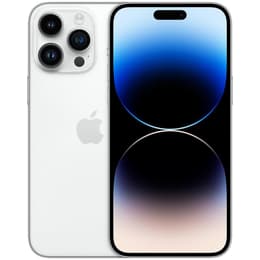
  • Special Features: The iPhone 14 Pro Max introduced the Dynamic Island, an interactive area around the front camera cutout that displays alerts and background activities. It also features an Always-On display, which can show essential information without fully waking the screen. Both devices offer HDR capabilities for enhanced contrast and color in compatible content.

Resolution

1080 x 2424

1290 x 2796

Screen type

OLED

LTPO Super Retina XDR OLED

Audiovisual

Both smartphones offer advanced camera systems designed to capture high-quality photos and videos, though they approach imaging with different strengths and software processing.

  • Rear Camera System: The Google Pixel 9 features a dual-camera setup on the rear, including a 50MP main sensor with an f/1.68 aperture and an 82-degree field of view, alongside a 48MP ultrawide sensor with an f/1.7 aperture and a 123-degree field of view. The iPhone 14 Pro Max comes with a versatile triple-camera system: a 48MP main sensor with an f/1.78 aperture and second-generation sensor-shift optical image stabilization, a 12MP ultrawide lens with a 120-degree field of view, and a 12MP telephoto lens offering 3x optical zoom. It also includes a 2x telephoto option enabled by its quad-pixel sensor, providing a 6x optical zoom range.
  • Photography Performance: The Pixel 9 leverages Google's computational photography for detailed images, often excelling in challenging lighting conditions and offering features like Magic Eraser and enhanced low-light performance. The iPhone 14 Pro Max's camera system, supported by the Photonic Engine, Deep Fusion, and Smart HDR 4, delivers excellent photos with improved quality in medium and low-light situations, and strong detail when shooting in Apple ProRaw. Its ultrawide camera also sees improvements in macro photography.
  • Video Recording and Front Camera: The Pixel 9 supports 4K video recording at 24, 30, or 60 frames per second. Its front camera is a 10.5MP sensor with an f/2.2 aperture. The iPhone 14 Pro Max offers extensive video capabilities, including 4K recording at various frame rates, 10-bit HDR, Dolby Vision HDR, ProRes video, and Cinematic mode for shallow depth-of-field effects. It also features Action mode for highly stabilized video. The front-facing 12MP camera on the iPhone 14 Pro Max includes autofocus for sharper selfies and improved video calls.

Main camera

50 megapixels

48 megapixels

Front camera

10.5 megapixels

12 megapixels

Miscellaneous

Beyond core performance and display, several practical elements contribute to the overall user experience and daily convenience of a smartphone.

  • Connectivity and Ports: Both devices support 5G connectivity, ensuring access to faster mobile networks. The Google Pixel 9 offers modern Wi-Fi standards and Bluetooth connectivity, typical of a contemporary Android flagship. It features a USB-C port for charging and data transfer. The iPhone 14 Pro Max supports Wi-Fi 6 and Bluetooth 5.3. It utilizes Apple's proprietary Lightning port for charging and data, and notably includes bidirectional satellite connectivity for emergency services in areas without cellular or Wi-Fi coverage.
  • Biometrics and Build: The Pixel 9 likely incorporates an under-display fingerprint sensor for secure unlocking. The iPhone 14 Pro Max relies on Face ID, an advanced facial recognition system, for secure authentication and payments. In terms of construction, the iPhone 14 Pro Max features a glass front with Ceramic Shield protection, a glass back, and a stainless steel frame, contributing to its robust feel. It also carries an IP68 rating for dust and water resistance. The Pixel 9 also uses glass on both the front and back.
  • Dimensions and Handling: The iPhone 14 Pro Max is a larger and heavier device, measuring 160.7 x 77.6 x 7.9 mm and weighing 240g. This size provides an expansive screen but may require two-handed use for some users. The standard Google Pixel 9 is a more compact device, with the Pixel 9 and 9 Pro sharing identical dimensions, offering a more manageable form factor for single-handed operation.

Weight

198 oz

120 oz

Screen size (in)

6.3

6.7

SIM card

Physical SIM + eSIM

Physical SIM + eSIM

Carrier compatibility

Unlocked

Unlocked

User feedback for the iPhone 14 Pro Max often highlights its exceptional battery life, robust performance, and high-quality camera system, particularly in low-light conditions and for video recording. Users appreciate the smooth iOS experience and the integration with Apple's ecosystem. Some common criticisms include the continued use of the Lightning port and the size and weight of the device, which can be substantial for some users.

For the Google Pixel 9, initial user sentiment praises its advanced AI features, the extended software support commitment, and improvements in battery life compared to previous Pixel generations. The display quality and camera performance, particularly Google's computational photography, are also frequently lauded. Some concerns have been raised regarding the repairability of the device, with some sources indicating challenges in accessing internal components.

Users prioritizing a large, bright display with advanced video capabilities and a highly integrated ecosystem may find the iPhone 14 Pro Max well-suited to their needs. Its established software support and strong build quality offer a reliable experience. Conversely, users who value cutting-edge AI features, a longer software update commitment, and a potentially more compact form factor with a focus on computational photography might lean towards the Google Pixel 9. Both devices offer quality-assured refurbished options, providing an eco-friendly alternative for consumers seeking premium technology with a reduced environmental impact.
See all articles

Our recent comparisons