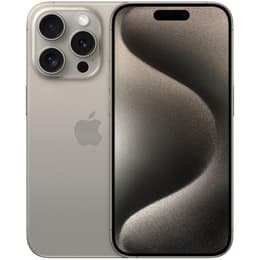

iPhone 15 Pro vs iPhone 16 Plus

iPhone 15 Pro
iPhone 15 Pro
Starting at

Refurbished price:A$873.00

Versus A$1,849.00 new

See options
iPhone 16 Plus
iPhone 16 Plus
Starting at

Refurbished price:A$942.00

Versus A$1,599.00 new

See options

Ratings

The iPhone 15 Pro, released in September 2023, and the iPhone 16 Plus, launched in September 2024, represent different tiers within Apple's smartphone lineup. While both devices operate on the iOS platform and offer a premium user experience, they cater to distinct preferences regarding size, display technology, and camera capabilities. The iPhone 15 Pro emphasizes advanced features in a more compact form, whereas the iPhone 16 Plus prioritizes a larger display and extended battery life.

Scores

Durability

Both the iPhone 15 Pro and iPhone 16 Plus are designed for longevity, benefiting from Apple's consistent software update policy and robust build quality.

  • Software Support: The iPhone 16 Plus, being a newer model, is expected to receive software updates for approximately one year longer than the iPhone 15 Pro, extending its functional lifespan. Both devices typically receive iOS updates for around 5-6 years from their release dates.
  • Build Materials: The iPhone 15 Pro features a titanium frame, contributing to its lighter weight and enhanced durability. The iPhone 16 Plus utilizes an aluminum frame with a Ceramic Shield front and color-infused glass back. Both models offer IP68 water and dust resistance, allowing submersion in up to 6 meters of water for 30 minutes.
  • Repairability: User reports suggest the iPhone 16 Plus might offer slightly easier repairability compared to the Pro models, partly due to a new electrically de-bonding adhesive used in its construction.

Release year

2023

2024

Compatible with latest Update

Yes

Yes

Foldable

No

No

Performance

Both devices deliver strong performance for everyday tasks and demanding applications, though they feature different generations of Apple's internal processing units.

  • Processing Power: The iPhone 15 Pro is equipped with a powerful processor that handles demanding apps and multitasking smoothly, providing a responsive user experience. The iPhone 16 Plus features a newer generation processor, offering a slight increase in performance and efficiency, particularly noticeable in complex computations and future-ready applications like Apple Intelligence.
  • Multitasking and Responsiveness: Users can expect fluid navigation and quick app loading on both devices. The iPhone 15 Pro's processor, with its advanced architecture, ensures that even graphically intensive games and professional applications run without significant slowdowns. The iPhone 16 Plus, with its updated processor, provides a similar, if not slightly more refined, experience for heavy usage and multitasking.
  • Storage Options: Both models offer various internal storage configurations, typically ranging from 128GB to 512GB, with the iPhone 15 Pro also offering a 1TB option, providing ample space for apps, photos, and videos.

Memory (GB)

8 GB

8 GB

Screen quality

The visual experience on both smartphones is vibrant and clear, though they differ in screen size and refresh rate technology.

  • Display Technology: Both the iPhone 15 Pro and iPhone 16 Plus feature Super Retina XDR OLED displays, known for deep blacks, vibrant colors, and excellent contrast.
  • Size and Clarity: The iPhone 15 Pro has a 6.1-inch display, offering a compact viewing experience with a resolution of 2556 by 1179 pixels at 460 pixels per inch (ppi). The iPhone 16 Plus provides a larger 6.7-inch display with a resolution of 2796 by 1290 pixels at 460 ppi, offering more screen real estate for content consumption.
  • Refresh Rate and Brightness: The iPhone 15 Pro features ProMotion technology, allowing for an adaptive refresh rate up to 120Hz, which results in smoother scrolling and more responsive interactions. It also includes an Always-On display. The iPhone 16 Plus maintains a standard 60Hz refresh rate and does not include an Always-On display. Both displays can reach a typical brightness of 1000 nits and a peak outdoor brightness of 2000 nits, ensuring good visibility in various lighting conditions.

Resolution

1179 x 2556

1290 x 2796

Screen type

LTPO Super Retina XDR OLED

Super Retina XDR OLED

Audiovisual

Both devices offer capable camera systems for capturing photos and videos, with some key differences in their optical zoom capabilities and user controls.

  • Main Camera System: The iPhone 15 Pro features a versatile triple-camera system, including a 48MP Main sensor, a 12MP Ultra Wide lens, and a dedicated 12MP 3x Telephoto lens for optical zoom. The iPhone 16 Plus comes with an advanced dual-camera system, featuring a 48MP Fusion Main camera and a 12MP Ultra Wide camera. It utilizes the main sensor to achieve 2x optical zoom.
  • Photography Features: Both phones excel in everyday photography, producing detailed images with good dynamic range and natural colors. The iPhone 15 Pro offers advanced features like ProRes video recording and a 3x optical zoom, making it suitable for users who require more precise framing without digital cropping. The iPhone 16 Plus introduces a new Camera Control button, allowing for more tactile adjustments of camera settings like zoom and exposure, and supports spatial video capture.
  • Video Recording: Both devices are capable of recording high-quality video, including 4K Dolby Vision. The iPhone 15 Pro's Pro camera system supports more advanced video formats and features. The iPhone 16 Plus also offers strong video capabilities, with improved sound recording tools that can benefit vloggers.

Main camera

48 megapixels

48 megapixels

Front camera

12 megapixels

12 megapixels

Miscellaneous

Beyond core features, several practical elements differentiate the user experience of these two iPhone models.

  • Connectivity and Ports: Both devices support 5G connectivity and feature a USB-C port. The iPhone 15 Pro's USB-C port offers faster data transfer speeds (USB 3) compared to the iPhone 16 Plus's USB-C 2.0 port. The iPhone 15 Pro supports Wi-Fi 6E, while the iPhone 16 Plus upgrades to Wi-Fi 7, offering potentially faster wireless speeds. Both include Bluetooth 5.3.
  • Physical Design and Controls: The iPhone 15 Pro features a lighter titanium frame and a customizable Action button, which replaces the traditional mute switch. The iPhone 16 Plus also incorporates the Action button and introduces a dedicated Camera Control button for enhanced photography interaction. The iPhone 15 Pro is more compact at 146.6 x 70.6 x 8.3 mm and 187 grams, while the iPhone 16 Plus is larger at 160.9 x 77.8 x 7.8 mm and 199 grams.
  • Biometric Security: Both models rely on Face ID for secure authentication and unlocking.

Weight

187 oz

199 oz

Screen size (in)

6.1

6.7

Network

5G

5G

SIM card

Physical SIM + eSIM

Physical SIM + eSIM

Carrier compatibility

Unlocked

Unlocked

Connector

USB-C (USB 3)

USB-C (USB 2)

The iPhone 15 Pro and iPhone 16 Plus each offer compelling features, appealing to different user priorities. The iPhone 15 Pro, with its titanium build, 120Hz ProMotion display, and dedicated 3x telephoto lens, is often praised by users for its premium feel and advanced camera capabilities in a more hand-friendly size. Some initial user reports for the iPhone 15 Pro noted concerns regarding overheating and battery drain, though software updates have addressed some of these issues.

The iPhone 16 Plus is frequently highlighted for its significantly larger display and exceptional battery life, often lasting up to two days or more for many users. Users appreciate the immersive viewing experience and the peace of mind that comes with extended usage between charges. However, some users express disappointment with the 60Hz refresh rate, which can feel less fluid compared to devices with higher refresh rates, and the absence of a dedicated telephoto lens.

Users prioritizing a compact device with a high refresh rate display and a dedicated optical zoom lens for photography may find the iPhone 15 Pro well-suited to their needs. Conversely, individuals who value a larger screen for media consumption and significantly longer battery life, and who do not require a 120Hz display or a dedicated telephoto lens, may lean towards the iPhone 16 Plus. Both devices represent quality-assured options, and considering a refurbished model can be an eco-friendly alternative for acquiring either of these capable smartphones.
See all articles

Our recent comparisons