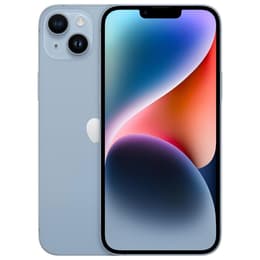
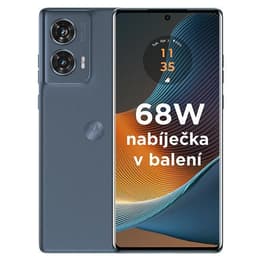

iPhone 14 Plus vs Motorola Edge 50 Fusion

iPhone 14 Plus
iPhone 14 Plus
Starting at

Refurbished price:A$480.00

Versus A$1,249.00 new

See options
Motorola Edge 50 Fusion
See options

The iPhone 14 Plus, released in October 2022, and the Motorola Edge 50 Fusion, launched in May 2024, represent distinct approaches to the large-screen smartphone experience. While both devices offer expansive displays and robust battery performance, they differ significantly in their operating systems, core hardware, and overall user philosophies. The iPhone 14 Plus operates on Apple's iOS, known for its integrated ecosystem, while the Motorola Edge 50 Fusion runs on Android, offering a more customizable interface.

Scores

Durability

When considering the long-term usability of these devices, their release timelines and software support policies are key differentiators.

  • Release Timeline: The iPhone 14 Plus was introduced in late 2022, making it an older model compared to the Motorola Edge 50 Fusion, which debuted in mid-2024. This difference in release year directly impacts their expected software support windows.
  • Software Longevity: Apple typically provides iOS updates for 5-6 years from a device's release, suggesting the iPhone 14 Plus will receive updates for several more years. Motorola generally offers 2-3 years of major Android OS updates and security patches for its Edge series, meaning the Edge 50 Fusion, being newer, will have a longer remaining support period from its launch date.
  • Physical Durability: Both devices feature an IP68 rating for dust and water resistance, indicating a similar level of protection against environmental elements. The iPhone 14 Plus incorporates a Ceramic Shield front cover, while the Motorola Edge 50 Fusion uses Corning Gorilla Glass 5 for screen protection.

Release year

2022

2024

Compatible with latest Update

Yes

Yes

Operating system

iOS

Android

Foldable

No

No

Performance

The performance of a smartphone is crucial for daily tasks, from app navigation to demanding applications and gaming. Both devices offer capable performance, but with different underlying architectures.

  • Everyday Responsiveness: The iPhone 14 Plus, powered by its integrated processor, delivers a consistently smooth and responsive experience for general use, app launching, and multitasking. Users can expect fluid navigation through iOS and efficient handling of most applications.
  • Demanding Tasks and Gaming: The Motorola Edge 50 Fusion, equipped with a current-generation processor, handles everyday applications and moderate multitasking effectively. For graphically intensive games or very demanding applications, some users have noted that its performance, while capable, may not match the highest-tier devices.
  • Multitasking and Storage: The iPhone 14 Plus comes with 6GB of RAM, which is sufficient for smooth multitasking within the iOS environment. The Motorola Edge 50 Fusion offers configurations with 8GB or 12GB of RAM, providing ample capacity for running multiple applications simultaneously on Android. Both devices offer various internal storage options, with the Edge 50 Fusion also featuring a microSD card slot for expandable storage, a feature not present on the iPhone 14 Plus.

Memory (GB)

6 GB

12 GB

Screen quality

The display is a primary interface for any smartphone, and both the iPhone 14 Plus and Motorola Edge 50 Fusion offer large, vibrant screens, though with key differences in technology and refresh rates.

  • Display Technology and Clarity: The iPhone 14 Plus features a 6.7-inch Super Retina XDR OLED display, providing deep blacks, high contrast, and vibrant colors with a resolution of 2778x1284 pixels. The Motorola Edge 50 Fusion also boasts a 6.7-inch pOLED display with a 1080x2400 (FHD+) resolution, offering good clarity and color reproduction.
  • Smoothness and Brightness: A notable difference lies in the refresh rate; the iPhone 14 Plus has a standard 60Hz refresh rate, while the Motorola Edge 50 Fusion offers a smoother 144Hz refresh rate, which can make scrolling and animations appear more fluid. Both displays achieve high peak brightness levels, with the iPhone 14 Plus reaching 1200 nits for HDR content and the Edge 50 Fusion reaching 1600 nits, ensuring good visibility in various lighting conditions.
  • Viewing Experience: The iPhone 14 Plus provides a flat display protected by Ceramic Shield. The Motorola Edge 50 Fusion features a curved display, which contributes to its slim profile and can offer an immersive viewing experience, though some users have noted potential fragility concerns with curved screens.

Resolution

1284 x 2778

1080 x 2400

Screen type

Super Retina XDR OLED

P-OLED

Audiovisual

Camera capabilities are a significant factor for many users, and both smartphones offer versatile camera systems for capturing photos and videos.

  • Rear Camera Systems: The iPhone 14 Plus features a dual 12MP camera system, including a wide and an ultrawide lens, known for consistent image processing and natural color reproduction. The Motorola Edge 50 Fusion comes with a 50MP main camera with optical image stabilization (OIS) and a 13MP ultrawide lens that also functions as a macro camera, offering higher megapixel counts for its primary sensor.
  • Photography Performance: In good lighting, both devices produce detailed and vibrant images. The iPhone 14 Plus generally excels in capturing balanced exposures and accurate colors. The Edge 50 Fusion's 50MP main sensor, particularly with its Ultra Pixel technology, aims for strong low-light performance, though some user reviews suggest occasional processing delays.
  • Video and Selfies: Both phones support 4K video recording, with the iPhone 14 Plus capable of 4K at 60fps and the Edge 50 Fusion at 4K 30fps. The iPhone 14 Plus offers a 12MP front camera, while the Motorola Edge 50 Fusion features a higher-resolution 32MP front camera, which generally delivers detailed selfies and good video call quality.

Main camera

12 megapixels

50 megapixels

Front camera

12 megapixels

32 megapixels

Miscellaneous

Beyond the core features, several practical elements contribute to the overall user experience and differentiate these two devices.

  • Connectivity and Ports: Both smartphones support 5G connectivity for fast mobile data. The iPhone 14 Plus uses Apple's proprietary Lightning port for charging and data transfer, while the Motorola Edge 50 Fusion features a more universally adopted USB-C port.
  • Biometric Security: The iPhone 14 Plus relies on Face ID for secure facial recognition. The Motorola Edge 50 Fusion incorporates an in-display fingerprint sensor for biometric authentication, alongside facial recognition.
  • Design and Handling: The iPhone 14 Plus weighs 203 grams and has a thickness of 7.8mm, featuring an aluminum frame and glass back. The Motorola Edge 50 Fusion is notably lighter at 175 grams and also 7.8mm thick, often praised for its slim and lightweight design, making it comfortable for one-handed use.

Weight

203 oz

175 oz

Screen size (in)

6,7

6.7

Network

5G

5G

SIM card

Physical SIM + eSIM

Dual Physical SIM

Carrier compatibility

Unlocked

Unlocked

Connector

Lightning

USB-C

Choosing between the iPhone 14 Plus and the Motorola Edge 50 Fusion involves weighing different priorities and ecosystem preferences. Users frequently praise the iPhone 14 Plus for its exceptional battery life, often lasting well over a day, and its consistent performance within the Apple ecosystem. Some users, however, note its 60Hz display as a drawback compared to many newer phones. The Motorola Edge 50 Fusion is often commended for its lightweight design, vibrant 144Hz pOLED display, and impressive fast charging capabilities, with many users reporting excellent battery endurance. Criticisms sometimes point to its processor not being ideal for the most demanding tasks and occasional software inconsistencies or bloatware.

Users prioritizing a highly integrated software experience, long-term software support, and industry-leading battery life in a large-screen format may find the iPhone 14 Plus well-suited to their needs. Conversely, individuals who value a smoother high-refresh-rate display, faster charging, expandable storage, and the flexibility of the Android operating system might lean towards the Motorola Edge 50 Fusion. Both devices offer compelling features, and considering a quality-assured refurbished option for either model can provide an eco-friendly alternative for consumers.

See all articles

Our recent comparisons