
iPhone 13 Pro Max vs Motorola Edge 50 Fusion

iPhone 13 Pro Max
iPhone 13 Pro Max
Starting at

Refurbished price:A$581.00

Versus A$1,689.00 new

See options
Motorola Edge 50 Fusion
See options

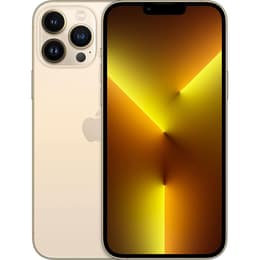
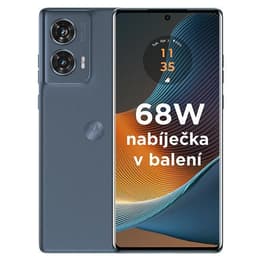
The iPhone 13 Pro Max, released in September 2021, and the Motorola Edge 50 Fusion, launched in May 2024, represent distinct approaches to smartphone design and functionality. While both are large-screen devices, the iPhone 13 Pro Max is a premium offering from Apple's ecosystem, running iOS, whereas the Motorola Edge 50 Fusion operates on Android, focusing on a balanced feature set. Key differentiators lie in their core processing power, camera systems, and software support timelines.

Scores

Durability

When considering the long-term usability of these devices, their release timelines and software support policies are important factors.

  • Release and Age: The iPhone 13 Pro Max was introduced in September 2021, making it an older device compared to the Motorola Edge 50 Fusion, which launched in May 2024. This age difference directly impacts their remaining software support cycles.
  • Software Longevity: The iPhone 13 Pro Max, running iOS, typically receives major operating system updates for approximately 5-6 years from its release, meaning it is expected to continue receiving updates for a few more years. The Motorola Edge 50 Fusion, launching with Android 14, is promised three major Android OS upgrades, extending its support up to Android 17, along with four years of security updates.
  • Durability Features: Both devices offer robust protection against environmental elements. The iPhone 13 Pro Max features a Ceramic Shield front cover and is rated IP68 for dust and water resistance, allowing submersion up to 6 meters for 30 minutes. The Motorola Edge 50 Fusion also boasts an IP68 rating for dust and water resistance and includes Corning Gorilla Glass 5 for screen protection.

Release year

2021

2024

Compatible with latest Update

Yes

Yes

Operating system

iOS

Android

Foldable

No

No

Performance

The performance of a smartphone is crucial for daily tasks, from navigating apps to demanding gaming sessions. These two devices offer different levels of processing power and system responsiveness.

  • Processing Capabilities: The iPhone 13 Pro Max is equipped with Apple's A15 Bionic chip, which, at its release, delivered high-end performance, ensuring smooth operation for complex applications, intensive multitasking, and graphically demanding games. The Motorola Edge 50 Fusion utilizes the Qualcomm Snapdragon 7s Gen 2 processor, which provides capable performance for everyday use and moderate gaming, positioning it as a solid mid-range performer.
  • System Responsiveness: Users of the iPhone 13 Pro Max can expect consistently fluid interactions and rapid app loading, maintaining a high level of responsiveness even with multiple applications running simultaneously. The Motorola Edge 50 Fusion offers a smooth user experience for general tasks, with its processor handling most applications without significant delays, though it may show limitations in highly resource-intensive scenarios.
  • Storage and Multitasking: Both devices come with various storage options, with the iPhone 13 Pro Max offering configurations up to 1TB and the Motorola Edge 50 Fusion up to 512GB. The iPhone 13 Pro Max typically includes 6GB of RAM, while the Motorola Edge 50 Fusion can be found with 8GB or 12GB of RAM, influencing their capacity for background processes and seamless app switching.

Memory (GB)

6 GB

12 GB

Screen quality

The display is a primary interface for any smartphone, and both models offer vibrant viewing experiences with distinct characteristics.

  • Display Technology and Clarity: The iPhone 13 Pro Max features a 6.7-inch Super Retina XDR OLED display, known for its deep blacks, vibrant colors, and high contrast ratio. It has a resolution of 2778 by 1284 pixels, resulting in a pixel density of 458 pixels per inch (ppi), providing sharp and detailed visuals. The Motorola Edge 50 Fusion also sports a 6.7-inch pOLED display with a resolution of 1080x2400 pixels (FHD+), offering good clarity for its class, with a pixel density of approximately 395 ppi.
  • Brightness and Refresh Rate: The iPhone 13 Pro Max's display can reach a typical brightness of 1000 nits and a peak HDR brightness of 1200 nits, ensuring good visibility even in bright outdoor conditions. It also features ProMotion technology, offering an adaptive refresh rate from 10Hz to 120Hz for smooth scrolling and responsive interactions. The Motorola Edge 50 Fusion offers a peak brightness of 1600 nits and a higher refresh rate of 144Hz (in most regions), providing a very fluid visual experience, particularly noticeable during scrolling and gaming.
  • Viewing Experience: Both devices provide large screens suitable for media consumption and productivity. The iPhone's display is praised for its color accuracy and HDR capabilities, making it well-suited for high-quality video content. The Motorola Edge 50 Fusion's curved pOLED display enhances the immersive feel, with content appearing to flow over the edges.

Resolution

1284 x 2778

1080 x 2400

Screen type

Super Retina XDR OLED

P-OLED

Audiovisual

The camera systems on both smartphones are designed to capture moments, though they approach photography with different strengths and features.

  • Rear Camera Systems: The iPhone 13 Pro Max features a versatile triple 12MP camera system, including Wide, Ultra Wide, and Telephoto lenses. The Wide camera has a large sensor and sensor-shift optical image stabilization (OIS), while the Telephoto lens offers 3x optical zoom. The Motorola Edge 50 Fusion comes with a dual-camera setup, featuring a 50MP main sensor with OIS and a 13MP ultrawide lens with autofocus.
  • Photography Performance: The iPhone 13 Pro Max excels in various lighting conditions, offering strong low-light performance across all lenses, macro photography capabilities, and advanced computational photography features like Photographic Styles and Apple ProRAW. The Motorola Edge 50 Fusion's 50MP main camera produces sharp and vibrant photos in good lighting, with OIS helping to reduce blur. Its ultrawide lens offers consistent color performance, though low-light performance on the ultrawide can be less detailed.
  • Video Recording and Front Camera: Both devices support 4K video recording, with the iPhone 13 Pro Max capable of 4K at up to 60 frames per second (fps) and offering Cinematic mode for depth-of-field effects. The Motorola Edge 50 Fusion records 4K video at 30fps and includes a 32MP front-facing camera for detailed selfies and video calls, while the iPhone 13 Pro Max has a 12MP front camera.

Main camera

12 megapixels

50 megapixels

Front camera

12 megapixels

32 megapixels

Miscellaneous

Beyond core performance and display, several practical features contribute to the overall user experience and daily convenience.

  • Connectivity and Ports: Both smartphones support 5G connectivity for fast mobile data. The iPhone 13 Pro Max uses Apple's proprietary Lightning port for charging and data transfer, and supports Wi-Fi 6 and Bluetooth 5.0. The Motorola Edge 50 Fusion features a USB-C port, a more universal standard, and supports Wi-Fi 6 and Bluetooth 5.2, along with NFC for contactless payments.
  • Biometrics and Sensors: The iPhone 13 Pro Max relies on Face ID for secure facial recognition. The Motorola Edge 50 Fusion incorporates an in-display fingerprint sensor for biometric authentication.
  • Design and Handling: The iPhone 13 Pro Max has dimensions of 160.8 x 78.1 x 7.65 mm and weighs 240 grams, giving it a substantial feel. The Motorola Edge 50 Fusion is lighter and slightly thinner, measuring around 161.9 x 73.1 x 7.9 mm and weighing 174-175 grams, which may contribute to more comfortable one-handed use for some users. It also offers various back finishes, including silicone polymer (eco leather).

Weight

238 oz

175 oz

Screen size (in)

6.7

6.7

Network

5G

5G

SIM card

Physical SIM + eSIM

Dual Physical SIM

Carrier compatibility

Unlocked

Unlocked

Connector

Lightning

USB-C

User feedback for the iPhone 13 Pro Max frequently highlights its exceptional battery life, often described as a two-day device for many users, and its highly capable camera system, particularly for video recording and low-light photography. Its ProMotion display is also consistently praised for its smoothness and brightness. Some users, however, noted that while camera improvements were significant over older models, the year-on-year leap from its direct predecessor was less dramatic.

The Motorola Edge 50 Fusion receives positive remarks for its vibrant 144Hz pOLED display, its main camera's ability to capture sharp and colorful images, and its solid battery life with fast charging. Its design, often featuring eco-leather finishes, is also a point of appreciation. Criticisms sometimes point to its mid-range processor performance when handling very demanding tasks and some inconsistencies in software update delivery, despite promises for extended support.

Users prioritizing a highly refined software experience, a consistently excellent camera across all lenses, and industry-leading battery endurance may find the iPhone 13 Pro Max well-suited to their needs. Conversely, those who value a high refresh rate display, fast charging, a modern Android interface, and a lighter design might lean towards the Motorola Edge 50 Fusion. Both devices offer compelling features, and choosing between them often comes down to individual preferences within the iOS or Android ecosystems. For those seeking a quality-assured refurbished option, both models can be found, providing an eco-friendly alternative.
See all articles

Our recent comparisons