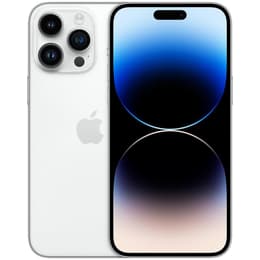

iPhone 11 Pro vs iPhone 14 Pro Max

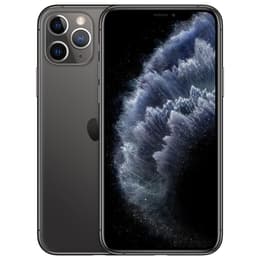
iPhone 11 Pro
iPhone 11 Pro
Starting at

Refurbished price:A$327.00

Versus A$1,029.00 new

See options
iPhone 14 Pro Max
iPhone 14 Pro Max
Starting at

Refurbished price:A$726.00

Versus A$1,899.00 new

See options

Ratings

The iPhone 11 Pro, released in September 2019, and the iPhone 14 Pro Max, launched in September 2022, represent different generations within Apple's professional-grade smartphone lineup. While both offer a premium experience, the iPhone 14 Pro Max introduces significant advancements in display technology, camera capabilities, and overall processing power, alongside a larger form factor. Both devices operate on Apple's iOS ecosystem, providing a consistent user experience.

Scores

Durability

When considering the practical lifespan of these devices, several factors come into play, primarily their release timelines and ongoing software support.

  • Release Timeline: The iPhone 11 Pro was introduced in September 2019, making it a device from an earlier generation. The iPhone 14 Pro Max, released in September 2022, benefits from a more recent launch, inherently offering a longer period of future support.
  • OS Support Duration: Apple typically provides major iOS updates for approximately five to six years from a device's release. Given the current date (March 2026), the iPhone 11 Pro has likely received its last major iOS update or is nearing the end of its update cycle, with iOS 17 being a recent major version it supports. The iPhone 14 Pro Max, being newer, is expected to receive software updates for several more years, extending its functional lifespan and access to new features and security enhancements.
  • Physical Durability: Both models feature a stainless steel frame and glass construction, contributing to a robust feel. The iPhone 11 Pro offers IP68 water and dust resistance, rated for a maximum depth of 4 meters for up to 30 minutes. The iPhone 14 Pro Max enhances this with a Ceramic Shield front cover for increased drop performance and an improved IP68 rating, allowing submersion up to 6 meters for 30 minutes.

Release year

2019

2022

Compatible with latest Update

Yes

Yes

Operating system

iOS

iOS

Foldable

No

No

Performance

The performance differences between these two models are notable, reflecting the advancements in mobile processing technology over three years.

  • Processing Capabilities: The iPhone 11 Pro is equipped with a capable processor that handles everyday applications, web browsing, and moderate multitasking smoothly. It provides a responsive experience for most users. The iPhone 14 Pro Max features a more advanced processor, delivering significantly faster CPU and GPU speeds. This translates to quicker app loading times, smoother transitions between applications, and enhanced performance in demanding tasks such as high-fidelity gaming, video editing, and complex augmented reality applications.
  • Multitasking and Responsiveness: The iPhone 11 Pro comes with 4GB of RAM, which is sufficient for typical daily usage and keeping a reasonable number of apps open in the background. The iPhone 14 Pro Max includes 6GB of RAM, allowing for more aggressive multitasking and maintaining more applications in memory without needing to reload them, contributing to a more fluid overall user experience.
  • Storage Options: The iPhone 11 Pro was available with storage options up to 512GB, starting from 64GB. The iPhone 14 Pro Max offers a broader range, starting at 128GB and extending up to 1TB, catering to users with extensive media libraries or large application needs.

Memory (GB)

4 GB

6 GB

Screen quality

The display is a key area of distinction, with the iPhone 14 Pro Max introducing several significant upgrades.

  • Display Technology and Size: Both devices feature an OLED display, known for deep blacks and vibrant colors. The iPhone 11 Pro has a 5.8-inch Super Retina XDR display with a resolution of 2436 x 1125 pixels, resulting in a pixel density of 458 ppi. The iPhone 14 Pro Max boasts a larger 6.7-inch Super Retina XDR display with a resolution of 2796 x 1290 pixels and a similar pixel density of 460 ppi, offering a more expansive viewing area.
  • Brightness and Refresh Rate: The iPhone 11 Pro's display offers a typical maximum brightness of 800 nits, peaking at 1200 nits for HDR content, and operates at a standard 60Hz refresh rate. The iPhone 14 Pro Max significantly increases brightness, reaching 1000 nits typical, 1600 nits for HDR, and an impressive 2000 nits peak for outdoor visibility. Crucially, it features ProMotion technology, offering an adaptive refresh rate from 1Hz to 120Hz, which provides smoother scrolling and more responsive interactions.
  • Unique Display Features: The iPhone 14 Pro Max introduces the Dynamic Island, an interactive area around the front camera cutout that dynamically adapts to display alerts, notifications, and background activities. It also includes an Always-On Display feature, which keeps essential information visible on the screen at a low refresh rate. The iPhone 11 Pro features a traditional notch design.

Resolution

1125 x 2436

1290 x 2796

Screen type

Super Retina XDR OLED

LTPO Super Retina XDR OLED

Audiovisual

Camera systems have seen substantial evolution between these two generations, particularly in sensor technology and computational photography.

  • Rear Camera System: The iPhone 11 Pro features a versatile triple 12MP camera system, including Ultra Wide, Wide, and Telephoto lenses. It introduced Night mode for improved low-light photography and Deep Fusion for enhanced detail in medium-light conditions. The iPhone 14 Pro Max elevates this with a 48MP Main camera using a quad-pixel sensor, alongside improved 12MP Ultra Wide and Telephoto lenses. This allows for greater detail capture, especially in well-lit conditions, and enhanced low-light performance through pixel binning.
  • Photography Features: Both models offer Portrait mode with depth control and various lighting effects. The iPhone 14 Pro Max introduces the Photonic Engine, which further improves mid-to-low light performance across all cameras, and Action mode for smoother video capture in dynamic scenarios. Video recording on both supports 4K up to 60fps, but the iPhone 14 Pro Max adds Cinematic mode with 4K HDR at 30fps and ProRes video recording for professional workflows.
  • Front Camera and Audio: Both devices feature a 12MP front-facing camera capable of 4K video recording. The iPhone 14 Pro Max's front camera includes autofocus for clearer selfies. For audio, both offer stereo speakers and good microphone quality for calls and video recording, with the 14 Pro Max potentially offering a richer sound profile due to its newer design.

Main camera

12 megapixels

48 megapixels

Front camera

12 megapixels

12 megapixels

Miscellaneous

Beyond the core specifications, several practical elements differentiate these two iPhone models.

  • Connectivity: The iPhone 11 Pro supports 4G LTE, Wi-Fi 6, and Bluetooth 5.0, providing reliable wireless connections. The iPhone 14 Pro Max steps up to 5G connectivity, offering faster cellular data speeds where available, and includes Bluetooth 5.3 for improved efficiency and range with accessories.
  • Ports and Sensors: Both devices utilize Apple's Lightning port for charging and data transfer. The iPhone 11 Pro relies on Face ID for secure authentication. The iPhone 14 Pro Max also uses Face ID but adds a LiDAR Scanner for enhanced augmented reality experiences and improved low-light focusing for the camera. It also incorporates advanced safety features like Crash Detection and Emergency SOS via Satellite.
  • Design and Handling: The iPhone 11 Pro is a more compact device, weighing 188 grams with dimensions of 144 x 71.4 x 8.1 mm, making it easier for one-handed use. The iPhone 14 Pro Max is a larger and heavier device at 240 grams and dimensions of 160.7 x 77.6 x 7.85 mm, which might appeal to users who prefer a larger screen but could be less comfortable for smaller hands. Both feature a premium build with a stainless steel frame and glass back, though the 14 Pro Max incorporates Ceramic Shield for added front display durability.

Weight

188 oz

120 oz

Screen size (in)

5.8

6.7

SIM card

Physical SIM + eSIM

Physical SIM + eSIM

Carrier compatibility

Unlocked

Unlocked

Connector

Lightning

Lightning

User sentiment often highlights the iPhone 11 Pro as a highly capable and reliable device, praised for its balanced size, solid camera performance for its time, and robust build quality. Many users appreciate its comfortable handling and the introduction of Night mode, which significantly improved low-light photography. Criticisms sometimes point to its 60Hz display, which can feel less fluid compared to newer models, and its battery life, while good for its era, may not always last a full day for heavy users.

The iPhone 14 Pro Max, conversely, is frequently lauded for its exceptional display, particularly the ProMotion adaptive refresh rate and the innovative Dynamic Island, which users find intuitive and engaging. Its advanced camera system, especially the 48MP main sensor and improved low-light capabilities, receives high praise for delivering professional-grade photos and videos. Users also commend its extended battery life, often lasting well beyond a full day of heavy use. Some common feedback includes its larger size and weight, which can be a consideration for those preferring a more compact device.

Users prioritizing a more compact form factor and a still-capable camera system for everyday photography may find the iPhone 11 Pro well-suited to their needs. It remains a solid choice for those who value a traditional iPhone experience without the latest bells and whistles. Conversely, users who prioritize the largest and brightest display, the most advanced camera technology, extended battery life, and cutting-edge features like the Dynamic Island and Always-On Display will likely lean towards the iPhone 14 Pro Max. It is particularly well-suited for content creators, mobile gamers, and professionals who demand top-tier performance and features. For those considering either model, exploring quality-assured refurbished options can provide a sustainable choice for acquiring these devices.
See all articles

Our recent comparisons