
Compare models
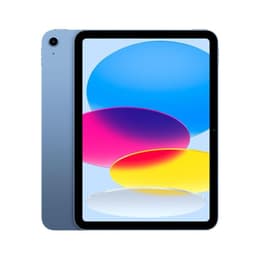
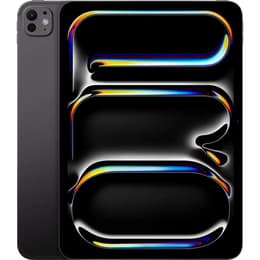
iPad 10 (2022, A14 series) vs iPad Pro (2025, M5 series)
- 1-year warranty
- Free standard shipping
- Free 30-day returns
Differences at a glance
The iPad 10 (2022) and the iPad Pro (2025) represent two distinct tiers within Apple's tablet lineup, catering to entirely different sets of user requirements. The iPad 10 serves as an accessible entry point designed for everyday tasks, while the iPad Pro targets professional workloads with advanced processing and display hardware. Although both run on iPadOS, their underlying architectures and hardware capabilities set them apart in performance and capability.
Available Models
Colour
Storage (GB)
Scores
Durability
When evaluating software longevity and hardware endurance, both devices offer robust build qualities and long-term support timelines, though their release dates separate them by three years.
- Software support duration: Both models benefit from Apple's extended update cycles, with the newer iPad Pro receiving security and feature updates further into the future due to its recent launch year.
- Repairability and durability: Each tablet utilizes a rigid aluminum chassis designed to withstand daily transport, though finding a quality-assured refurbished option provides a sustainable choice that extends device lifecycles without requiring new manufacturing.
- Expected lifespan: The iPad Pro holds a hardware headroom advantage for longevity under heavy multi-year workloads, whereas the iPad 10 easily maintains day-to-day functionality for standard browsing and media consumption over time.
Release year
2022
2025
Compatible with latest Update
Yes
Yes
Operating system
iPadOS
iPadOS
Performance
Processing power and resource management differ significantly between these models, impacting how they handle multitasking, storage options, and demanding applications.
- Multitasking and responsiveness: The iPad Pro handles intensive creative apps, heavy 3D rendering, and professional multitasking effortlessly, while the iPad 10 smoothly manages standard web browsing, streaming, and casual document editing.
- Storage configurations: The iPad Pro offers expansive storage capacities tailored for large media libraries and project files, whereas the iPad 10 provides standard tiers suited for general app storage and cloud-based workflows.
- Thermal efficiency and battery: Both devices deliver a full day of typical usage on a single charge, though intensive processing on the iPad Pro draws more power under maximum load.
Processor
Apple A14 Bionic
Apple M5
Screen quality
Display technology is one of the most prominent differentiators, affecting color accuracy, brightness, and visual fluidity during media consumption and creative work.
- Display panels: The iPad Pro features an advanced OLED or mini-LED display with deep contrast and exceptional outdoor visibility, while the iPad 10 utilizes a bright standard liquid crystal display suitable for indoor reading and video playback.
- Refresh rate smoothness: The iPad Pro includes high-refresh-rate technology for fluid scrolling and responsive stylus interaction, whereas the iPad 10 features a standard refresh rate sufficient for everyday navigation.
- Viewing experience: Both tablets offer sharp resolutions and vibrant color reproduction, though the iPad Pro delivers finer detail rendering for photo editing and professional design tasks.
Resolution
2360 x 1640
2420 x 1668
True Tone
Yes
Yes
Promotion
No
Yes
Screen type
Liquid Retina display
Ultra Retina XDR display
Sound quality
Speakers
Stereo speakers
Four speaker audio
Audiovisual
Audio and visual capture capabilities vary to match the intended use cases of each device, ranging from casual documentation to professional media production.
- Camera systems: The iPad Pro includes multiple lenses and advanced scanning sensors for augmented reality and detailed photography, while the iPad 10 features a single rear camera and a landscape-oriented front camera optimized for video calls.
- Speaker output: The iPad Pro incorporates a multi-speaker audio array that delivers rich sound for media enjoyment, whereas the iPad 10 relies on a stereo setup adequate for casual viewing.
- Microphone performance: Both models capture clear voice audio for virtual meetings, with the iPad Pro adding studio-quality arrays designed for field recording.
Miscellaneous
External connections, physical dimensions, and accessory compatibility define how each tablet integrates into daily mobile setups and desk environments.
- Connectivity standards: The iPad Pro supports high-speed wireless networks and advanced peripheral data transfer through a versatile port, while the iPad 10 utilizes standard wireless protocols and a conventional connector.
- Biometric security: The iPad 10 integrates fingerprint recognition into the top power button, whereas the iPad Pro relies on facial recognition technology.
- Form factor: Both models maintain slim profiles and lightweight builds, though the iPad Pro offers larger screen size variations to accommodate expansive workspace layouts.
Weight
477 oz
444 oz
Screen size (in)
10.9
11
Network
Wi-Fi + 5G
Wi-Fi
Carrier compatibility
Unlocked
Without SIM Port
Face ID
No
Yes
Touch ID
Yes
No
Connector
USB Type-C
USB Type-C
What the community thinks
User feedback and community discussions highlight distinct preferences for each tablet based on daily routines. Owners of the iPad 10 frequently praise its dependable battery life, clear display, and straightforward functionality for everyday browsing, reading, and streaming. At the same time, some users note limitations when attempting intensive video editing or complex multitasking. Conversely, iPad Pro users commend the exceptional display clarity, rapid processing speeds, and responsive stylus support, though frequent criticisms often center on the higher weight of larger configurations and the steep investment required for brand-new hardware.
Users prioritizing web browsing, digital reading, casual gaming, and educational tasks will find the iPad 10 well-suited to their needs. Meanwhile, professional creatives, digital artists, and power users requiring desktop-class performance and advanced display tech will lean toward the iPad Pro. Choosing a quality-assured refurbished option for either model allows consumers to secure fully functional hardware while making a sustainable choice that reduces electronic waste.