
Compare models

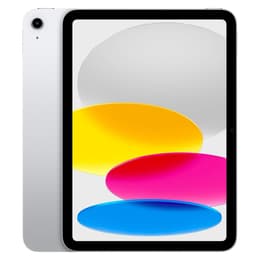
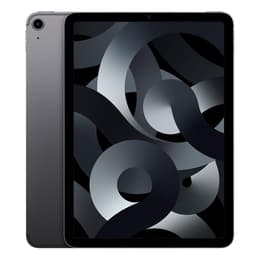
iPad 10 (2022, A14 series) vs iPad Air 5 (2022, M1 series)

  • 1-year warranty
  • Free standard shipping
  • Free 30-day returns
iPad 10 (2022, A14 series)
Starting at

Refurbished price:A$535.00

Versus A$599.00 new

See options
iPad Air 5 (2022, M1 series)
Starting at

Refurbished price:A$614.79

Versus A$1,499.00 new

See options

Differences at a glance

The iPad 10 (2022) and iPad Air 5 (2022) are both mid-range tablets released in 2022 that share similar screen sizes and modern flat-edge designs. While both run on iPadOS and offer versatile utility, they differ significantly in internal hardware capabilities and display construction, catering to distinct user preferences.

Available Models

Colour

Storage

Scores

Durability

Both models share the same release year and receive robust software support, though internal component differences influence long-term suitability.

  • Software lifespan: Both devices receive regular iPadOS updates, though hardware headroom ensures the iPad Air 5 maintains smooth operation through heavier future software iterations.
  • Build and repairability: Each model features a durable aluminum enclosure and glass front, with repairability profiles remaining consistent across both mainstream tablet lines.
  • Expected lifespan: Users can expect reliable multi-year longevity from both options under standard daily workloads, supported by efficient battery management systems.

Release year

2022

2022

Compatible with latest Update

Yes

Yes

Operating system

iPadOS

iPadOS

Minimum system requirements (iPadOS)

iPadOS 18

iPadOS 18

Performance

The core processing hardware creates a distinct operational divergence between the two devices during intensive tasks and multitasking.

  • Multitasking capacity: The iPad Air 5 includes double the random access memory compared to the iPad 10, enabling smoother background app management and demanding creative workflows.
  • Processing capability: The iPad Air 5 utilizes desktop-class architecture that handles advanced gaming and heavy rendering effortlessly, whereas the iPad 10 relies on a standard processor adept at everyday tasks and media viewing.
  • Storage configurations: Both models offer identical tier options starting at baseline capacities and scaling up for media-heavy users.

Processor

Apple A14 Bionic

Apple M1

Screen quality

While both screens match in size and resolution, the underlying panel technology creates visible differences in visual depth and reflection handling.

  • Display construction: The iPad Air 5 features a fully laminated display with an antireflective coating, reducing air gaps and glare compared to the non-laminated screen on the iPad 10.
  • Color reproduction: The iPad Air 5 supports wide color formats for richer image presentation, while the iPad 10 relies on standard sRGB color grading.
  • Outdoor legibility: Both tablets maintain similar maximum brightness levels suitable for outdoor visibility under shaded conditions.

Resolution

2360 x 1640

2360 x 1640

True Tone

Yes

Yes

Promotion

No

No

Screen type

Liquid Retina display

Liquid Retina display

Pixel density

264ppp

264ppp

Brightness

500 nits brightness

500 nits brightness

Sound quality

Speakers

Stereo speakers

Stereo speakers

Audiovisual

Camera configurations are largely comparable on paper, though front-facing camera placement and orientation differ between the two models.

  • Front camera placement: The iPad 10 relocates the ultra-wide lens to the landscape edge for natural video calls, while the iPad Air 5 retains traditional top-edge placement.
  • Video and photo capture: Both devices capture crisp high-definition video and clear stills using similar main wide-angle rear sensors.
  • Audio output: Both models provide clear stereo sound during media playback, though landscape orientation yields balanced sound staging on each device.

Miscellaneous

Physical dimensions and accessory compatibility vary slightly between the two devices, influencing peripheral choices.

  • Accessory support: The iPad Air 5 supports magnetic inductive pairing for advanced stylus models, whereas the iPad 10 relies on direct wired cable connection for input accessories.
  • Portability: The iPad Air 5 is marginally thinner and lighter, while the iPad 10 adopts a slightly chunkier profile housed in a wider array of bright color finishes.
  • Connectivity: Both tablets provide reliable wireless standards and utilize standard universal USB-C ports for charging and data transfer.

Weight

477 oz

462 oz

Width

17.95 in

17.85 in

Height

24.86 in

24.76 in

Depth

0.7 in

0.61 in

Screen size (in)

10.9

10.9

Network

Wi-Fi

Wi-Fi + 5G

Carrier compatibility

Without SIM Port

Unlocked

Wi-Fi version

Wi-Fi 6 802.11ax

Wi-Fi 6 802.11ax

Bluetooth version

Bluetooth 5.2

Bluetooth 5.0

Face ID

No

No

Touch ID

Yes

Yes

Connector

USB Type-C

USB Type-C

What the community thinks

User feedback highlights that the iPad 10 excels as an approachable household device for web browsing, streaming, and educational tasks, though some users note limitations with non-laminated glass reflections. Conversely, the iPad Air 5 receives praise for its smooth multitasking and robust processing power, though power users occasionally mention battery drain during intensive creative tasks. Users prioritizing drawing precision, expanded multitasking headroom, and vibrant color accuracy often gravitate toward the iPad Air 5. Meanwhile, users focused on casual media consumption, family sharing, and straightforward daily utility will find the iPad 10 well-suited to their needs. Exploring a quality-assured refurbished option provides an eco-friendly alternative for acquiring either model while supporting sustainable technology choices.

Our recent comparisons