
Galaxy Tab A (8.4", 2020) vs iPad 10 (2022, A14 series)

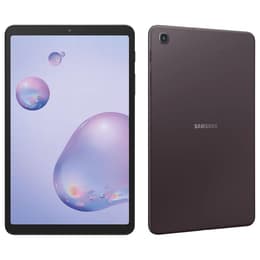
Galaxy Tab A (8.4", 2020)
See options
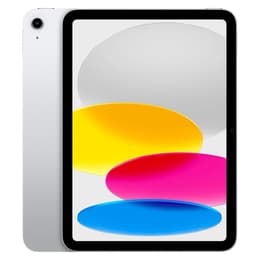
iPad 10 (2022, A14 series)
Starting at

Refurbished price:A$419.00

Versus A$599.00 new

See options

Ratings

The Samsung Galaxy Tab A 8.4 (2020) and the Apple iPad (10th generation, 2022) are tablet devices designed for different user ecosystems and released approximately two and a half years apart. The Galaxy Tab A 8.4 operates on Android, offering a more compact form factor, while the iPad (10th Gen) runs on iPadOS, featuring a larger display and more recent internal components. These fundamental differences in operating system and hardware generation lead to distinct user experiences.

Scores

Durability

The expected practical lifespan of a tablet is significantly influenced by its release date and the manufacturer's software support policies.

  • Release Timeline: The Galaxy Tab A 8.4 was released in March 2020, making it an older device compared to the iPad (10th Gen), which launched in October 2022. This age difference impacts the remaining period of official software and security updates.
  • Software Longevity: The Galaxy Tab A 8.4 launched with Android 9.0 or 10 and was upgradable to Android 11, with Samsung typically providing a few years of major Android updates for its A-series tablets. In contrast, Apple is known for extended software support, with iPads often receiving iPadOS updates for five to seven years or more from their release, meaning the iPad (10th Gen) will likely receive updates for a considerably longer duration.
  • Practical Lifespan: Users seeking the longest possible software support and access to the latest operating system features will find the iPad (10th Gen) offers a more extended practical lifespan due to its newer release and Apple's update policies. The Galaxy Tab A 8.4, while still functional for basic tasks, will have fewer years of official software support remaining.

Release year

2020

2022

Compatible with latest Update

No

Yes

Operating system

Android

iPadOS

Performance

Performance varies between these two tablets, largely due to their different hardware generations and operating systems.

  • Processor Capabilities: The Galaxy Tab A 8.4 (2020) is equipped with an octa-core processor that handles everyday tasks like web browsing, email, and media consumption adequately. Users report it is suitable for basic use but can experience sluggishness with heavy multitasking or demanding applications. The iPad (10th Gen) features a more advanced hexa-core processor, which provides significantly faster performance for a wider range of activities, including more intensive applications, gaming, and smoother multitasking.
  • Multitasking and Responsiveness: With 3GB of RAM, the Galaxy Tab A 8.4 can manage a few applications simultaneously, but switching between them might involve slight delays. The iPad (10th Gen) comes with 4GB of RAM, contributing to a more fluid and responsive experience when running multiple apps or engaging in more complex workflows.
  • Storage Options: The Galaxy Tab A 8.4 offers 32GB of internal storage, which is expandable via a microSD card up to 512GB, providing flexibility for storing media and documents. The iPad (10th Gen) is available with 64GB or 256GB of internal storage, but it does not offer expandable storage.

Memory (GB)

3 GB

4 GB

Screen quality

The display is a primary interaction point, and both tablets offer different viewing experiences.

  • Display Technology and Size: The Galaxy Tab A 8.4 features an 8.4-inch TFT LCD with a resolution of 1920 x 1200 pixels. The iPad (10th Gen) has a larger 10.9-inch Liquid Retina IPS LCD with a higher resolution of 2360 x 1640 pixels. The larger screen on the iPad provides more screen real estate for content consumption and productivity.
  • Clarity and Brightness: Both displays offer good clarity for their respective sizes. The iPad's Liquid Retina display typically provides more vibrant colors and better contrast compared to the TFT LCD of the Galaxy Tab A 8.4. The iPad (10th Gen) also generally offers higher brightness levels, which can improve visibility in brighter environments.
  • Viewing Experience: The iPad (10th Gen) features a display with rounded corners and a more modern edge-to-edge design compared to the Galaxy Tab A 8.4, enhancing the immersive viewing experience. Neither tablet features a high refresh rate display, with both typically operating at 60Hz.

Resolution

1200 x 1920

2360 x 1640

Screen type

TFT LCD

Liquid Retina display

Pixel density

270ppp

264ppp

Audiovisual

While tablets are not typically primary photography devices, their cameras are useful for video calls, scanning documents, and casual photography.

  • Rear Camera System: The Galaxy Tab A 8.4 includes an 8-megapixel rear camera. The iPad (10th Gen) features a 12-megapixel wide rear camera with an ƒ/1.8 aperture and an LED flash, capable of 4K video recording, offering more detail and better low-light performance.
  • Front Camera and Video Calls: For video conferencing, the Galaxy Tab A 8.4 has a 5-megapixel front camera. The iPad (10th Gen) is equipped with a 12-megapixel ultra-wide front camera that supports Center Stage, a feature that keeps the user automatically framed during video calls. This makes the iPad more suitable for dynamic video call scenarios.
  • Audio Quality: Both tablets include stereo speakers. The Galaxy Tab A 8.4 has dual speakers, which some users have described as tinny. The iPad (10th Gen) also features stereo speakers, providing a generally clearer audio output for media consumption and video calls.

Miscellaneous

Beyond core specifications, several practical elements differentiate these tablets in daily use.

  • Connectivity: Both devices support Wi-Fi and Bluetooth. The Galaxy Tab A 8.4 supports Wi-Fi 802.11 a/b/g/n/ac and Bluetooth 5.0. The iPad (10th Gen) offers more advanced connectivity with Wi-Fi 6 (802.11ax) and Bluetooth 5.2, potentially providing faster and more stable wireless connections. Both also offer cellular models for mobile data connectivity.
  • Ports and Biometrics: Both tablets feature a USB-C port for charging and data transfer. The Galaxy Tab A 8.4 retains a 3.5mm headphone jack, which is absent on the iPad (10th Gen). The iPad (10th Gen) integrates Touch ID into its power button for secure authentication, while the Galaxy Tab A 8.4 relies on traditional password/PIN security.
  • Design and Handling: The Galaxy Tab A 8.4 is smaller and lighter at 309g, making it more portable and easier to hold with one hand. The iPad (10th Gen) is larger and heavier at 477g (Wi-Fi model), offering a more expansive viewing experience but requiring two hands for comfortable use. The iPad (10th Gen) also features a more modern design with flat edges and a uniform bezel.

Weight

309 oz

477 oz

Screen size (in)

8.4

10.9

Network

Wi-Fi

Wi-Fi

Carrier compatibility

Without SIM Port

Without SIM Port

User feedback for the Galaxy Tab A 8.4 (2020) often highlights its suitability as a compact, affordable device for basic media consumption, e-reading, and light web browsing. Common criticisms include its limited performance for demanding tasks and occasional Wi-Fi connectivity issues. Users generally appreciate its portability and the inclusion of a headphone jack and expandable storage.

The iPad (10th Gen, 2022) receives praise for its vibrant display, improved performance for a wide range of applications, and enhanced camera features like Center Stage. Frequent points of discussion among users revolve around the charging method for the first-generation Apple Pencil, which requires an adapter, and its initial pricing compared to other iPad models. Despite these points, many users find it a capable device for students and general use, especially for those within the Apple ecosystem.

Users prioritizing a smaller, lighter tablet for casual use, with the flexibility of expandable storage and a traditional headphone jack, may find the Galaxy Tab A 8.4 (2020) aligns with their needs. Conversely, those seeking a larger, more powerful tablet with a longer software support lifespan, a more advanced camera system, and a modern design for productivity and more demanding applications will likely lean towards the iPad (10th Gen, 2022). Both devices are available as quality-assured refurbished options, providing an eco-friendly alternative for consumers.

See all articles

Our recent comparisons