Compare models
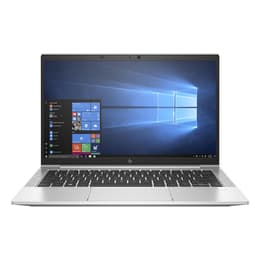
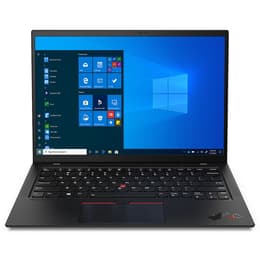
HP EliteBook 830 G7 13" vs Lenovo ThinkPad X1 Carbon G9 14"
- 1-year warranty
- Free standard shipping
- Free 30-day returns
Differences at a glance
The HP EliteBook 830 G7 (2020) and the Lenovo ThinkPad X1 Carbon Gen 9 (2021) are lightweight business laptops designed for mobile professionals and students. While both run on the Windows operating system and emphasize portability, they differ primarily in screen aspect ratio, generation year, and chassis design. Choosing between them depends on whether you prioritize traditional compact form factors or modern, expansive display layouts.
Scores
Durability
Both laptops are built to enterprise-grade durability standards, though their release years and hardware generations introduce slight differences in long-term support and expected service life.
- Release Timeline: The HP EliteBook debuted in 2020, while the Lenovo ThinkPad arrived a year later in 2021, giving the latter a minor advantage in overall hardware age.
- Software Longevity: Both models support current Windows operating systems, though newer internal components on the Lenovo variant may extend feature compatibility slightly further down the line.
- Repairability and Build: Both machines feature robust metallic and composite chassis structures designed to withstand frequent travel, alongside modular internal storage options that simplify maintenance. Choosing a quality-assured refurbished option extends the usable lifecycle of these durable business devices while supporting sustainable technology habits.
Release year
2019
2020
Last Os Compatibility
Yes
Yes
Operating system
Windows 11
Windows 11
Performance
Equipped with solid-state drive storage configurations and ample memory options, both laptops handle everyday productivity tasks like document editing, web browsing, and video conferencing with ease.
- Multitasking Responsiveness: Configurations often range from 8GB to 32GB of memory, allowing users to switch smoothly between dozens of browser tabs and office applications without stuttering.
- System Speed: The processing hardware on both devices manages demanding office workflows efficiently, though generation differences mean the Lenovo model generally yields slightly quicker application launch times under heavy loads.
- Battery Behavior: Both units provide enough battery capacity to sustain typical work sessions away from an outlet, though heavy multi-app usage will require midday recharging for both.
Graphic card
Integrated Graphics
Integrated Graphics
Screen quality
Display configurations form a major practical differentiator, affecting how much content fits on the screen during daily tasks.
- Aspect Ratio and Workspace: The HP EliteBook features a traditional 16:9 widescreen layout at 13.3 inches, whereas the Lenovo ThinkPad utilizes a taller 16:10 format at 14 inches, providing extra vertical viewing space for documents and spreadsheets.
- Clarity and Resolution: Both devices offer clear Full HD or higher panel options with anti-glare coatings that reduce reflections under harsh office lighting.
- Outdoor Usability: Panel brightness levels on standard configurations are well-suited for indoor environments, while upgraded configurations provide higher luminance for comfortable outdoor viewing.
Resolution
1920 x 1080
1920 x 1200
Screen type
IPS
IPS
Camera
Audiovisual
Designed primarily for virtual meetings and media consumption, both laptops offer reliable audiovisual equipment for remote collaboration.
- Webcam Performance: Integrated standard-definition webcams equipped with privacy shutters handle video calls adequately under standard indoor lighting conditions.
- Audio Clarity: Built-in multi-microphone arrays capture speech clearly during calls while filtering out background ambient noise.
- Speaker Output: Stereo speakers direct sound toward the user, providing balanced audio for conference calls and casual video streaming.
Miscellaneous
Physical dimensions, weight distribution, and port selections dictate how easily each laptop integrates into travel routines and desktop workspaces.
- Port Selection: Both models include traditional USB ports alongside versatile USB-C connections and video outputs, reducing reliance on external dongles.
- Dimensions and Weight: The HP model offers a slightly smaller footprint due to its compact 13-inch frame, while the Lenovo model manages to house a larger 14-inch screen while keeping its weight exceptionally low.
- Security Sensors: Enterprise security features such as fingerprint readers are readily available on both machines for quick authentication.
Weight
1240 oz
1130 oz
Screen size
13
14
What the community thinks
User feedback from online communities highlights distinct preferences for each machine. Owners of the HP EliteBook 830 G7 frequently praise its sturdy metal chassis, comfortable keyboard feedback, and reliable day-to-day stability for remote office work. Conversely, users favor the Lenovo ThinkPad X1 Carbon Gen 9 for its remarkably lightweight carbon-fiber construction, taller screen space, and modern port arrangement. Review discussions consistently point out that while both handle typing-heavy workflows effortlessly, personal preference heavily dictates the final choice.
Users prioritizing a compact, highly portable 13-inch footprint with a traditional widescreen layout will find the HP EliteBook well-suited to their needs. Meanwhile, users prioritizing a more expansive vertical display and an ultra-lightweight frame for frequent travel may lean toward the Lenovo ThinkPad. Exploring a quality-assured refurbished option provides an eco-friendly alternative for acquiring either of these reliable business laptops without compromising on build quality or performance standards.