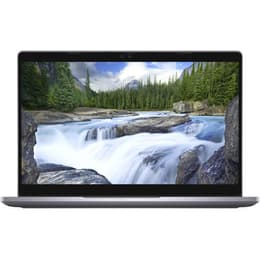
Dell Latitude 5300 13" vs Dell Latitude 5310 13"

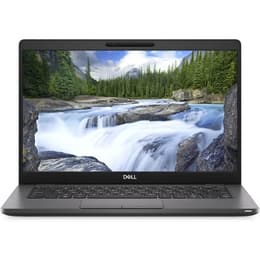
Dell Latitude 5300 13"
Starting at

Refurbished price:A$460.00

Versus A$750.00 new

See options
Dell Latitude 5310 13"
See options

The Dell Latitude 5300 13, released in 2019, and the Dell Latitude 5310 13, launched in 2020, are both compact business-oriented laptops designed for productivity and portability. While they share a similar form factor and target audience, the 5310 introduces updated internal components and enhanced wireless connectivity. Both models operate on the Windows operating system, providing a familiar environment for professional users.

Scores

Durability

When considering the longevity of these laptops, several factors come into play, primarily their release dates and the typical support cycles for business-grade devices.

  • Release Timeline: The Latitude 5300 was released in 2019, making it a slightly older model compared to the Latitude 5310, which debuted in 2020. This one-year difference can influence the duration of software support and the availability of replacement parts.
  • OS Support Duration: Both devices run Windows, and Microsoft generally provides around 10 years of support for its operating systems. As of October 2025, Windows 10 will no longer receive free security updates, though an Extended Security Update (ESU) program is available for a fee. The newer Latitude 5310 may have a slightly longer practical lifespan for receiving the latest Windows feature updates and security patches, especially if it is compatible with Windows 11, which has an expected retirement date around 2031.
  • Repairability: Dell Latitude laptops are generally designed with business users in mind, often featuring accessible internal components for maintenance and upgrades. Both models are expected to offer a reasonable degree of repairability, allowing for component replacement to extend their functional life.

Release year

2019

2020

Last Os Compatibility

Yes

Yes

Operating system

Windows 11

Windows 11

Performance

The performance of these laptops is largely dictated by their internal processing capabilities and memory configurations, which saw an upgrade in the newer model.

  • Processor Capabilities: The Latitude 5300 is equipped with 8th Generation Intel Core processors, while the Latitude 5310 features 10th Generation Intel Core processors. This generational leap means the 5310 generally offers improved processing power and efficiency, leading to faster application loading and smoother multitasking for demanding business applications.
  • System Responsiveness: Both models utilize fast NVMe SSDs for storage, ensuring quick boot times and rapid access to files. However, the 5310's newer processor contributes to a more responsive overall system experience, particularly when handling complex tasks or running multiple applications simultaneously.
  • RAM Implications: Both laptops support up to 32GB of DDR4 RAM, with the 5310 also offering configurations up to 64GB in some variants. This ample memory capacity allows for efficient multitasking and handling of memory-intensive applications on either device.

Memory (GB)

8 GB

16 GB

Processor

Core i5 - Gen 8 (U)

Core i5 - Gen 10 (U)

Graphic card

Integrated Graphics

Integrated Graphics

Screen quality

The display characteristics of the Latitude 5300 and 5310 are quite similar, offering a consistent visual experience for everyday business tasks.

  • Display Technology and Resolution: Both laptops typically feature 13.3-inch Full HD (1920 x 1080) IPS panels, providing clear visuals and good viewing angles. Some configurations of the 5300 also offered HD (1366 x 768) displays. The Full HD options are well-suited for document work, presentations, and general media consumption.
  • Brightness and Clarity: Many Full HD configurations for both models offer a brightness of around 300 nits, which is suitable for indoor use and provides adequate visibility in moderately lit outdoor environments. The anti-glare finish common on these displays helps reduce reflections, enhancing clarity.
  • Refresh Rate: Both devices typically come with a standard 60Hz refresh rate, which is sufficient for general productivity tasks, web browsing, and video playback.

Resolution

1920 x 1080

1920 x 1080

Screen type

LED

IPS

Camera

Audiovisual

For communication and multimedia, both Latitude models offer similar audio-visual components designed for business use.

  • Camera System: Both the Latitude 5300 and 5310 are equipped with a 720p webcam, which is standard for business laptops and suitable for video conferencing and online meetings.
  • Microphone Quality: The integrated microphones on both devices are designed to capture clear audio for calls, often incorporating noise reduction features to improve communication in various environments.
  • Speaker Output: Both laptops feature integrated speakers that provide clear audio for video calls, presentations, and casual media consumption. While not designed for high-fidelity audio, they are adequate for typical business needs.

Miscellaneous

Beyond core performance and display, several practical features differentiate these two Latitude models, particularly in terms of connectivity.

  • Connectivity Options: A notable difference lies in wireless connectivity. The Latitude 5300 primarily supports Wi-Fi 5 (802.11ac) and Bluetooth 5.0, though some configurations offered optional Wi-Fi 6. The Latitude 5310, being newer, generally comes with Wi-Fi 6 (802.11ax) and Bluetooth 5.1, offering faster and more stable wireless connections, especially in crowded network environments.
  • Port Types: Both laptops offer a comprehensive selection of ports, including USB-C (with optional Thunderbolt 3), multiple USB-A ports, HDMI, Ethernet (RJ45), a microSD card reader, and an audio jack. This ensures broad compatibility with various peripherals and external displays.
  • Weight and Dimensions: Both the Latitude 5300 and 5310 maintain a similar compact and portable design, with starting weights around 1.22 kg to 1.24 kg (approximately 2.69 to 2.73 lbs). Their dimensions are also very close, making them easy to carry for users on the go.

Weight

1240 oz

7500 oz

Screen size

13

13

The Dell Latitude 5300 13 and 5310 13 are both solid choices for professionals seeking a compact and reliable business laptop. Users often praise the Latitude series for its robust build quality and comprehensive security features. The 5300 is frequently noted for its good battery life and sturdy carbon fiber construction. However, some users have pointed out that its heat management could be improved under heavy loads.

The Latitude 5310 builds on its predecessor, with users appreciating its enhanced performance from the 10th Generation Intel processors and the inclusion of Wi-Fi 6 for improved wireless speeds. It also receives positive feedback for its battery life, often exceeding a full workday on a single charge. A common observation for the 5310 is that while it offers a performance boost, it can still experience increased fan noise and heat under sustained heavy use.

Users prioritizing a slightly more current internal architecture and faster wireless connectivity may find the Latitude 5310 better suited to their needs. Its newer processor offers a modest but noticeable improvement in responsiveness for everyday tasks and future-proofing. Conversely, those who find the specifications of the Latitude 5300 sufficient for their workload, particularly if their tasks are not heavily processor-intensive, may find it to be a capable device. Both models represent durable and functional options for business and academic environments. Exploring quality-assured refurbished options for either model can provide an eco-friendly alternative for acquiring these reliable laptops.


See all articles

Our recent comparisons