
Galaxy S23+ vs Google Pixel 6a

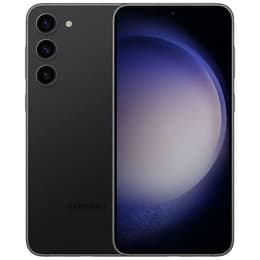
Galaxy S23+
Galaxy S23+
Starting at

Refurbished price:A$539.00

Versus A$1,953.00 new

See options
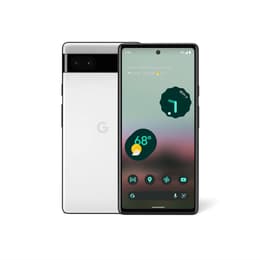
Google Pixel 6a
Google Pixel 6a
Starting at

Refurbished price:A$235.00

Versus A$569.00 new

See options

Ratings

The Samsung Galaxy S23 Plus (2023) and the Google Pixel 6a (2022) are Android smartphones that offer distinct user experiences. While both devices provide access to the vast Android ecosystem, the Galaxy S23 Plus emphasizes advanced hardware and a feature-rich interface, whereas the Pixel 6a focuses on a streamlined software experience and computational photography capabilities. Both run on the Android operating system, but their approaches to software integration and hardware design differ significantly.

Scores

Durability

When considering the long-term usability of these devices, several factors contribute to their expected practical lifespan, including software support and physical durability.

  • Software Longevity: The Galaxy S23 Plus, released in early 2023, benefits from Samsung's policy of providing four major Android OS upgrades and five years of security updates, extending its software longevity until at least Android 17 and security updates until 2028. The Pixel 6a, launched in mid-2022, was initially promised three years of OS updates and five years of security updates, with recent extensions confirming OS updates until at least July 2025 and security updates until at least July 2027. This means the Galaxy S23 Plus will likely receive newer Android versions for a longer period.
  • Physical Durability: The Galaxy S23 Plus features Corning Gorilla Glass Victus 2 on both its front and back, along with an Armor Aluminum frame, contributing to a robust build and IP68 water and dust resistance. The Pixel 6a uses Corning Gorilla Glass 3 for its screen and has an aluminum frame with a plastic back, offering IP67 water and dust resistance. The Galaxy S23 Plus offers a newer generation of protective glass and a higher water resistance rating.
  • Repairability: The Pixel 6a generally receives a good repairability score, with its display and battery being relatively accessible for replacement. Information on the repairability of the Galaxy S23 Plus is less readily available, but flagship devices often present more challenges due to their intricate designs.

Release year

2023

2022

Compatible with latest Update

Yes

Yes

Foldable

No

No

Performance

The performance of these two devices varies, primarily due to their different internal components and software optimizations.

  • Processing Power: The Galaxy S23 Plus is equipped with a newer, more powerful processor, enabling it to handle demanding applications, intensive multitasking, and graphic-heavy games with smooth responsiveness. The Pixel 6a utilizes a processor that provides a fluid user experience for everyday tasks and benefits from Google's software optimizations, ensuring smooth navigation and efficient handling of most applications.
  • Memory and Storage: The Galaxy S23 Plus offers 8GB of RAM and storage options of 256GB and 512GB, utilizing faster UFS 4.0 technology, which contributes to quicker app loading and data transfer speeds. The Pixel 6a comes with 6GB of RAM and 128GB of storage, using UFS 3.1 technology, which is sufficient for typical user needs and smooth app switching.
  • Battery Behavior: The Galaxy S23 Plus features a 4700 mAh battery, often providing extended endurance that can last through a full day of heavy use for many users. It supports 45W wired charging, 15W wireless charging, and 4.5W reverse wireless charging. The Pixel 6a has a 4410 mAh battery, delivering good all-day battery life with typical usage, often lasting nearly 13 hours during continuous video streaming, partly due to its 60Hz display. It supports 18W wired charging but does not offer wireless charging.

Memory (GB)

8 GB

6 GB

Screen quality

The display is a primary interface for smartphone interaction, and both devices offer vibrant viewing experiences with distinct characteristics.

  • Display Technology and Resolution: The Galaxy S23 Plus features a 6.6-inch Dynamic AMOLED 2X display with a Full HD+ resolution (2340 x 1080 pixels), providing sharp images and rich colors. The Pixel 6a comes with a 6.1-inch OLED display, also offering a Full HD+ resolution (2400 x 1080 pixels), known for deep blacks and good contrast.
  • Refresh Rate and Brightness: The Galaxy S23 Plus offers an adaptive refresh rate ranging from 48Hz to 120Hz, resulting in smoother scrolling and more fluid animations, and boasts a peak brightness of 1750 nits for excellent outdoor visibility. The Pixel 6a has a standard 60Hz refresh rate, which is suitable for most content but less fluid than higher refresh rate displays. Its brightness levels are adequate for indoor and typical outdoor use, with a peak brightness of around 1100 nits.
  • Screen Protection: The Galaxy S23 Plus is protected by Corning Gorilla Glass Victus 2, offering enhanced durability against drops and scratches. The Pixel 6a uses Corning Gorilla Glass 3 for screen protection.

Resolution

1080 x 2340

1080 x 2400

Screen type

Dynamic AMOLED 2X

OLED

Audiovisual

Both devices offer capable camera systems, though they approach photography with different hardware and software philosophies.

  • Rear Camera Systems: The Galaxy S23 Plus features a versatile triple-camera setup, including a 50MP main sensor, a 12MP ultrawide lens, and a 10MP telephoto lens with 3x optical zoom, allowing for a wide range of photographic possibilities from expansive landscapes to detailed close-ups. The Pixel 6a employs a dual-camera system with a 12.2MP main sensor and a 12MP ultrawide lens, relying heavily on advanced computational photography for impressive results, particularly in everyday and low-light conditions.
  • Photography Performance: The Galaxy S23 Plus delivers excellent photos across various lighting conditions, with strong detail and color accuracy, and its telephoto lens provides clear zoomed shots. The Pixel 6a is praised for its consistent image quality, especially its ability to produce well-exposed and detailed photos even with its more modest hardware, thanks to its powerful software processing. Users often report impressive results from the Pixel 6a's main camera, even in challenging lighting.
  • Video Recording and Front Camera: Both devices offer 4K video recording capabilities. The Galaxy S23 Plus has a 12MP front camera, suitable for high-quality selfies and video calls, and can record 8K video. The Pixel 6a features an 8MP front camera that captures solid selfies and benefits from Google's processing for good results, recording 1080p video.

Main camera

50 megapixels

12.2 megapixels

Front camera

12 megapixels

8 megapixels

Miscellaneous

Beyond core specifications, several practical elements differentiate these two smartphones in daily use.

  • Connectivity and Ports: Both devices support 5G connectivity, Wi-Fi, and Bluetooth. The Galaxy S23 Plus includes Wi-Fi 6E for faster wireless speeds and supports both physical SIM and eSIM. The Pixel 6a also supports physical SIM and eSIM. Both utilize a USB-C port for charging and data transfer, but neither includes a 3.5mm headphone jack.
  • Biometric Security: Both smartphones feature in-display fingerprint sensors for secure unlocking and authentication. The Galaxy S23 Plus also offers face recognition for additional security.
  • Design and Handling: The Galaxy S23 Plus measures 157.8 x 76.2 x 7.6 mm and weighs 196g, offering a larger screen and a more substantial feel. The Pixel 6a is more compact at 152.2 x 71.8 x 8.9 mm and lighter at 178g, making it potentially easier for one-handed use and pocketability. The Galaxy S23 Plus uses premium materials like Gorilla Glass Victus 2 and Armor Aluminum, while the Pixel 6a combines an aluminum frame with a plastic back.

Weight

196 oz

250 oz

Screen size (in)

6.6

6.1

SIM card

Physical SIM + eSIM

Physical SIM + eSIM

Carrier compatibility

Unlocked

Unlocked

Users often praise the Galaxy S23 Plus for its robust performance, extended battery life, and versatile camera system, particularly the inclusion of a telephoto lens and its bright, high refresh rate display. Some common criticisms might revolve around its larger size for those preferring a more compact device. The Google Pixel 6a is frequently lauded for its exceptional computational photography, delivering impressive photos despite its hardware specifications, and its streamlined software experience. Criticisms sometimes point to its 60Hz display, slower charging, and occasional reports of the fingerprint sensor being less responsive.

Users prioritizing a premium build, a highly responsive display, and a versatile camera system with optical zoom capabilities will find the Samsung Galaxy S23 Plus well-suited to their needs. Its longer software support also appeals to those seeking maximum longevity from their device. Conversely, users who value a compact form factor, exceptional point-and-shoot photography driven by advanced software, and a clean Android experience may lean toward the Google Pixel 6a. Both devices offer a quality Android experience, and choosing between them often comes down to whether one prioritizes cutting-edge hardware and features or a more software-centric, compact approach. For those looking for an eco-friendly alternative, both models are available as quality-assured refurbished options.


See all articles

Our recent comparisons