
Google Pixel 9 Pro Fold vs Motorola Edge 30 Fusion

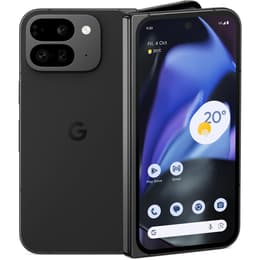
Google Pixel 9 Pro Fold
See options
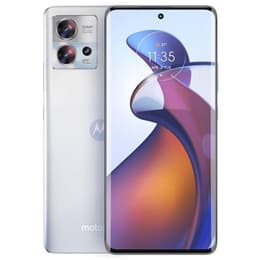
Motorola Edge 30 Fusion
Starting at

Refurbished price:A$257.46

Versus A$1,352.00 new

See options

The Google Pixel Fold, released in June 2023, and the Motorola Edge 30 Fusion, launched in September 2022, represent distinct approaches to smartphone design and functionality. While the Motorola Edge 30 Fusion offers a traditional smartphone experience with a focus on a sleek form factor and a high refresh rate display, the Google Pixel Fold introduces a foldable design, transforming from a compact device into a larger tablet-like screen. Both devices operate on the Android platform, but their core differentiators lie in their form factor, display technology, and software ecosystems.

Scores

Durability

The practical lifespan of a smartphone is significantly influenced by its release timeline, software support, and physical durability. These two devices, released about a year apart, offer different expectations in these areas.

  • Software Longevity: The Google Pixel Fold, released in June 2023, is guaranteed five years of OS and security updates, extending its support until at least June 2028. In contrast, the Motorola Edge 30 Fusion, launched in September 2022, was promised two major OS updates and three years of security updates. It has received updates up to Android 14, with security updates expected to conclude around 2025. This means the Pixel Fold offers a longer period of official software support.
  • Physical Durability: The Pixel Fold features Gorilla Glass Victus on its cover display and back, with a plastic protective layer on its internal foldable screen, and boasts an IPX8 water resistance rating. User reports on the Pixel Fold have been mixed regarding durability, with some early concerns about screen integrity. The Motorola Edge 30 Fusion utilizes Gorilla Glass 5 for its display and glass back, with an aluminum frame, and is splash and dust resistant, though it lacks a formal IP rating.
  • Repairability: The Pixel Fold received a repairability score of 6.5 out of 10 from iFixit, with Google providing spare parts and repair guides, though some components like the USB-C port are soldered, and battery access can be challenging. Information on the specific repairability score for the Motorola Edge 30 Fusion is less prominent, but its more traditional design may offer different repair challenges and advantages.

Release year

2024

2022

Compatible with latest Update

Yes

Yes

Operating system

Android

Android

Foldable

Yes

No

Performance

Performance in daily use is a key consideration, encompassing how smoothly applications run, how efficiently the battery manages power, and the overall responsiveness of the system.

  • Processing Power: The Google Pixel Fold is powered by a processor designed by Google, which handles demanding applications and multitasking efficiently, leveraging its integrated AI capabilities for various tasks. The Motorola Edge 30 Fusion features a processor from a previous generation of flagship chipsets, providing strong performance for everyday tasks and gaming, though it may show its age compared to newer silicon in highly intensive scenarios.
  • Multitasking and Storage: The Pixel Fold comes with 12GB of RAM, facilitating smooth transitions between numerous open applications, especially beneficial for its foldable form factor that encourages split-screen usage. It offers 256GB or 512GB of internal storage. The Edge 30 Fusion is available with 8GB or 12GB of RAM and storage options of 128GB, 256GB, or 512GB. Neither device offers expandable storage.
  • Battery Behavior: The Pixel Fold is equipped with a 4821mAh battery, designed to provide over 24 hours of use, and supports 30W wired charging and Qi wireless charging. The Edge 30 Fusion has a 4400mAh battery, which typically lasts a full day for most users, and supports faster 68W wired charging but lacks wireless charging capabilities.

Memory (GB)

16 GB

8 GB

Screen quality

The display is a primary interface for user interaction, and both devices offer distinct visual experiences.

  • Display Technology and Size: The Google Pixel Fold features two OLED displays: a 5.8-inch cover display and a 7.6-inch internal foldable display when unfolded. This allows for a versatile experience, switching between a traditional smartphone and a larger tablet-like canvas. The Motorola Edge 30 Fusion has a single 6.55-inch pOLED display with curved edges.
  • Resolution and Clarity: The Pixel Fold's internal display offers a resolution of 2208x1840 pixels (380 ppi), while its cover display is 2092x1080 pixels (408 ppi), providing sharp visuals. The Edge 30 Fusion's display has a resolution of 2400x1080 pixels (402 ppi), delivering clear and detailed images.
  • Brightness and Refresh Rate: Both displays on the Pixel Fold support a 120Hz refresh rate, with peak brightness levels of 1450 nits for the internal screen and 1550 nits for the cover screen, ensuring smooth scrolling and good visibility in various lighting conditions. The Edge 30 Fusion boasts a higher 144Hz refresh rate and a peak brightness of 1100 nits, offering a very fluid visual experience.

Resolution

2076 x 2152

1080 x 2400

Screen type

Foldable LTPO OLED

P-OLED

Audiovisual

Camera capabilities are a significant factor for many users, and both devices aim to deliver quality imaging, albeit with different hardware and software philosophies.

  • Rear Camera Systems: The Google Pixel Fold features a triple rear camera setup, including a 48MP main sensor with optical image stabilization (OIS), a 10.8MP ultrawide lens, and a 10.8MP telephoto lens with 5x optical zoom. This configuration provides versatility for various photographic situations, including distant subjects. The Motorola Edge 30 Fusion also has a triple rear camera system, comprising a 50MP main sensor with OIS, a 13MP ultrawide lens that can also function for macro shots, and a 2MP depth sensor. It lacks a dedicated telephoto lens.
  • Photography Performance: Pixel devices are known for their computational photography, offering strong low-light performance and accurate color reproduction. The Edge 30 Fusion's main camera delivers detailed photos with good contrast and true-to-life colors, performing well in everyday conditions and showing improvement in low light compared to previous Motorola models.
  • Video and Front Cameras: Both devices are capable of recording 4K video, with the Pixel Fold supporting up to 60fps and the Edge 30 Fusion offering 8K at 30fps from its main camera. The Pixel Fold has a 9.5MP front camera on the cover display and an 8MP inner camera. The Edge 30 Fusion features a 32MP front-facing camera with autofocus, providing detailed selfies and 4K selfie video recording.
  • Audio Experience: The Motorola Edge 30 Fusion includes stereo speakers with Dolby Atmos support, providing a clear and loud audio experience for media consumption. The Pixel Fold also offers stereo speakers.

Main camera

48 megapixels

50 megapixels

Front camera

10 megapixels

32 megapixels

Miscellaneous

Beyond the core features, several practical elements contribute to the overall user experience and device utility.

  • Connectivity: Both the Google Pixel Fold and the Motorola Edge 30 Fusion support 5G connectivity, Wi-Fi 6 (802.11ax), and Bluetooth 5.2, ensuring fast wireless data transfer and reliable connections to accessories.
  • Ports and Biometrics: Both devices feature a USB Type-C port for charging and data transfer. The Pixel Fold uses USB 3.2, while the Edge 30 Fusion uses USB 3.1. For security, the Pixel Fold incorporates a side-mounted fingerprint sensor and face recognition. The Edge 30 Fusion utilizes an optical in-screen fingerprint sensor.
  • Design and Handling: The Pixel Fold, when folded, measures 139.7 x 79.5 x 12.1 mm and weighs 283g, offering a compact yet substantial feel. Unfolded, it is 139.7 x 158.7 x 5.8 mm. The Edge 30 Fusion is a slimmer and lighter device, measuring around 158.5 x 72 x 7.5 mm and weighing between 168g and 175g, depending on the back material. Its curved design contributes to a comfortable in-hand feel.
  • Build Materials: The Pixel Fold uses Gorilla Glass Victus for its exterior and an aluminum frame, with a flexible plastic layer on the inner display. The Edge 30 Fusion features Gorilla Glass 5 on its front and back, with an aluminum frame, and some variants offer a vegan leather back.

Weight

257 oz

168 oz

Screen size (in)

8.0

6,55

Network

5G

5G

SIM card

Physical SIM + eSIM

Dual Physical SIM

Carrier compatibility

Unlocked

Unlocked

The Google Pixel Fold and the Motorola Edge 30 Fusion cater to different user preferences, primarily distinguished by their form factors and release timelines. User sentiment for the Pixel Fold often praises its innovative foldable design, versatile camera system, and the expansive internal display for productivity and media consumption. However, some users have noted its weight and initial concerns regarding the durability of the inner display. The Motorola Edge 30 Fusion is frequently lauded for its sleek design, vibrant high-refresh-rate display, and solid everyday performance. Common criticisms include the absence of a telephoto camera and wireless charging, as well as a shorter software update commitment compared to some competitors.

Users prioritizing a cutting-edge, adaptable device that can switch between a traditional smartphone and a larger screen for enhanced multitasking and media viewing may find the Google Pixel Fold well-suited to their needs. Its longer software support also appeals to those seeking extended device longevity. Conversely, users who prefer a more conventional, lightweight, and slim smartphone with a very smooth display and fast wired charging will likely lean towards the Motorola Edge 30 Fusion. It remains a strong option for those who value design and a fluid user experience in a non-foldable form factor. Both devices offer a quality-assured refurbished option, providing a sustainable choice for consumers looking to extend the life cycle of electronic products.
See all articles

Our recent comparisons