
Google Pixel 8 vs Motorola Edge 30 Pro

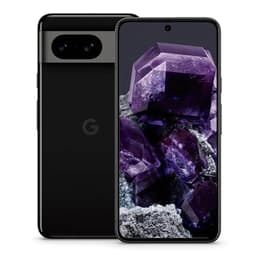
Google Pixel 8
Google Pixel 8
Starting at

Refurbished price:A$463.00

Versus A$1,245.00 new

See options
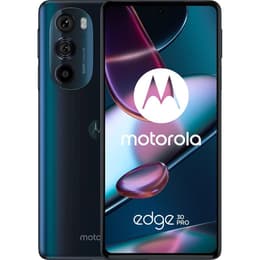
Motorola Edge 30 Pro
Starting at

Refurbished price:A$289.72

Versus A$2,709.00 new

See options

The Google Pixel 8 (released in October 2023) and the Motorola Edge 30 Pro (released in February 2022) are both Android smartphones, but they cater to different user priorities. While the Pixel 8 emphasizes advanced computational photography and long-term software support, the Edge 30 Pro focuses on a high refresh rate display and raw processing power from its earlier release. Both devices run on the Android operating system, offering a familiar user experience with distinct manufacturer-specific enhancements.

Scores

Durability

The practical lifespan of a smartphone is significantly influenced by its release date and the manufacturer's commitment to software updates and repairability.

  • Release Timeline: The Google Pixel 8, launched in October 2023, is a more recent device compared to the Motorola Edge 30 Pro, which was released in February 2022. This difference in launch dates inherently provides the Pixel 8 with a longer potential lifespan in terms of receiving the latest software and security features.
  • Software Support: Google offers an extensive seven years of OS and security updates for the Pixel 8, extending its support until October 2030. In contrast, the Motorola Edge 30 Pro is guaranteed two major Android OS upgrades (up to Android 14) and three years of bi-monthly security updates. This means the Pixel 8 will receive significantly more software longevity.
  • Repairability: The Google Pixel 8 has received repairability scores of 7 out of 10 from PBKreviews and 6 out of 10 from iFixit/Stocklytics, indicating it is moderately repairable with available OEM parts and service manuals. While specific repairability scores for the Motorola Edge 30 Pro are less commonly cited, general user sentiment suggests less emphasis on user-friendly repairs.

Release year

2023

2022

Compatible with latest Update

Yes

Yes

Operating system

Android

Android

Foldable

No

No

Performance

When evaluating performance, both devices offer capable experiences, but they approach processing power and efficiency differently.

  • Processing Capabilities: The Google Pixel 8 features a current-generation processor designed for efficient handling of everyday tasks, demanding applications, and advanced AI features. The Motorola Edge 30 Pro, equipped with a powerful processor from its release year, delivers fast performance for general use and multitasking. Users have noted its speed and smooth operation.
  • Multitasking and Responsiveness: Both phones come with 8GB of RAM, with some configurations of the Edge 30 Pro offering 12GB, which contributes to smooth multitasking and app management. The Pixel 8's software optimization ensures a responsive user experience across various applications. The Edge 30 Pro also provides a fluid experience, with apps remaining open in the background effectively.
  • Battery Behavior: The Pixel 8 has a 4575 mAh battery, generally providing 8-10 hours of screen time with mixed usage, though heavy users might see 6-8 hours. Its Adaptive Battery feature helps optimize power consumption. The Motorola Edge 30 Pro has a 4800 mAh battery. User experiences vary, with some reporting around 4 hours of screen time with 5G and high refresh rates, while others note 7-8 hours of active use. Some users have reported that the Edge 30 Pro's processor can lead to heating issues, which may impact battery life.

Memory (GB)

8 GB

8 GB

Screen quality

The display is a primary interface for any smartphone, and both the Pixel 8 and Edge 30 Pro offer vibrant viewing experiences with distinct characteristics.

  • Display Technology and Clarity: Both devices feature OLED displays, known for deep blacks and vibrant colors. The Pixel 8 has a 6.2-inch display with a 1080x2400 resolution, resulting in approximately 428 pixels per inch (ppi), offering clear visuals. The Motorola Edge 30 Pro has a larger 6.7-inch display with a 1080x2400 resolution, translating to about 393 ppi. While the Pixel 8 offers a slightly higher pixel density, both provide sharp images for typical viewing distances.
  • Brightness and Refresh Rate: The Pixel 8's display can reach a peak brightness of 2000 nits for HDR content and 1400 nits for high brightness mode, making it highly visible outdoors. It also features a 120Hz refresh rate for smooth scrolling and animations, which can dynamically adjust to 60Hz or lower to conserve battery. The Edge 30 Pro boasts an impressive 144Hz refresh rate, providing an exceptionally fluid visual experience, though its maximum brightness is around 658 nits, which is lower than the Pixel 8.
  • Screen Protection: The Google Pixel 8 uses Corning Gorilla Glass Victus for both its front and back, offering enhanced durability. The Motorola Edge 30 Pro features Gorilla Glass 3 on its display.

Resolution

1080 x 2400

1080 x 2400

Screen type

OLED

OLED

Audiovisual

Camera capabilities are a significant consideration for many users, and these two phones offer different strengths in their imaging systems.

  • Rear Camera System: The Google Pixel 8 features a dual-camera setup with a 50MP main sensor (f/1.7 with optical image stabilization) and a 12MP ultrawide sensor (f/2.2 with autofocus and macro capabilities). The Motorola Edge 30 Pro has a triple-camera system, including a 50MP main sensor (f/1.8 with optical image stabilization), a 50MP ultrawide sensor (f/2.2, also capable of macro shots), and a 2MP depth sensor.
  • Photography Performance: The Pixel 8 is recognized for its excellent computational photography, producing well-exposed, detailed photos with accurate colors, even in challenging lighting conditions. Its low-light performance is strong. The Edge 30 Pro's main camera can take good photos with strong color reproduction and dynamic range in good lighting. However, its camera system is frequently cited as a weakness, with users reporting issues like graininess, noise, and a lack of detail, particularly in low light, and a general sentiment that it doesn't match high-end competition.
  • Video and Selfie Cameras: The Pixel 8 supports video recording up to 4K at 60 frames per second (fps) and has a 10.5MP selfie camera. The Edge 30 Pro can record 8K video at 30fps with its main camera and 4K at 60fps (though some reports indicate this is not full 4K resolution). It features a high-megapixel 60MP front-facing camera, but user reviews suggest it can be disappointing, with images prone to blur and grain.

Main camera

50 megapixels

50 megapixels

Front camera

10.5 megapixels

60 megapixels

Miscellaneous

Beyond core specifications, several practical features contribute to the overall user experience and daily usability of these smartphones.

  • Connectivity and Ports: Both devices support 5G connectivity, modern Wi-Fi standards (Pixel 8 with Wi-Fi 6e/7, Edge 30 Pro with Wi-Fi 6e), and Bluetooth (Pixel 8 with 5.3, Edge 30 Pro with 5.2). Both utilize a USB-C port for charging and data transfer. Neither phone includes a traditional 3.5mm headphone jack.
  • Biometric Security: The Google Pixel 8 features an in-display optical fingerprint sensor for secure unlocking. The Motorola Edge 30 Pro integrates its fingerprint sensor into the power button on the side of the device, which is noted for being fast and accurate. Both also offer face recognition.
  • Design and Build Materials: The Pixel 8 has a glass front and back (Gorilla Glass Victus) with an aluminum frame, and it carries an IP68 rating for dust and water resistance. It weighs 187g. The Edge 30 Pro features a glass back (Gorilla Glass 5) and a plastic frame, offering splash resistance but not full waterproofing. It weighs 196g. The Edge 30 Pro also supports Motorola's 'Ready For' mode, which allows for a desktop-like experience when connected to an external display.

Weight

187 oz

196 oz

Screen size (in)

6.2

6,7

Network

5G

5G

SIM card

Physical SIM + eSIM

Dual Physical SIM

Carrier compatibility

Unlocked

Unlocked

The Google Pixel 8 and Motorola Edge 30 Pro present distinct propositions for smartphone users, each with its own set of advantages and trade-offs based on user feedback and specifications.

Common praise for the Google Pixel 8 centers on its exceptional camera performance, particularly its computational photography capabilities and strong low-light results. Users also highly value Google's commitment to seven years of software updates, ensuring long-term security and access to new features. Its vibrant OLED display with high peak brightness is also a frequently noted positive. Some criticisms include battery life that is considered good but not outstanding, with some users reporting faster drain on mobile data.

The Motorola Edge 30 Pro is often praised for its fast performance, smooth 144Hz OLED display, and near-stock Android experience. Its 'Ready For' feature, offering a PC-like desktop mode, is also a unique highlight. However, the device faces frequent criticisms regarding its camera quality, which many users find to be a significant weakness, especially in low light. Battery life is also a mixed bag, with some users experiencing overheating and shorter endurance. The shorter software update policy compared to the Pixel 8 is another common concern.

Users prioritizing an advanced and consistent camera experience, coupled with extensive software support for long-term use, may find the Google Pixel 8 well-suited to their needs. Its compact size and robust build quality also appeal to those seeking a durable and manageable device. Conversely, individuals who value a very high refresh rate display for an exceptionally smooth visual experience, strong raw processing power for general tasks, and features like a desktop mode might lean towards the Motorola Edge 30 Pro. It could be a suitable option for users who are less focused on photographic excellence and prioritize a fluid interface. Both devices, when considered as quality-assured refurbished options, offer an eco-friendly alternative for consumers looking to make informed and sustainable choices.
See all articles

Our recent comparisons