
Google Pixel 8 vs Motorola Edge 30 Fusion

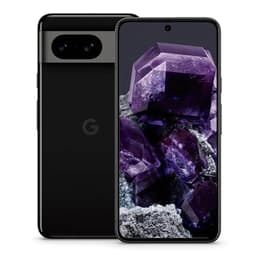
Google Pixel 8
Google Pixel 8
Starting at

Refurbished price:A$465.00

Versus A$1,245.00 new

See options
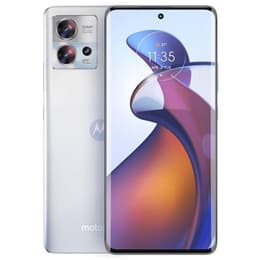
Motorola Edge 30 Fusion
Starting at

Refurbished price:A$257.46

Versus A$1,352.00 new

See options

The Google Pixel 8 (released October 2023) and the Motorola Edge 30 Fusion (released September 2022) are both Android smartphones that offer distinct experiences for users. While the Pixel 8 emphasizes advanced computational photography and long-term software support, the Edge 30 Fusion focuses on a fluid display and rapid charging capabilities. Both devices run on the Android operating system, but they differ in their approach to software updates and user interface.

Scores

Durability

When considering the longevity of these devices, their release timelines and software support policies are key differentiators.

  • Release Timeline: The Google Pixel 8 is a more recent device, launched in October 2023, making it approximately a year newer than the Motorola Edge 30 Fusion, which debuted in September 2022. This difference in age directly impacts their remaining support cycles.
  • OS Support Duration: The Pixel 8 offers an extensive software commitment, with Google promising seven years of operating system and security updates, extending its support until at least October 2030. In contrast, the Motorola Edge 30 Fusion was scheduled to receive two major Android OS updates and three years of security updates from its initial release with Android 12, meaning its official OS updates likely concluded with Android 14, and security updates are expected to end around September 2025.
  • Repairability: The Google Pixel 8 has been noted to have a moderate repairability score, with some components being relatively accessible for replacement, though certain repairs might be challenging for inexperienced users. The Motorola Edge 30 Fusion also has available repair services for common issues like screen and battery replacement, indicating a practical level of repairability, though a specific repairability score is not widely published.

Release year

2023

2022

Compatible with latest Update

Yes

Yes

Operating system

Android

Android

Foldable

No

No

Performance

The performance of a smartphone is crucial for daily tasks, from browsing to demanding applications and gaming.

  • System Responsiveness: The Google Pixel 8, powered by its custom-designed processor, is optimized for smooth navigation, quick app launches, and efficient handling of AI-driven features. Users generally report a fluid and responsive experience for everyday use and multitasking. The Motorola Edge 30 Fusion, featuring a high-performance processor from a previous generation, also delivers a fast and smooth experience for general usage and multitasking, capable of handling demanding applications effectively.
  • Multitasking and Storage: Both devices offer 8GB of RAM in their base configurations, providing ample capacity for running multiple applications simultaneously without significant slowdowns. The Pixel 8 is available with 128GB or 256GB of internal storage, while the Edge 30 Fusion offers more varied options, including 128GB, 256GB, and 512GB, catering to users with larger storage needs.
  • Battery Behavior: The Pixel 8 includes a 4575mAh battery, which typically provides a full day of use for moderate users, though heavy usage or wireless charging can sometimes lead to the device becoming warm. The Edge 30 Fusion has a 4400mAh battery, which also tends to last a full day with light to moderate use. It supports rapid wired charging, allowing for quick power top-ups.

Memory (GB)

8 GB

8 GB

Screen quality

The display is a primary interface for any smartphone, and both devices offer high-quality viewing experiences with distinct characteristics.

  • Display Technology and Clarity: The Google Pixel 8 features a 6.2-inch OLED display, known for its deep blacks and vibrant colors, offering a resolution of 1080x2400 pixels for clear and sharp visuals. The Motorola Edge 30 Fusion sports a slightly larger 6.55-inch P-OLED display, also providing excellent color reproduction and contrast with the same 1080x2400 pixel resolution.
  • Refresh Rate and Smoothness: The Pixel 8 offers a dynamic refresh rate that can go up to 120Hz, contributing to smooth scrolling and a responsive feel. The Edge 30 Fusion surpasses this with a 144Hz refresh rate, which can result in an even more fluid visual experience, particularly noticeable in fast-paced content or gaming.
  • Brightness Levels: For outdoor visibility, the Pixel 8 boasts a peak brightness of up to 2000 nits, ensuring content remains legible even in bright sunlight. The Edge 30 Fusion offers a peak brightness of around 1100 nits, which is also sufficient for most outdoor conditions.

Resolution

1080 x 2400

1080 x 2400

Screen type

OLED

P-OLED

Audiovisual

Both smartphones aim to deliver capable photography and videography, though they approach imaging with different strengths.

  • Camera System Capabilities: The Google Pixel 8 features a dual-camera setup with a 50-megapixel main sensor with optical image stabilization (OIS) and a 12-megapixel ultrawide camera. The Motorola Edge 30 Fusion also has a 50-megapixel main sensor with OIS, complemented by a 13-megapixel ultrawide camera that doubles as a macro lens, and a 2-megapixel depth sensor.
  • Photography Performance: The Pixel 8 is recognized for its computational photography, producing consistently good photos in various conditions, with strong detail and accurate colors in daylight. Its low-light performance is generally decent, and it includes advanced AI-powered editing features. The Edge 30 Fusion captures good daylight photos with plenty of detail and natural colors. Its ultrawide camera is also capable, and it offers a dedicated macro mode. Low-light performance is considered acceptable but may not match the Pixel's computational strengths.
  • Video Recording and Front Camera: Both devices are capable of recording 4K video. The Pixel 8's video quality is good, with solid stabilization, and it features a 10.5-megapixel front camera with fixed focus. The Edge 30 Fusion can record up to 8K video and includes a 32-megapixel front camera with autofocus, which is beneficial for sharp selfies and video calls.

Main camera

50 megapixels

50 megapixels

Front camera

10.5 megapixels

32 megapixels

Miscellaneous

Beyond the core features, several practical elements contribute to the overall user experience of these devices.

  • Connectivity Options: Both the Google Pixel 8 and Motorola Edge 30 Fusion support 5G connectivity for fast mobile data speeds and include Wi-Fi 6E for advanced wireless networking. They also feature USB-C ports for charging and data transfer. The Edge 30 Fusion also includes Bluetooth 5.2 and NFC for wireless accessories and contactless payments.
  • Sensors and Biometrics: The Pixel 8 incorporates an in-display fingerprint sensor and advanced face recognition for secure unlocking. The Edge 30 Fusion also features an in-display optical fingerprint sensor and face unlock capabilities.
  • Build Materials and Durability: The Pixel 8 has an IP68 rating for dust and water resistance, indicating strong protection against environmental elements, and features a glass body with a glossy back. The Edge 30 Fusion has an IP52 rating, offering basic splash and dust resistance, and is constructed with Gorilla Glass 5 on the front and back, framed by aluminum.

Weight

187 oz

168 oz

Screen size (in)

6.2

6,55

Network

5G

5G

SIM card

Physical SIM + eSIM

Dual Physical SIM

Carrier compatibility

Unlocked

Unlocked

The Google Pixel 8 and Motorola Edge 30 Fusion cater to slightly different user priorities, reflecting their respective design philosophies. Users often praise the Pixel 8 for its exceptional camera capabilities, particularly its AI-enhanced features and consistent image quality, even in challenging lighting. Its extended software support is also a significant advantage, offering peace of mind for long-term use. Some users, however, have noted that while its custom processor is optimized for AI, it might not always deliver the raw gaming performance of some competitors, and the glossy back can attract fingerprints.

The Motorola Edge 30 Fusion is frequently lauded for its striking design, vibrant 144Hz P-OLED display, and rapid wired charging. Its performance is generally considered strong for daily tasks and even demanding applications, though some reviews mention potential thermal throttling during prolonged intensive gaming. Criticisms sometimes point to its more limited software update policy compared to the Pixel and its lower IP rating.

Users prioritizing a cutting-edge camera experience, long-term software longevity, and robust water and dust protection may find the Google Pixel 8 well-suited to their needs. Conversely, those who value a very fluid display, fast charging, and a sleek design, and are comfortable with a shorter software support window, might lean towards the Motorola Edge 30 Fusion. Both devices offer compelling features, and considering a quality-assured refurbished option for either model can be a sustainable choice for consumers.


See all articles

Our recent comparisons