
Google Pixel 7a vs iPhone 14 Plus

Google Pixel 7a
Google Pixel 7a
Starting at

Refurbished price:A$336.00

Versus A$749.00 new

See options
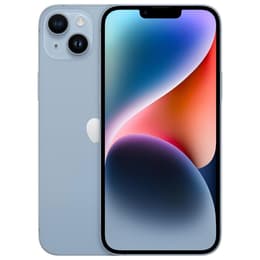
iPhone 14 Plus
iPhone 14 Plus
Starting at

Refurbished price:A$486.00

Versus A$1,249.00 new

See options

Ratings

The Google Pixel 7A, released in May 2023, and the iPhone 14 Plus, launched in October 2022, represent distinct approaches to the smartphone experience. While the Pixel 7A offers Google's vision of an accessible Android device with advanced computational photography, the iPhone 14 Plus provides a larger display and extended battery life within Apple's iOS ecosystem. These devices cater to users with different preferences for operating systems and form factors.

Scores

Durability

The longevity of a smartphone is influenced by its build, software support, and repairability. Both devices offer robust designs, but their software update policies and material choices present different long-term prospects.

  • Software Support: The Google Pixel 7A is expected to receive five years of OS and security updates from its release date, extending through May 2028. The iPhone 14 Plus, typical for Apple devices, generally receives major iOS updates for five to six years, with security updates often continuing beyond that, suggesting support into late 2027 or 2028.
  • Physical Durability: The Pixel 7A features a plastic back and Corning Gorilla Glass 3 on the front, with an IP67 rating for dust and water resistance, meaning it can withstand immersion in up to 1 meter of water for 30 minutes. The iPhone 14 Plus incorporates a Ceramic Shield front cover and a glass back with an aluminum frame, boasting an IP68 rating, allowing for submersion in up to 6 meters of water for 30 minutes.
  • Repairability: While specific repairability scores can vary, both devices are designed with modern smartphone construction, which often requires specialized tools and expertise for repairs. The availability of parts and repair services can influence the practical lifespan of either device.

Performance

Performance in daily use is a key differentiator, with both devices offering capable internal components designed for smooth operation, though they approach power management and processing slightly differently.

  • Processing Power: The Pixel 7A is equipped with a Google Tensor G2 chip and 8GB of RAM, enabling efficient handling of demanding applications, multitasking, and AI-driven features like advanced image processing. The iPhone 14 Plus utilizes an A15 Bionic chip with a 5-core GPU and 6GB of RAM, providing strong performance for gaming, video editing, and general system responsiveness.
  • Battery Performance: The Pixel 7A has a 4385 mAh battery, which users report can provide a full day of moderate use, though heavy usage, especially with the 90Hz display, may require more frequent charging. The iPhone 14 Plus, with its 4325 mAh battery, is noted for its extended battery life, often lasting through a full day and beyond for many users, even with significant screen-on time.
  • Storage Options: The Pixel 7A comes with 128GB of internal storage. The iPhone 14 Plus offers more flexibility with storage options, available in 128GB, 256GB, and 512GB configurations.

Memory (GB)

8 GB

6 GB

Screen quality

The visual experience on a smartphone is largely defined by its display, and both the Pixel 7A and iPhone 14 Plus offer vibrant screens with distinct characteristics.

  • Display Technology and Size: The Pixel 7A features a 6.1-inch OLED display with a resolution of 1080 x 2400 pixels, offering deep blacks and rich colors in a more compact form factor. The iPhone 14 Plus boasts a larger 6.7-inch Super Retina XDR OLED display with a resolution of 2778 x 1284 pixels, providing an expansive viewing area.
  • Refresh Rate and Smoothness: The Pixel 7A supports a 90Hz refresh rate, contributing to smoother scrolling and a more fluid user interface, though it may drop to 60Hz in bright sunlight to manage power and thermals. The iPhone 14 Plus maintains a standard 60Hz refresh rate, which is consistent for all content.
  • Brightness and Clarity: Both devices offer excellent clarity. The Pixel 7A's OLED panel provides good brightness for indoor and outdoor use. The iPhone 14 Plus's Super Retina XDR display offers typical brightness of 800 nits and a peak HDR brightness of 1200 nits, ensuring good visibility even in bright conditions.

Audiovisual

Both smartphones are designed to capture high-quality images and videos, but they employ different camera hardware and software processing to achieve their results.

  • Rear Camera System: The Pixel 7A features a dual-camera setup with a 64 MP main sensor with optical image stabilization (OIS) and a 13 MP ultrawide lens. The iPhone 14 Plus also has a dual-camera system, consisting of a 12 MP main camera with sensor-shift OIS and a 12 MP ultrawide camera.
  • Photography Performance: The Pixel 7A leverages Google's computational photography for strong low-light performance, detailed everyday shots, and features like Magic Eraser. The iPhone 14 Plus offers improved low-light performance compared to its predecessors, with a focus on natural color reproduction and consistent image quality across its lenses.
  • Video Recording and Audio: Both devices are capable of recording 4K video at 60 frames per second. The iPhone 14 Plus includes features like Cinematic mode for depth-of-field effects in video. Both offer good microphone quality for calls and video recording, and stereo speakers for media consumption.

Miscellaneous

Beyond core features, several practical elements contribute to the overall user experience, from connectivity to physical design.

  • Connectivity and Ports: Both the Pixel 7A and iPhone 14 Plus support 5G connectivity and Bluetooth 5.3. The Pixel 7A includes Wi-Fi 6E and a USB-C 3.2 port. The iPhone 14 Plus uses Wi-Fi 6 and retains the Lightning port.
  • Biometrics and Sensors: The Pixel 7A offers both an under-display fingerprint sensor and face unlock. The iPhone 14 Plus relies solely on Face ID for secure authentication. Both devices include essential sensors like accelerometers, gyroscopes, and proximity sensors.
  • Design and Handling: The Pixel 7A measures 152 x 72.9 x 9 mm and weighs 193.5 grams, offering a relatively compact and manageable feel. The iPhone 14 Plus is larger at 160.8 x 78.1 x 7.8 mm and weighs 203 grams, providing a more expansive screen experience. The Pixel 7A has an aluminum frame and plastic back, while the iPhone 14 Plus features an aluminum frame with a glass back.

Screen size (in)

6.1

6,7

Network

5G

5G

SIM card

Physical SIM + eSIM

Physical SIM + eSIM

Carrier compatibility

Unlocked

Unlocked

User feedback for the Google Pixel 7A often praises its camera capabilities, particularly its computational photography features, and its clean Android experience. Some users have noted concerns regarding battery life under heavy use and potential thermal management in bright conditions. The iPhone 14 Plus is frequently lauded for its exceptional battery life and large, vibrant display, making it a strong choice for media consumption. Common criticisms sometimes point to the 60Hz refresh rate as a potential drawback compared to some Android counterparts.

Users prioritizing a compact device with advanced camera features and a pure Android experience may find the Google Pixel 7A well-suited to their needs. Its strong software support and AI-driven functionalities make it appealing for those who value smart features and photography. Conversely, users who prioritize a large display, extended battery endurance, and the established iOS ecosystem will likely lean towards the iPhone 14 Plus. Its consistent performance and robust build quality offer a reliable experience for daily tasks and entertainment.

For those considering either device, exploring quality-assured refurbished options can provide a sustainable choice, offering access to these technologies while supporting environmental responsibility.

See all articles

Our recent comparisons