
Google Pixel 7 vs Motorola Razr 40

Google Pixel 7
Google Pixel 7
Starting at

Refurbished price:A$348.00

Versus A$879.00 new

See options
Motorola Razr 40
Motorola Razr 40
See options

Ratings

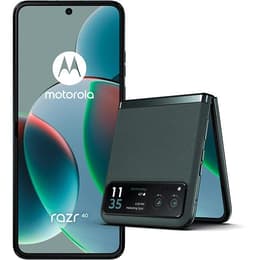
The Google Pixel 7, released in October 2022, is a traditional slab-style smartphone known for its camera capabilities and software experience. In contrast, the Motorola Razr 40, launched in June 2023, offers a distinct foldable design, allowing it to compact into a smaller form factor when not in use. Both devices operate on the Android platform, but they cater to different user preferences through their unique designs and feature sets.

Scores

Durability

When considering the long-term usability of a device, factors like software support and physical resilience are key. The Pixel 7 and Razr 40 offer different approaches to longevity.

  • Software Support: The Google Pixel 7 is set to receive five years of OS and security updates from its release date, extending its support until 2027, likely including Android 18. The Motorola Razr 40, released later, is promised three major Android OS upgrades and four years of bi-monthly security updates, with its last OS update expected to be Android 16.
  • Physical Durability: The Pixel 7 features Gorilla Glass Victus on both its front and back, along with an aluminum frame and an IP68 rating for dust and water resistance, indicating a high level of protection against environmental elements. The Razr 40, with its foldable design, uses a plastic front (when unfolded), plastic back, an aluminum frame, and a stainless steel hinge. It has a water-repellent coating and an IP52 rating, offering splash resistance but less comprehensive protection than the Pixel 7.
  • Repairability: The Google Pixel 7 generally has a moderate repairability score, with screen replacements being relatively straightforward, though battery replacement can be more involved due to adhesive and a soldered charging port. The Motorola Razr 40, due to its complex foldable mechanism, presents greater challenges for repair, often involving strong adhesives and intricate component access, resulting in a lower repairability assessment.

Release year

2022

2023

Compatible with latest Update

Yes

Yes

Foldable

No

Yes

Performance

The performance of both smartphones is influenced by their internal components, affecting how smoothly they handle daily tasks and demanding applications.

  • Processing Power: The Google Pixel 7 is equipped with a processor designed by Google, which provides efficient performance for everyday use, including app loading, multitasking, and image processing. The Motorola Razr 40 utilizes a current-generation processor that capably handles typical smartphone operations and offers a responsive experience for most users.
  • Memory and Storage: Both devices offer 8GB of RAM, with the Razr 40 also having a 12GB RAM option, which can contribute to smoother multitasking with many applications open simultaneously. Storage options for both include 128GB and 256GB, providing ample space for apps, photos, and media.
  • Battery Behavior: The Pixel 7 has a 4355 mAh battery, designed to offer a full day of use for many users. The Razr 40 comes with a 4200 mAh battery, which, combined with its foldable design and potentially smaller external display usage, can also provide sufficient power for daily activities.

Memory (GB)

8 GB

8 GB

Screen quality

The visual experience on these devices differs significantly, primarily due to the Razr 40's unique foldable form factor and dual-screen setup.

  • Main Display Technology: The Google Pixel 7 features a 6.3-inch AMOLED display, known for its deep blacks and vibrant colors. The Motorola Razr 40 boasts a larger 6.9-inch Foldable LTPO AMOLED main display, offering similar color richness and contrast, with the added benefit of its flexible nature.
  • Resolution and Refresh Rate: Both phones offer Full HD+ resolutions, providing clear and sharp visuals for typical viewing distances. The Pixel 7 has a 90Hz refresh rate for smooth scrolling and animations. The Razr 40 surpasses this with a 144Hz refresh rate on its main display, contributing to an even more fluid visual experience.
  • Brightness and External Display: Both devices achieve high peak brightness levels, making them suitable for outdoor visibility. A key differentiator for the Razr 40 is its 1.5-inch external AMOLED display, which allows users to view notifications, time, and control certain functions without unfolding the phone.

Resolution

1080 x 2400

1080 x 2640

Screen type

AMOLED

Foldable LTPO AMOLED

Audiovisual

Both smartphones offer capable camera systems, but they prioritize different aspects of photography and videography.

  • Rear Camera Systems: The Google Pixel 7 features a dual-camera setup with a 50MP wide lens and a 12MP ultrawide lens, known for its computational photography that enhances image quality, especially in various lighting conditions. The Motorola Razr 40 also has a dual-camera system, comprising a 64MP wide lens with optical image stabilization (OIS) and a 13MP ultrawide lens, providing detailed images.
  • Low-Light and Everyday Photography: The Pixel 7's advanced image processing often results in well-exposed and detailed photos in challenging lighting. The Razr 40's larger main sensor and OIS contribute to good performance in everyday scenarios and can capture clear images in lower light.
  • Video Recording and Front Camera: Both devices are capable of recording high-resolution video. For selfies and video calls, the Pixel 7 includes a 10.8MP ultrawide front camera. The Razr 40 offers a higher resolution 32MP front camera, which can also be utilized for creative shots using the folded form factor.

Main camera

50 megapixels

64 megapixels

Front camera

10.8 megapixels

32 megapixels

Miscellaneous

Beyond the core features, several practical elements contribute to the overall user experience and daily convenience of these devices.

  • Connectivity and Ports: Both smartphones support 5G connectivity for fast mobile data. The Pixel 7 features Wi-Fi 6 (ax) and Bluetooth 5.2, along with a USB-C 3.2 port. The Razr 40 offers Wi-Fi 6E (ax) and Bluetooth 5.3, providing slightly newer wireless standards, but its USB-C port is 2.0.
  • Biometric Security: The Google Pixel 7 incorporates an under-display optical fingerprint scanner and supports face recognition for unlocking. The Motorola Razr 40 features a side-mounted fingerprint sensor and also includes face unlock capabilities.
  • Design and Handling: The Pixel 7 is a traditional smartphone with dimensions of 155.6 x 73.2 x 8.7 mm and a weight of 197g. The Razr 40's foldable design means it is 170.8 x 74 x 7.4 mm when unfolded and significantly more compact at 88.2 x 74 x 15.8 mm when folded, weighing 188.6g. This makes the Razr 40 more pocketable when closed, while the Pixel 7 offers a consistent, rigid form factor.

Weight

212 oz

189 oz

Screen size (in)

6.3

6,9

SIM card

Physical SIM + eSIM

Dual Physical SIM + eSIM

Carrier compatibility

Unlocked

Unlocked

The Google Pixel 7 and Motorola Razr 40 cater to different user priorities, each excelling in distinct areas. User feedback often praises the Pixel 7 for its consistent camera performance and streamlined software experience, with some noting its solid build quality. Criticisms sometimes point to its 90Hz display not being the highest refresh rate available compared to some competitors. The Razr 40, on the other hand, is frequently lauded for its innovative foldable design and the utility of its external display, offering a fresh take on smartphone interaction. Some users have expressed concerns regarding the long-term durability of foldable screens and the repairability challenges associated with such designs.

Users prioritizing a reliable, high-performing camera system and a consistent, long-supported software experience in a traditional smartphone form factor may find the Google Pixel 7 well-suited to their needs. Its robust update policy ensures extended access to the latest Android features and security. Conversely, users who value a compact, stylish device with a unique foldable design and an interactive external display will likely lean towards the Motorola Razr 40. Its distinct form factor offers a different kind of portability and user engagement.

For those considering either device, exploring quality-assured refurbished options can provide an eco-friendly alternative, extending the lifespan of these electronics and offering a sustainable choice.

See all articles

Our recent comparisons