
Google Pixel 7 vs iPhone 14 Pro Max

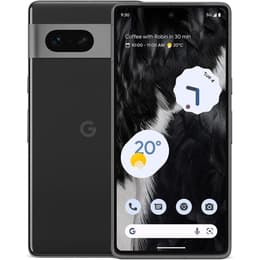
Google Pixel 7
Google Pixel 7
Starting at

Refurbished price:A$348.00

Versus A$879.00 new

See options
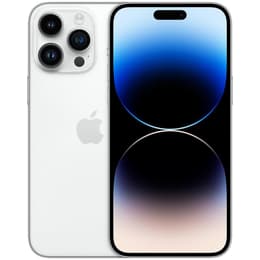
iPhone 14 Pro Max
iPhone 14 Pro Max
Starting at

Refurbished price:A$726.00

Versus A$1,899.00 new

See options

Ratings

The Google Pixel 7, released in October 2022, and the iPhone 14 Pro Max, launched in September 2022, represent distinct approaches to high-end smartphones from their respective manufacturers. While both devices offer advanced capabilities, they differ significantly in their operating systems, display technologies, and camera philosophies. The Pixel 7 operates on Android, emphasizing Google's software innovations, whereas the iPhone 14 Pro Max runs on iOS, focusing on a premium hardware and software integration.

Scores

Durability

When considering the long-term usability of these devices, several factors contribute to their expected lifespan, including software support and physical resilience.

  • Software Longevity: The Google Pixel 7 is expected to receive three major Android OS updates and five years of security patches from its release date. The iPhone 14 Pro Max, running iOS, typically receives software updates for a longer period, often five to six years or more, extending its functional software life.
  • Physical Durability: The Pixel 7 features Corning Gorilla Glass Victus on both its front and back, along with an IP68 rating for dust and water resistance. The iPhone 14 Pro Max boasts a Ceramic Shield front cover, a stainless steel frame, and a glass back, also carrying an IP68 rating for water and dust resistance, allowing submersion up to 6 meters for 30 minutes.
  • Repairability: The Pixel 7 has a repairability score of 6 out of 10, with some components like the battery being difficult to remove and the USB-C port soldered to the main board. While specific repairability scores for the iPhone 14 Pro Max were not readily available, iPhones are generally known for complex repairs due to their integrated design.

Release year

2022

2022

Compatible with latest Update

Yes

Yes

Foldable

No

No

Performance

The performance of a smartphone is crucial for daily tasks, from app usage to demanding multimedia. Both devices offer robust performance, though they achieve it through different hardware architectures.

  • Processing Power: The Google Pixel 7 is powered by Google's Tensor G2 chip, designed to optimize AI and machine learning tasks, contributing to smooth app loading and efficient multitasking. The iPhone 14 Pro Max utilizes the A16 Bionic chip, which provides strong performance for intensive applications, gaming, and overall system responsiveness.
  • Memory and Storage: The Pixel 7 comes with 8GB of RAM and offers storage options of 128GB or 256GB. The iPhone 14 Pro Max includes 6GB of RAM and provides a wider range of storage configurations, including 128GB, 256GB, 512GB, and 1TB.
  • Battery Behavior: The Pixel 7 features a 4355 mAh battery, with user experiences varying; some report it lasting a full day with moderate use, while heavy usage can lead to more frequent charging and potential heating. The iPhone 14 Pro Max, with a 4323 mAh battery, is noted for its extended battery life, often lasting through a full day of heavy use, though the Always-On display can impact this.

Memory (GB)

8 GB

6 GB

Screen quality

The visual experience is a primary interaction point for users, and both phones offer high-quality displays with distinct characteristics.

  • Display Technology and Size: The Google Pixel 7 features a 6.3-inch OLED display with a Full HD+ resolution of 2400x1080 pixels, resulting in a pixel density of 416 ppi. The iPhone 14 Pro Max sports a larger 6.7-inch Super Retina XDR OLED display with a higher resolution of 2796x1290 pixels and a pixel density of 460 ppi.
  • Brightness and Refresh Rate: The Pixel 7 offers a 90Hz refresh rate for smoother scrolling and can reach a peak brightness of up to 1400 nits, with 1000 nits sustained for HDR content. The iPhone 14 Pro Max features ProMotion technology, providing an adaptive refresh rate up to 120Hz for fluid visuals and can scale down to 1Hz for power efficiency. It achieves a typical brightness of 1000 nits, peaking at 1600 nits for HDR content and up to 2000 nits for outdoor visibility.
  • Special Features: The iPhone 14 Pro Max introduces the Dynamic Island, an interactive area around the front camera cutout, and an Always-On display feature. Both displays are protected by durable glass, with the Pixel 7 using Gorilla Glass Victus and the iPhone 14 Pro Max featuring Ceramic Shield.

Resolution

1080 x 2400

1290 x 2796

Screen type

AMOLED

LTPO Super Retina XDR OLED

Audiovisual

Both smartphones are recognized for their advanced camera systems, employing different strategies to capture high-quality photos and videos.

  • Rear Camera Systems: The Google Pixel 7 is equipped with a dual-camera setup, featuring a 50MP wide-angle main lens with optical image stabilization and a 12MP ultrawide lens with a 114-degree field of view. The iPhone 14 Pro Max features a triple-camera system, including a 48MP main sensor with second-generation sensor-shift optical image stabilization, a 12MP ultrawide lens with a 120-degree field of view, and a 12MP 3x telephoto lens with optical image stabilization.
  • Photography Performance: The Pixel 7 is highly praised for its computational photography, delivering excellent results in various conditions, particularly in low light, and offering good color reproduction. The iPhone 14 Pro Max also excels in image quality, with notable improvements in medium and low-light scenarios, and offers the ability to capture 48MP ProRAW images for greater editing flexibility.
  • Video Capabilities and Audio: Both devices support video recording up to 4K at 60 frames per second, with good stabilization. The iPhone 14 Pro Max includes Cinematic mode for depth-of-field effects and ProRes video recording. Both phones offer stereo speakers for media consumption.

Main camera

50 megapixels

48 megapixels

Front camera

10.8 megapixels

12 megapixels

Miscellaneous

Beyond core features, several practical elements contribute to the overall user experience and daily functionality of these smartphones.

  • Connectivity and Ports: The Google Pixel 7 supports 5G, Wi-Fi 6E, and Bluetooth 5.2, utilizing a USB-C port for charging and data transfer. The iPhone 14 Pro Max also offers 5G connectivity, Wi-Fi 6, and Bluetooth 5.3, but uses Apple's proprietary Lightning port.
  • Biometric Security: The Pixel 7 incorporates an in-display fingerprint sensor, though some users have reported inconsistencies with its reliability. It also features face unlock. The iPhone 14 Pro Max relies solely on Face ID for biometric authentication.
  • Design and Handling: The Pixel 7 weighs 197 grams and measures 155.6 x 73.2 x 8.7 mm, offering a relatively compact form factor. The iPhone 14 Pro Max is a larger and heavier device, weighing 240 grams with dimensions of 160.7 x 77.6 x 7.85 mm, featuring a stainless steel frame.

Weight

212 oz

120 oz

Screen size (in)

6.3

6.7

SIM card

Physical SIM + eSIM

Physical SIM + eSIM

Carrier compatibility

Unlocked

Unlocked

User feedback for the Google Pixel 7 often highlights its exceptional camera performance, particularly its computational photography capabilities and low-light imaging, as a major strength. Many appreciate its clean Android experience and vibrant display. However, common criticisms include inconsistent battery life for heavy users, occasional heating, and concerns regarding the reliability of its in-display fingerprint sensor.

The iPhone 14 Pro Max is frequently praised for its outstanding battery life, large and bright Super Retina XDR display, and powerful performance that handles demanding tasks with ease. Its versatile camera system, including the new 48MP main sensor and telephoto lens, receives high marks for image quality. Some users note its considerable weight and large size as potential drawbacks, and the Always-On display has been mentioned as a factor impacting battery drain for some.

For users prioritizing advanced camera software, a pure Android experience, and a slightly more compact device, the Google Pixel 7 may be a suitable choice. Conversely, individuals seeking maximum battery endurance, a larger and brighter display, and a comprehensive camera system within the iOS ecosystem will likely find the iPhone 14 Pro Max better suited to their needs. Both devices offer compelling features, and considering quality-assured refurbished options can provide an eco-friendly alternative for acquiring either model.

See all articles

Our recent comparisons