
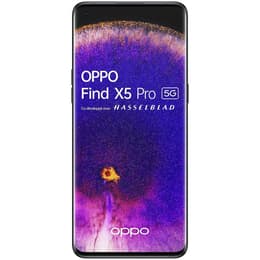

Google Pixel 7 Pro vs Oppo Find X5 Pro 5G

Google Pixel 7 Pro
Google Pixel 7 Pro
Starting at

Refurbished price:A$520.00

Versus A$1,219.00 new

See options
Oppo Find X5 Pro 5G
Oppo Find X5 Pro 5G
Starting at

Refurbished price:A$461.00

Versus A$2,708.00 new

See options

The Google Pixel 7 Pro (released October 2022) and the Oppo Find X5 Pro 5G (released March 2022) are both high-end smartphones that offer distinct user experiences. While both devices run on the Android operating system, they differentiate themselves through their camera philosophies, software approaches, and hardware optimizations. The Pixel 7 Pro emphasizes computational photography and a streamlined Android interface, whereas the Oppo Find X5 Pro 5G focuses on advanced charging technology and a customized Android skin.

Scores

Durability

When considering the long-term usability of these devices, their release timelines and software support policies are key factors.

  • Software Support: The Google Pixel 7 Pro is expected to receive five years of OS and security updates, extending its support until at least October 2027. The Oppo Find X5 Pro 5G, launched earlier, typically offers four years of software support. This means the Pixel 7 Pro generally provides a longer period of guaranteed software updates.
  • Build and Protection: Both devices feature an IP68 rating for dust and water resistance, indicating a similar level of protection against environmental elements. The Pixel 7 Pro uses Corning Gorilla Glass Victus for screen protection, a common choice for durability. The Oppo Find X5 Pro 5G also incorporates Gorilla Glass for its display and offers variants with a ceramic or eco-leather back, contributing to its overall build quality.
  • Practical Lifespan: Users on forums have noted that the Pixel 7 Pro's build quality is solid, though some mention the glass-to-metal transition could be smoother. The Oppo Find X5 Pro 5G's ceramic body has been praised for its unique look and feel, and its battery health engine is designed to maintain over 80% capacity after 1600 charging cycles, potentially extending its effective battery lifespan.

Release year

2022

2022

Foldable

No

No

Performance

Both smartphones are equipped with powerful components designed to handle demanding applications and multitasking efficiently.

  • Processing Power: The Google Pixel 7 Pro is powered by Google's Tensor G2 processor, which is optimized for AI and machine learning tasks, contributing to features like advanced computational photography and voice recognition. The Oppo Find X5 Pro 5G utilizes a current-generation Snapdragon processor, known for its strong general performance in gaming and heavy applications.
  • Multitasking and Responsiveness: Both devices typically come with 12GB of RAM, allowing for smooth transitions between multiple open applications and efficient background processing. User experiences with the Pixel 7 Pro indicate a very responsive system, particularly for AI-driven tasks. The Oppo Find X5 Pro 5G also delivers high-end performance, with users reporting smooth operation even with intensive use.
  • Battery Behavior: The Pixel 7 Pro houses a 5000 mAh battery, with some users reporting it can last a full day of heavy use, though intensive camera usage or high brightness in sunlight can lead to faster drain. The Oppo Find X5 Pro 5G also features a 5000 mAh battery, with users generally achieving a full day of use, and some extending it to 1.5 days with moderate usage.

Memory (GB)

12 GB

12 GB

Screen quality

The display on both the Pixel 7 Pro and the Oppo Find X5 Pro 5G offers a high-quality visual experience, though with some differences in technology and characteristics.

  • Display Technology and Resolution: Both phones feature large 6.7-inch LTPO AMOLED or OLED displays, providing deep blacks, vibrant colors, and excellent contrast. They both offer a sharp QHD+ resolution (1440x3120 for Pixel 7 Pro, 1440x3216 for Oppo Find X5 Pro 5G), resulting in crisp text and detailed images.
  • Refresh Rate and Brightness: Both displays support a 120Hz refresh rate, contributing to smoother scrolling and more fluid animations. The Pixel 7 Pro can reach a peak brightness of 1500 nits, offering good visibility in bright outdoor conditions. The Oppo Find X5 Pro 5G has a peak brightness of 1300 nits, also providing strong outdoor visibility.
  • Viewing Experience: Users have described the Pixel 7 Pro's screen as large, bright, and great-looking. The Oppo Find X5 Pro 5G's display is noted for its vibrant colors and dynamic range, making video content particularly immersive.

Resolution

1440 x 3120

1440 x3216

Audiovisual

Both devices offer advanced camera systems, each with its own strengths in photography and videography.

  • Rear Camera Systems: The Google Pixel 7 Pro features a triple camera setup with a 50MP main sensor, a 48MP telephoto lens offering 5x optical zoom, and a 12MP ultrawide camera with autofocus and macro capabilities. The Oppo Find X5 Pro 5G also has a triple camera system, including a 50MP wide-angle, a 50MP ultrawide-angle, and a 13MP telephoto lens with 2x optical zoom.
  • Photography Performance: The Pixel 7 Pro is highly regarded for its computational photography, delivering excellent detail, dynamic range, and low-light performance, with features like Super Res Zoom up to 30x. The Oppo Find X5 Pro 5G, with its Hasselblad partnership, aims for rich and accurate colors, performing well in various lighting conditions, including low light.
  • Video and Additional Features: The Pixel 7 Pro captures good video quality up to 4K at 60 frames per second, with various new video features. The Oppo Find X5 Pro 5G also supports 4K video recording at 60fps and includes a 4K Night Video mode, enhanced by its MariSilicon X imaging NPU.

Miscellaneous

Beyond core specifications, several practical elements contribute to the overall user experience of these smartphones.

  • Connectivity and Ports: Both the Pixel 7 Pro and the Oppo Find X5 Pro 5G support 5G connectivity, Wi-Fi 6, and Bluetooth 5.2, ensuring modern wireless communication capabilities. Both devices utilize a USB-C port for charging and data transfer, and neither includes a 3.5mm headphone jack.
  • Biometric Security: The Pixel 7 Pro offers both an under-display fingerprint sensor and face unlock for secure access. The Oppo Find X5 Pro 5G also features an in-display fingerprint sensor.
  • Design and Handling: The Pixel 7 Pro measures 162.9 x 76.6 x 8.9mm and weighs 212g, with curved sides that can make it feel slightly narrower. The Oppo Find X5 Pro 5G has dimensions of 163.7 x 73.9 x 8.5mm and weighs 218g for its ceramic variant, featuring a distinctive camera housing that blends into the back.

Weight

212 oz

218 oz

Screen size (in)

67

6,7

SIM card

Physical SIM + eSIM

Physical SIM + eSIM

Carrier compatibility

Unlocked

Unlocked

The Google Pixel 7 Pro and the Oppo Find X5 Pro 5G each present a compelling package, catering to slightly different user priorities. User feedback for the Pixel 7 Pro often highlights its exceptional camera performance, particularly for still photography and its intelligent software features. Common criticisms sometimes point to inconsistent battery life under heavy use, especially with the display at high brightness, and occasional heating. The Oppo Find X5 Pro 5G receives praise for its unique design, vibrant display, and extremely fast charging capabilities. However, some users have noted that its telephoto camera, with 2x optical zoom, may not offer the same reach as some competitors, and ColorOS, while improving, can have minor software quirks.

Users prioritizing a streamlined Android experience with a strong emphasis on computational photography and long-term software support may find the Google Pixel 7 Pro well-suited to their needs. Those who value rapid charging, a distinctive design, and a powerful main and ultrawide camera system might lean towards the Oppo Find X5 Pro 5G. Both devices offer robust performance for daily tasks and media consumption. For those considering either of these models, exploring a quality-assured refurbished option can be a sustainable choice.

See all articles

Our recent comparisons