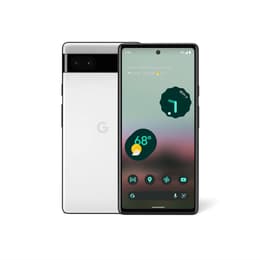

Google Pixel 6a vs Google Pixel 9 Pro XL

Google Pixel 6a
Google Pixel 6a
Starting at

Refurbished price:A$236.00

Versus A$569.00 new

See options
Google Pixel 9 Pro XL
Starting at

Refurbished price:A$853.00

Versus A$1,849.00 new

See options

Ratings

The Google Pixel 6a, released in July 2022, and the Google Pixel 9 Pro XL, launched in August 2024, represent different segments and generations within Google's smartphone lineup. While both devices operate on the Android platform and leverage Google's computational strengths, the Pixel 9 Pro XL introduces significant advancements in processing power, camera capabilities, and overall user experience, reflecting its flagship status and newer release. The Pixel 6a, on the other hand, offers a more compact form factor and a streamlined feature set.

Scores

Durability

The practical lifespan of a smartphone is often influenced by its release date, software support, and ease of repair. These factors determine how long a device remains functional and secure for daily use.

  • Software Longevity: The Pixel 6a, released in July 2022, is slated to receive OS updates until at least July 2025 and security updates until at least July 2027, providing a solid five years of security support from its launch [1, 11, 22]. The Pixel 9 Pro XL, launched in August 2024, benefits from Google's extended support policy, promising seven years of OS and security updates, extending its support until August 2031 [1, 9, 26, 27, 29, 36]. This difference means the Pixel 9 Pro XL offers a considerably longer period of guaranteed software and security updates.
  • Repairability: The Pixel 6a received a repairability score of 7 out of 10, with its battery being relatively easy to remove and the display secured with clips rather than excessive adhesive [2, 3, 5, 7]. The USB-C port, however, is soldered to the mainboard, which can complicate repairs [7]. The Pixel 9 Pro XL features a dual-entry design, allowing access from both the front and back, and its USB-C port is on a separate daughterboard, simplifying its replacement [38, 39]. However, practical teardowns have noted the screen can be fragile and battery removal challenging despite pull tabs, leading to a practical repairability score of 5 out of 10 in some assessments [13, 38].
  • Build Durability: The Pixel 6a features a plastic back and Gorilla Glass 3 on the front, with an IP67 rating for dust and water resistance [2, 4]. The Pixel 9 Pro XL boasts a more premium construction with a matte glass back, metal frame, and an IP68 rating, indicating enhanced protection against dust and water ingress [27, 31]. It also incorporates a mid-plate for increased structural rigidity, making it more resistant to damage from impacts [38].

Release year

2022

2024

Compatible with latest Update

Yes

Yes

Foldable

No

No

Performance

Performance in a smartphone encompasses its ability to handle applications, manage multitasking, and sustain operations through its battery life. These aspects are largely driven by the internal processing unit and system optimization.

  • Processing Power: The Pixel 6a is powered by an earlier generation of Google's custom-designed processor, which capably handles everyday tasks, app launches, and general navigation with responsiveness [4, 14]. The Pixel 9 Pro XL integrates a significantly newer generation of Google's processor, designed for enhanced efficiency and advanced artificial intelligence capabilities [9, 16, 17]. This results in smoother performance for demanding applications, complex multitasking, and more sophisticated on-device AI features.
  • Multitasking and Storage: The Pixel 6a comes with 6GB of RAM and 128GB of internal storage, which is suitable for typical user needs but does not offer expandable storage [4, 14]. The Pixel 9 Pro XL features a more substantial 16GB of RAM, providing ample capacity for seamless multitasking and running numerous applications simultaneously [9, 17]. It also offers a wider range of storage options, starting from 128GB and extending to higher capacities, catering to users with larger digital libraries [9, 27].
  • Battery Performance: The Pixel 6a is equipped with a 4410 mAh battery, generally providing a full day of use for moderate users, though heavy usage may require a mid-day top-up [4, 19, 28, 32]. It supports 18W fast charging but lacks wireless charging [4, 28]. The Pixel 9 Pro XL houses a larger 5060 mAh battery, which, combined with its more efficient processor and adaptive display, can offer extended usage, with some users reporting multi-day battery life under certain conditions [9, 18, 24, 30, 31]. It also supports faster 45W wired charging [18].

Memory (GB)

6 GB

16 GB

Screen quality

The display is a primary interface for smartphone interaction, and its quality significantly impacts the visual experience, from clarity to color reproduction and responsiveness.

  • Display Technology and Clarity: Both devices feature OLED display technology, known for deep blacks and vibrant colors. The Pixel 6a has a 6.1-inch OLED display with a Full HD+ resolution (2400 x 1080 pixels), offering clear visuals for everyday content consumption [4, 14]. The Pixel 9 Pro XL features a larger 6.7-inch LTPO OLED display with a Quad HD+ resolution (2992 x 1344 pixels), providing a sharper and more detailed viewing experience, particularly noticeable with high-resolution media [9, 20, 31].
  • Refresh Rate and Smoothness: The Pixel 6a's display operates at a standard 60Hz refresh rate, which is adequate for general use [4, 14]. The Pixel 9 Pro XL, however, incorporates an adaptive refresh rate that can dynamically adjust from 1Hz to 120Hz [20, 31]. This higher and variable refresh rate contributes to noticeably smoother scrolling, more fluid animations, and a more responsive feel during gaming or fast-paced content.
  • Brightness and Outdoor Visibility: The Pixel 6a offers sufficient brightness for indoor and typical outdoor use [32]. The Pixel 9 Pro XL significantly enhances brightness, reaching up to 3000 nits peak brightness [9]. This higher brightness level ensures excellent visibility even in direct sunlight, making it more comfortable for outdoor use and improving HDR content viewing.

Resolution

1080 x 2400

1344 x 2992

Screen type

OLED

LTPO OLED

Audiovisual

Camera performance is a key differentiator for many smartphone users, encompassing the quality of still images, video recording capabilities, and audio capture.

  • Rear Camera System: The Pixel 6a features a dual-camera setup with a 12.2MP main lens and a 12MP ultrawide lens [4, 19]. It is praised for its computational photography, delivering crisp and vibrant photos, especially for its segment, and includes features like Night Sight and Magic Eraser [4, 19, 23]. The Pixel 9 Pro XL boasts a more advanced triple-camera system, including a 50MP main sensor, a 48MP ultrawide lens with macro focus, and a 48MP telephoto lens offering 5x optical zoom [17, 27, 31]. This setup provides greater versatility and detail across various photographic scenarios.
  • Low-Light and Video Performance: While the Pixel 6a performs well in good lighting, its smaller sensor can result in some noise in very low-light conditions [19]. It supports 4K video recording at up to 60 frames per second [4]. The Pixel 9 Pro XL excels in low-light photography due to its larger sensors and advanced processing, consistently delivering images with good color accuracy and dynamic range [30]. It also offers 8K video recording and features like Video Boost, enhancing video quality and stability [17, 18, 27, 31].
  • Front Camera and Audio: The Pixel 6a includes an 8MP front camera that is suitable for video calls and casual selfies [4, 19]. The Pixel 9 Pro XL features a higher-resolution 42MP front camera with autofocus, designed for more detailed selfies and improved video conferencing [18, 31]. Both devices offer dual stereo speakers, providing a good audio experience for media consumption [19, 24].

Main camera

12.2 megapixels

50 megapixels

Front camera

8 megapixels

42 megapixels

Miscellaneous

Beyond core performance, several practical features contribute to the overall user experience, including connectivity, physical interfaces, and build quality.

  • Connectivity and Ports: Both devices support 5G connectivity, ensuring access to modern cellular networks [4, 9]. The Pixel 6a supports Wi-Fi 6 and Bluetooth 5.2 [4]. The Pixel 9 Pro XL features newer Wi-Fi standards and Bluetooth versions, offering potentially faster and more stable wireless connections [9]. Both utilize a USB-C port for charging and data transfer, though the Pixel 6a notably omits a headphone jack [4]. The Pixel 9 Pro XL also introduces satellite connectivity for emergency messaging, a feature not present on the Pixel 6a [27].
  • Biometric Security and Sensors: The Pixel 6a incorporates an in-display fingerprint sensor for secure unlocking [4]. The Pixel 9 Pro XL also features an under-display fingerprint sensor, which is described as quick and responsive, and likely includes advanced face recognition capabilities typical of flagship devices [9, 24]. Both phones include standard sensors like accelerometers, gyroscopes, and proximity sensors.
  • Design and Handling: The Pixel 6a has a compact design with a 6.1-inch display, a plastic back, and an aluminum frame, making it comfortable for one-handed use [4, 15, 32]. It has an IP67 rating for dust and water resistance [4]. The Pixel 9 Pro XL, with its larger 6.7-inch display, offers a more expansive viewing area and a premium build with a matte glass back and metal sides [20, 27, 31]. Its design includes rounded edges for a comfortable grip despite its size, and it carries an IP68 rating for enhanced durability [24, 31].

Weight

250 oz

221 oz

Screen size (in)

6.1

6.8

SIM card

Physical SIM + eSIM

Physical SIM + eSIM

Carrier compatibility

Unlocked

Unlocked

The Google Pixel 6a and Google Pixel 9 Pro XL cater to distinct user needs, reflecting their generational and market positioning. The Pixel 6a is often praised by users for its strong camera performance relative to its compact size and its ability to deliver a smooth Android experience with timely updates [19, 23, 32]. Common criticisms sometimes point to its 60Hz display and battery life that, while generally sufficient, may not satisfy heavy users [28, 32].

The Pixel 9 Pro XL, as a more recent flagship, receives acclaim for its advanced camera system, offering exceptional detail and versatility, particularly in challenging lighting conditions [30, 31]. Users also appreciate its vibrant, high-refresh-rate display and the extended software support, ensuring longevity [21, 24, 26]. Some user feedback indicates that while battery life is generally good, it might not always surpass competitors in extreme usage scenarios, and the repairability, despite some improvements, can still be challenging for certain components [13, 21].

Users prioritizing a compact device with a capable camera and a reliable software experience for everyday tasks may find the Pixel 6a well-suited to their needs. It remains a solid choice for those who value a streamlined smartphone without the latest premium features. Conversely, users who demand cutting-edge performance, a top-tier camera system, a large and fluid display, and the longest possible software support will likely lean towards the Pixel 9 Pro XL. Its advanced processing and AI capabilities also make it ideal for power users and those who engage with demanding applications.

For those considering either device, exploring quality-assured refurbished options can provide an eco-friendly alternative, extending the life cycle of these capable smartphones.


See all articles

Our recent comparisons