

Google Pixel 6a vs Google Pixel 7a

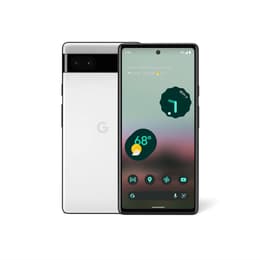
Google Pixel 6a
Google Pixel 6a
Starting at

Refurbished price:A$236.00

Versus A$569.00 new

See options
Google Pixel 7a
Google Pixel 7a
Starting at

Refurbished price:A$337.00

Versus A$749.00 new

See options

Ratings

The Google Pixel 6a, released in July 2022, and the Google Pixel 7a, launched in May 2023, are both mid-range smartphones from Google's Pixel A-series. While they share a similar design philosophy and run on the Android operating system, the Pixel 7a introduces several key upgrades, particularly in its camera system, display technology, and internal processing capabilities. Both devices offer a pure Android experience with timely software updates.

Scores

Durability

When considering the long-term usability of these devices, their release timelines and Google's software support policies are important factors.

  • Software Longevity: The Pixel 6a, released in July 2022, is expected to receive OS and security updates until at least July 2027. The newer Pixel 7a, launched in May 2023, benefits from a longer support window, with updates guaranteed until at least May 2028. [1, 3, 9, 15, 27, 30, 35]
  • Repairability: The Pixel 6a generally scores well for repairability, with some assessments giving it a score of 7 out of 10, noting its relatively easy battery removal and display replacement. [5, 6, 11, 14] The Pixel 7a initially received a lower repairability score, later uprated to 5 out of 10 by iFixit after Google provided service manuals, indicating a moderate ease of repair for common components. [2, 22]
  • Practical Lifespan: Both phones are built to last, featuring IP67 water and dust resistance for protection against everyday elements. [7, 13] Users can expect a practical lifespan extending beyond their official software support, especially for those who prioritize hardware functionality over the latest software features.

Release year

2022

2022

Compatible with latest Update

Yes

Yes

Foldable

No

No

Performance

The performance of the Pixel 6a and Pixel 7a differs primarily due to their internal components, impacting how smoothly they handle various tasks.

  • Processing Power: The Pixel 6a is powered by Google's first-generation Tensor processor, while the Pixel 7a features the more advanced Tensor G2. [7, 16, 24] This newer processor in the 7a provides improved speeds for both general tasks and graphics-intensive applications, leading to a more responsive user experience. [10, 26]
  • Multitasking and Responsiveness: The Pixel 7a comes with 8GB of RAM, an increase from the Pixel 6a's 6GB. [2, 7, 23] This additional RAM allows the Pixel 7a to manage more applications simultaneously and switch between them more fluidly, which can be noticeable for heavy users. [24]
  • Storage: Both devices offer 128GB of internal storage, which is suitable for most users, though neither model supports expandable storage. [7, 16, 23] For users who store large amounts of media or applications, managing storage space will be a consideration.
  • Battery Behavior: The Pixel 6a has a 4410 mAh battery, slightly larger than the Pixel 7a's 4385 mAh unit. [10, 16, 24] However, the Pixel 7a's more efficient processor often results in comparable or even slightly better real-world battery endurance for a full day of use. [10, 24, 25, 39]

Memory (GB)

6 GB

8 GB

Screen quality

The display experience on both Pixel A-series phones offers clarity and vibrant colors, though the newer model brings a notable enhancement.

  • Display Technology and Resolution: Both the Pixel 6a and Pixel 7a feature a 6.1-inch OLED display with a Full HD+ resolution (2400 x 1080 pixels), providing sharp images and deep blacks. [7, 10, 16, 23]
  • Refresh Rate: A key difference lies in the refresh rate. The Pixel 6a has a standard 60Hz refresh rate, while the Pixel 7a offers a smoother 90Hz refresh rate. [10, 13, 23, 25] This higher refresh rate makes scrolling, animations, and gaming appear more fluid on the Pixel 7a.
  • Brightness and Durability: The Pixel 7a's display can achieve higher brightness levels, improving visibility in bright outdoor conditions. [24, 25] For screen protection, the Pixel 6a uses Corning Gorilla Glass 3, whereas the Pixel 7a features the more robust Gorilla Glass Victus, offering enhanced scratch and drop resistance. [10, 36]

Resolution

1080 x 2400

1080 x 2400

Screen type

OLED

OLED

Audiovisual

Photography is a strong suit for Pixel phones, and while both models deliver quality results, the Pixel 7a features significant hardware upgrades.

  • Rear Camera System: The Pixel 6a is equipped with a 12.2MP main camera and a 12MP ultrawide lens. [7, 21] The Pixel 7a boasts a substantially upgraded 64MP main camera with a larger sensor, allowing it to capture more light and detail, alongside a 13MP ultrawide lens. [3, 13, 23, 25, 26] This results in improved image quality, especially in challenging lighting conditions, for the Pixel 7a. [24, 29]
  • Front Camera and Video: The Pixel 6a features an 8MP front camera, while the Pixel 7a upgrades to a 13MP front camera. [18, 23] The Pixel 7a's front camera also supports 4K video recording, a feature not available on the Pixel 6a's front camera. [23, 29] Both phones can record 4K video at up to 60 frames per second with their rear cameras. [7, 23]
  • Computational Photography: Both devices leverage Google's advanced computational photography features, such as Magic Eraser and Night Sight, to enhance photos. [7, 28, 32] The Pixel 7a's newer processor further refines these capabilities, contributing to its overall superior camera performance. [26]

Main camera

12.2 megapixels

64 megapixels

Front camera

8 megapixels

13 megapixels

Miscellaneous

Beyond core performance and display, several practical elements differentiate these two Pixel smartphones.

  • Connectivity: Both phones support 5G connectivity and Wi-Fi 6E for fast wireless internet. The Pixel 7a features Bluetooth 5.3, a slight upgrade from the Pixel 6a's Bluetooth 5.2, offering minor improvements in connection stability and efficiency. [3, 13]
  • Charging and Ports: Both devices support 18W wired fast charging, though neither includes a power adapter in the box. [10, 26] A notable addition to the Pixel 7a is 7.5W wireless charging, a convenience feature absent from the Pixel 6a. [3, 10, 13] Neither phone includes a traditional headphone jack. [3, 40]
  • Biometric Security: Both models feature an in-display fingerprint sensor for secure unlocking. The Pixel 7a also adds face unlock functionality, providing an additional biometric option. [2, 7]
  • Design and Build: The Pixel 6a has a plastic back and an aluminum frame, weighing 178g. [16, 26, 40] The Pixel 7a also uses recycled plastics and glass for its construction with an aluminum frame, but it is slightly heavier at 193.5g and marginally thicker. [3, 13, 26] Both maintain an IP67 rating for dust and water resistance. [7, 13]

Weight

250 oz

212 oz

Screen size (in)

6.1

6.1

SIM card

Physical SIM + eSIM

Physical SIM + eSIM

Carrier compatibility

Unlocked

Unlocked

The Google Pixel 6a and Pixel 7a both offer a compelling Android experience, but cater to slightly different user priorities. User feedback for the Pixel 6a often praises its strong camera performance for its release period and its overall smooth operation, especially considering its processing power. [28, 33, 37] Some common criticisms included its 60Hz display and the absence of wireless charging. [10, 28]

The Pixel 7a, on the other hand, is frequently lauded for its significantly upgraded camera system, smoother 90Hz display, and the inclusion of wireless charging. [10, 23, 25, 29] However, some users have noted that its battery life, while generally good, can be inconsistent for heavy usage, and its increased weight compared to its predecessor is sometimes mentioned. [20, 24, 36]

Users prioritizing a more modern display experience, enhanced photography capabilities, and the convenience of wireless charging may find the Pixel 7a better suited to their needs. Its additional RAM also benefits those who frequently multitask. Conversely, users who value a lighter device and are content with a 60Hz display and slightly older camera hardware, while still receiving robust software support, might find the Pixel 6a to be a practical choice. Both devices represent solid options within the Pixel ecosystem, and choosing a quality-assured refurbished option for either model can be an eco-friendly alternative for consumers.

See all articles

Our recent comparisons