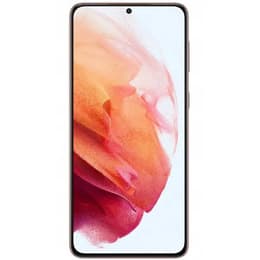
Galaxy A23 5G vs Galaxy S21+ 5G

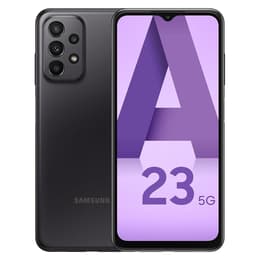
Galaxy A23 5G
Galaxy A23 5G
Starting at

Refurbished price:A$219.00

Versus A$457.00 new

See options
Galaxy S21+ 5G
Galaxy S21+ 5G
Starting at

Refurbished price:A$348.00

Versus A$2,005.00 new

See options

Ratings

The Samsung Galaxy A23 5G and the Samsung Galaxy S21 Plus 5G are two smartphones from different segments of Samsung's lineup, released in August 2022 and January 2021, respectively. While both offer 5G connectivity, the Galaxy S21 Plus 5G was positioned as a flagship device at its launch, featuring a more advanced display and camera system, whereas the Galaxy A23 5G serves the mid-range market with a focus on essential features and battery life. Both devices run on the Android operating system with Samsung's One UI overlay.

Scores

Durability

The practical lifespan of a smartphone is influenced by its release timeline, software support, and physical durability.

  • Release and Software Support: The Galaxy S21 Plus 5G, released in January 2021, launched with Android 11 and has received updates up to Android 14. It was part of Samsung's policy to provide three major Android OS upgrades and four years of security updates for its flagship devices. The Galaxy A23 5G, released in August 2022 with Android 12, has been updated to Android 15 and is expected to receive two major OS upgrades and four years of security updates. This means the Galaxy A23 5G will likely receive software support for a longer period due to its later release date.
  • Physical Durability: The Galaxy S21 Plus 5G features a more robust build with Gorilla Glass Victus on both the front and back, along with an aluminum frame, and boasts an IP68 rating for dust and water resistance. The Galaxy A23 5G uses Gorilla Glass 5 for screen protection and has a plastic back, without an official IP rating for water and dust resistance. Users prioritizing enhanced physical protection and water resistance may find the S21 Plus 5G more suitable.
  • Repairability: The Galaxy S21 Plus 5G's glass back panel can make repairs more complex compared to devices with polycarbonate backs. While specific repairability scores vary, the A23 5G's construction might offer a simpler repair process in some instances due to its plastic back.

Performance

Performance differences between these two devices are notable, reflecting their respective market segments and release generations.

  • Processing Power: The Galaxy S21 Plus 5G is equipped with a processor designed for flagship performance, enabling it to handle demanding applications, intensive multitasking, and graphic-heavy games with fluidity. The Galaxy A23 5G features a mid-range processor that capably manages everyday tasks, web browsing, and lighter gaming, but may show limitations with very intensive applications or prolonged heavy use.
  • System Responsiveness and Multitasking: With 8GB of RAM as standard, the Galaxy S21 Plus 5G offers a highly responsive user experience, allowing for seamless switching between numerous applications and efficient background processing. The Galaxy A23 5G, available with 4GB, 6GB, or 8GB RAM options, may exhibit varying levels of responsiveness, with lower RAM configurations potentially experiencing more noticeable slowdowns during heavy multitasking.
  • Storage Capabilities: Both devices offer 128GB and 256GB internal storage options. A key difference is that the Galaxy A23 5G includes a microSD card slot, allowing for storage expansion up to 1TB, which is beneficial for users with large media libraries or extensive app collections. The Galaxy S21 Plus 5G does not support expandable storage.
  • Battery Behavior: The Galaxy A23 5G features a larger 5000 mAh battery, generally providing extended usage times for average users. The Galaxy S21 Plus 5G has a 4800 mAh battery, which, combined with its more powerful components and higher-end display, may result in a shorter battery life for heavy users, though many users report it lasting a full day.

Memory (GB)

4 GB

8 GB

Screen quality

The visual experience on these two smartphones differs significantly due to their display technologies and specifications.

  • Display Technology and Clarity: The Galaxy S21 Plus 5G features a 6.7-inch Dynamic AMOLED 2X display, known for its deep blacks, vibrant colors, and excellent contrast. This technology provides a rich viewing experience for media consumption. The Galaxy A23 5G uses a 6.6-inch PLS LCD panel, which offers good color reproduction and viewing angles but does not achieve the same level of contrast or black depth as an AMOLED display.
  • Resolution and Brightness: Both devices offer a Full HD+ resolution (1080 x 2400 pixels for S21 Plus 5G, 1080 x 2408 pixels for A23 5G), providing sharp images and text. However, the Galaxy S21 Plus 5G boasts a significantly higher peak brightness of 1300 nits, making it more comfortable to view outdoors in bright sunlight. The Galaxy A23 5G's brightness levels are suitable for most indoor and outdoor conditions but may struggle in direct, intense sunlight.
  • Refresh Rate and Smoothness: The Galaxy S21 Plus 5G offers an adaptive 120Hz refresh rate, which dynamically adjusts based on content, providing exceptionally smooth scrolling and fluid animations while conserving battery. The Galaxy A23 5G also features a 120Hz refresh rate (some variants may have 90Hz), contributing to a smoother user interface experience compared to standard 60Hz displays.

Audiovisual

The camera systems on the Galaxy A23 5G and Galaxy S21 Plus 5G cater to different photography needs and expectations.

  • Rear Camera System: The Galaxy S21 Plus 5G features a versatile triple-camera setup, including a 12MP wide-angle lens with optical image stabilization (OIS) and Dual Pixel autofocus, a 64MP telephoto lens with OIS and 3x hybrid optical zoom, and a 12MP ultrawide lens. This configuration allows for detailed shots across various focal lengths and improved performance in challenging conditions. The Galaxy A23 5G has a quad-camera system with a 50MP main lens (OIS), a 5MP ultrawide, a 2MP macro, and a 2MP depth sensor. While the 50MP main sensor captures good detail, the auxiliary lenses are less capable than those on the S21 Plus 5G.
  • Photography Performance: The S21 Plus 5G excels in overall image quality, offering strong detail, dynamic range, and color accuracy, particularly in well-lit conditions and with its telephoto capabilities. Its low-light performance is also robust. The A23 5G's main camera performs well in good lighting, but its ultrawide and macro lenses may produce less detailed images, and low-light performance is generally more limited.
  • Video Recording and Front Camera: The Galaxy S21 Plus 5G supports advanced video recording, including 8K resolution at 24 frames per second and 4K at 30/60 frames per second, with a 10MP front camera that also records 4K video. The Galaxy A23 5G records video up to 1080p at 30 frames per second with its 8MP front camera, suitable for casual video capture and video calls.

Miscellaneous

Beyond core specifications, several practical elements differentiate the user experience of these two devices.

  • Connectivity and Ports: Both smartphones support 5G connectivity. The Galaxy S21 Plus 5G features Wi-Fi 6 and Bluetooth 5.0, offering faster and more stable wireless connections. The Galaxy A23 5G supports Wi-Fi 5 (802.11ac) and Bluetooth 5.1. The A23 5G retains a 3.5mm headphone jack, which is absent on the S21 Plus 5G. Both utilize a USB-C port for charging and data transfer.
  • Biometric Security: The Galaxy S21 Plus 5G incorporates an ultrasonic in-display fingerprint sensor and supports face recognition for secure unlocking. The Galaxy A23 5G features a side-mounted fingerprint sensor integrated into the power button.
  • Build Materials and Handling: The Galaxy S21 Plus 5G has a more premium feel with its glass front and back, and aluminum frame, contributing to a solid in-hand feel. It weighs around 200-202 grams and measures 161.5 x 75.6 x 7.8 mm. The Galaxy A23 5G, with its plastic back and slightly thicker profile (197 grams, 165.4 x 76.9 x 8.4 mm), offers a different tactile experience.

Screen size (in)

6.6

6.7

Network

5G

5G

SIM card

Physical SIM

Physical SIM + eSIM

Carrier compatibility

Unlocked

Unlocked

The Samsung Galaxy A23 5G and Galaxy S21 Plus 5G cater to distinct user needs, reflecting their different market positions and release timelines. User feedback for the Galaxy S21 Plus 5G often highlights its bright AMOLED display, smooth performance, and capable camera system as strong points. Some criticisms include battery life concerns for heavy users and occasional heating, particularly with the Exynos variant. Conversely, the Galaxy A23 5G receives praise for its large battery capacity and 120Hz display at a more accessible point. However, some users have reported issues with performance, particularly with lower RAM configurations, and less impressive camera results in challenging conditions.

Users prioritizing a premium build, a high-quality AMOLED display, advanced camera features, and robust performance for demanding tasks will find the Galaxy S21 Plus 5G well-suited to their needs. Its IP68 water and dust resistance also makes it a more durable choice for those concerned about environmental exposure. For individuals who value extended battery life, expandable storage, and a 3.5mm headphone jack, the Galaxy A23 5G presents a practical option. It is a suitable choice for everyday communication, social media, and casual content consumption, especially for those who do not require top-tier processing power or advanced photography capabilities. Both models are available as quality-assured refurbished options, providing a sustainable choice for consumers.

See all articles

Our recent comparisons