
Compare models

Google Pixel 10 Pro vs iPhone 16 Pro

  • 1-year warranty
  • Free standard shipping
  • Free 30-day returns
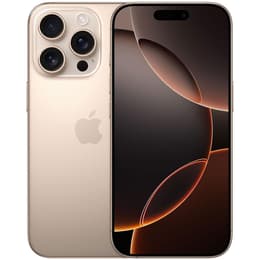
iPhone 16 Pro
Starting at

Refurbished price:A$1,063.20

Versus A$1,799.00 new

See options

Differences at a glance

The Google Pixel 10 Pro (2025) and the iPhone 16 Pro (2024) represent high-end flagship smartphone engineering from two major platform ecosystems. While both devices deliver premium features, robust multi-lens camera arrays, and polished metallic builds, they differ fundamentally in their underlying software architectures and user interface philosophies. The Google Pixel 10 Pro runs on Android 16 with deep artificial intelligence integration, whereas the iPhone 16 Pro operates on iOS with a focus on seamless ecosystem continuity. Understanding how these two distinct operating environments and hardware configurations compare helps clarify which device fits specific daily workflows.

Available Models

Colour

Storage (GB)

Scores

Durability

When evaluating structural longevity and software support, both smartphones offer extended lifecycles, though their release schedules and update policies diverge slightly.

  • Software support timelines: Google provides multi-year operating system and security updates for the Pixel series, matching Apple's long-standing tradition of supporting iOS devices for roughly five to seven years.
  • Build resilience and repairability: The iPhone 16 Pro features a titanium chassis and durable glass protection, while the Pixel 10 Pro utilizes a robust aluminum frame and strengthened glass. Both options maintain standard industry repairability profiles for modern high-end handsets.
  • Expected practical lifespan: Due to powerful internal components and enduring software maintenance, both models are well-equipped to remain functional and responsive for many years of daily use.

Release year

2025

2024

Foldable

No

No

Performance

Underneath the exterior, both devices manage heavy computational loads efficiently, though they utilize entirely different internal architectures and memory configurations.

  • Multitasking and memory management: The Pixel 10 Pro incorporates expansive random access memory configurations to support intensive background tasks, whereas the iPhone 16 Pro relies on tightly integrated hardware-software optimization to handle multitasking smoothly.
  • Everyday responsiveness: Both devices load demanding applications instantly, switch between multiple active programs without stuttering, and handle high-fidelity mobile gaming with consistent frame stability.
  • Battery behavior: The Pixel 10 Pro includes a large capacity power cell designed to endure a full day of mixed use, while the iPhone 16 Pro balances energy efficiency to deliver reliable daily battery performance despite a more compact physical battery size.

Screen quality

Display performance on both handsets delivers sharp details, deep contrast levels, and fluid motion handling for everyday media consumption.

  • Display technology: Each device utilizes advanced organic light-emitting diode technology with adaptive refresh rates scaling up to 120 hertz, ensuring smooth scrolling and responsive touch interaction.
  • Outdoor visibility: High peak brightness capabilities on both screens allow for clear readability and vibrant color reproduction even under direct sunlight.
  • Size and viewing space: Both models offer identical 6.3-inch screen real estate, striking a balance between comfortable one-handed operation and immersive video viewing.

Resolution

1280x2856

1206 x 2622

Audiovisual

Imaging capabilities on these flagship devices cater to diverse photography styles, featuring versatile multi-lens setups and advanced computational processing.

  • Lens configurations: Both phones incorporate high-resolution main sensors, ultra-wide lenses, and dedicated telephoto options with optical zoom capabilities to capture detailed shots from varying distances.
  • Processing and low light: The Pixel 10 Pro utilizes advanced computational photography algorithms for balanced exposures in difficult lighting, while the iPhone 16 Pro emphasizes true-to-life color fidelity and swift shutter response.
  • Video and audio recording: Both handsets deliver professional-grade video stabilization, high-resolution recording formats, and clear microphone arrays suitable for capturing crisp audio during voice calls and video creation.

Miscellaneous

Practical daily usability is shaped by connectivity standards, physical dimensions, and accessory compatibility across both models.

  • Connectivity and ports: Both devices support modern fifth-generation cellular networks, rapid wireless protocols, and universal USB-C connectivity for charging and data transfer.
  • Dimensions and handling: Weighing very similarly around the two-hundred-gram mark with comparable slim profiles, both smartphones offer balanced ergonomics that sit comfortably in the hand or pocket.
  • Security and authentication: The Pixel 10 Pro relies on an under-display fingerprint sensor, whereas the iPhone 16 Pro utilizes facial recognition technology for secure unlocking and authentication.

Weight

207 oz

199 oz

Screen size (in)

6.3

6.3

Network

5G

5G

SIM card

Physical SIM + eSIM

eSIM

Carrier compatibility

Unlocked

Unlocked

What the community thinks

Deciding between the Google Pixel 10 Pro and the iPhone 16 Pro largely depends on personal preference regarding software ecosystems and daily user workflows. Users who appreciate deep customization, extensive artificial intelligence integration, and Android flexibility will find the Pixel 10 Pro well-suited to their needs. Conversely, users who prioritize seamless integration with other Apple devices, streamlined interface navigation, and iOS-exclusive services will naturally gravitate toward the iPhone 16 Pro. Both devices serve as capable, high-performing daily companions.

For consumers seeking a sustainable choice, opting for a quality-assured refurbished option through platforms like Back Market provides an eco-friendly alternative that reduces electronic waste without compromising on flagship reliability or performance.


Our recent comparisons