
Compare models

Google Pixel 10 Pro XL vs iPhone 16e

  • 1-year warranty
  • Free standard shipping
  • Free 30-day returns
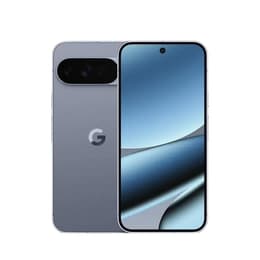
Google Pixel 10 Pro XL
Starting at

Refurbished price:A$1,150.00

Versus A$1,434.00 new

See options
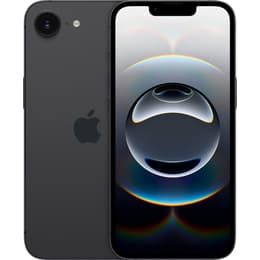
iPhone 16e
Starting at

Refurbished price:A$660.00

Versus A$999.00 new

See options

Differences at a glance

The Google Pixel 10 Pro XL (2025) and the iPhone 16e (2025) represent two different approaches to modern smartphone design, catering to distinct software ecosystems and physical footprints. The Google Pixel 10 Pro XL operates on Android and emphasizes a large-form factor with advanced photographic capabilities, whereas the iPhone 16e runs on iOS, delivering a streamlined, compact profile geared toward everyday efficiency. While both devices support modern connectivity standards and run on current-generation processing hardware, they differ significantly in screen estate, camera versatility, and user interface philosophy.

Available Models

Colour

Storage

Scores

Durability

When evaluating durability, both models benefit from recent release windows in 2025, though their long-term software update commitments and hardware repairability structures differ. Users choosing a quality-assured refurbished option can extend a device's lifecycle while reducing electronic waste.

    Software longevity: Both devices receive multi-year manufacturer operating system updates, ensuring long-term security and feature compatibility.
    Build resilience: Each phone incorporates reinforced glass and aluminum or alloy frames designed to withstand daily wear and tear.
    Repair ecosystem: Both manufacturers provide structured repair frameworks and official component access, supporting predictable long-term maintenance.

Release year

2025

2025

Operating system

Android

iOS

Foldable

No

No

Performance

Performance characteristics vary across both devices in terms of multitasking capacity, internal storage configurations, and battery endurance during intensive workflows. Both models handle standard applications, web browsing, and media streaming smoothly without noticeable stuttering.

    Multitasking and memory: Both options offer generous internal memory configurations that maintain stable background app execution and swift switching between demanding tasks.
    Battery behavior: The larger physical footprint of the Google Pixel 10 Pro XL accommodates a higher-capacity battery designed for extended mixed usage, while the iPhone 16e optimizes energy draw efficiently for standard daily routines.
    System responsiveness: Modern processing architecture ensures rapid application loading times and fluid user interface navigation on both platforms.

Screen quality

Display characteristics differ notably in physical dimensions, peak brightness metrics, and refresh rate implementation, directly influencing media consumption and outdoor visibility.

    Panel technology and size: The Google Pixel 10 Pro XL features an expansive OLED display measuring 6.8 inches, whereas the iPhone 16e utilizes a more compact 6.1-inch OLED screen.
    Brightness and clarity: Both screens deliver deep contrast ratios and sharp resolutions, with high peak brightness capabilities that maintain legibility under direct sunlight.
    Refresh rate: The Google Pixel 10 Pro XL utilizes an adaptive high refresh rate for smoother scrolling animations, while the iPhone 16e maintains a standard refresh rate profile.

Resolution

1344x2992

2532x1170

Audiovisual

Imaging capabilities diverge significantly based on lens selection, auxiliary sensor setups, and integrated computational photography tools available on each platform.

    Rear camera versatility: The Google Pixel 10 Pro XL incorporates a multi-lens array featuring primary, ultra-wide, and dedicated telephoto zoom capabilities, whereas the iPhone 16e employs a streamlined single or dual-lens setup focused on core everyday captures.
    Low-light and video performance: Both devices leverage advanced software processing to preserve detail in challenging lighting conditions and support steady high-resolution video recording.
    Audio and media output: Stereo speaker configurations on both models deliver clear voice reproduction and balanced sound output for hands-free calls and media playback.

Miscellaneous

Practical usability factors such as biometric security methods, physical dimensions, and accessory ecosystem compatibility help define day-to-day handling comfort.

    Biometric authentication: The Google Pixel 10 Pro XL supports both facial recognition and an in-display fingerprint sensor, while the iPhone 16e relies exclusively on face-scanning technology.
    Physical handling: The iPhone 16e offers a lighter, narrower profile suited for single-handed operation, whereas the Google Pixel 10 Pro XL provides a wider workspace ideal for media viewing.
    Connectivity and ports: Both models utilize standard USB-C charging ports and support rapid 5G wireless networks alongside modern short-range communication protocols.

Weight

232 oz

167 oz

Screen size (in)

6.8

6.1

Network

5G

5G

SIM card

Physical SIM + eSIM

Physical SIM + eSIM

Carrier compatibility

Unlocked

Unlocked

What the community thinks

User feedback from online communities highlights distinct preferences for each device depending on daily usage habits. Owners of the Google Pixel 10 Pro XL frequently praise its expansive display estate, versatile multi-lens zoom system, and fluid high-refresh-rate viewing experience. Conversely, common discussions surrounding the iPhone 16e emphasize appreciation for its comfortable one-handed handling, reliable battery efficiency within a compact body, and streamlined iOS interface. Some users note that the larger footprint of the Google device can feel heavy during prolonged single-handed use, while iPhone 16e users occasionally desire a dedicated telephoto lens for distant subjects.

Users prioritizing screen space, advanced zoom flexibility, and an Android environment will find the Google Pixel 10 Pro XL well-suited to their needs. Meanwhile, users prioritizing a compact form factor, straightforward operation, and the iOS ecosystem may lean toward the iPhone 16e. Exploring a quality-assured refurbished option provides a sustainable choice for acquiring either model while supporting eco-friendly technology consumption.