Compare models
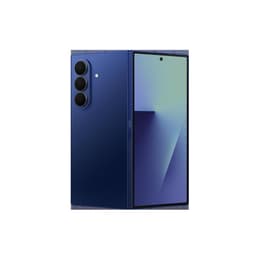
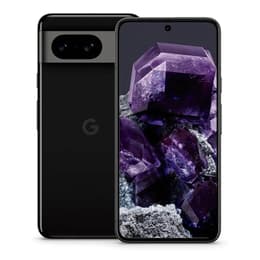
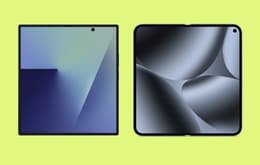
Galaxy Z Fold7 vs Google Pixel 8
- 1-year warranty
- Free standard shipping
- Free 30-day returns
Differences at a glance
The Samsung Galaxy Z Fold7 (2025) and the Google Pixel 8 (2023) represent two distinct approaches to modern mobile technology, contrasting an innovative book-style foldable smartphone with a traditional slate design. While the Galaxy Z Fold7 provides a transformable dual-screen workspace, the Google Pixel 8 focuses on a compact, pocket-friendly form factor backed by intelligent software features. Both devices run on the Android operating system, yet they cater to entirely different user preferences through their distinct hardware configurations and physical dimensions.
Available Models
Colour
Storage
Scores
Durability
Device longevity depends heavily on physical design and software support, with both models offering extended manufacturer backing to ensure long-term usability.
- Software Support and Updates: Both models provide long-term software update commitments spanning multiple years, helping maintain security and feature relevance over time.
- Physical Durability: The Google Pixel 8 features a rigid slate body with standard glass protection, whereas the Galaxy Z Fold7 utilizes a complex folding mechanism that requires careful handling of its flexible inner screen over years of daily use.
- Repairability and Lifespan: Traditional slate devices like the Pixel 8 generally present simpler paths for structural upkeep, while foldable models involve specialized components that influence long-term maintenance considerations.
Release year
2025
2023
Operating system
Android
Android
Foldable
Yes
No
Performance
Underneath their exteriors, these devices handle everyday tasks, app launching, and system navigation differently based on their internal hardware tiers.
- Multitasking and Responsiveness: The Galaxy Z Fold7 handles demanding applications and heavy multitasking smoothly thanks to its current-generation processor and ample memory configuration, while the Google Pixel 8 manages daily messaging, browsing, and moderate apps efficiently using its custom silicon.
- Storage Configurations: Users can select from broader storage capacities reaching up to high-tier levels on the foldable model, whereas the Pixel 8 provides standard tiered storage options suitable for routine media collections.
- Battery Behavior: The Pixel 8's single-screen layout maintains steady power distribution throughout standard daily use, while the Z Fold7's dual-display system manages energy demands across both an outer cover screen and a expansive inner panel.
Screen quality
Visual output differs fundamentally due to the physical screen layouts and display technologies implemented on each device.
- Display Technology and Versatility: The Galaxy Z Fold7 features a large folding internal panel alongside a wide cover screen, offering a tablet-like workspace, while the Pixel 8 utilizes a single, traditional flat display panel with vibrant color reproduction.
- Brightness and Outdoor Legibility: Both screens reach high peak brightness levels, allowing content to remain legible under direct sunlight through automated outdoor enhancement features.
- Refresh Rate and Smoothness: High refresh rate support ensures fluid scrolling, responsive touch tracking, and smooth animations during daily navigation on both models.
Resolution
1968x2184
1080 x 2400
Audiovisual
Media capture and audio output capabilities vary to accommodate different photography styles and content consumption preferences.
- Camera System Versatility: The Galaxy Z Fold7 includes a high-resolution primary sensor and an optical zoom lens for distant subjects, whereas the Pixel 8 relies on dual rear lenses paired with advanced computational photography software to process everyday shots.
- Low-Light and Video Performance: Both devices capture clear details in dim environments, utilizing built-in image processing algorithms to reduce visual noise during video recording and night photography.
- Media and Audio Output: Stereo speaker setups on both models deliver clear sound output for hands-free calls, video streaming, and casual music playback.
Miscellaneous
Practical everyday utility is shaped by connectivity standards, physical dimensions, and handling characteristics.
- Connectivity and Ports: Both smartphones support modern 5G cellular networks, fast Wi-Fi standards, and use reversible USB-C ports for charging and data transfer.
- Security Sensors: Each device incorporates biometric authentication methods, utilizing secure facial recognition alongside responsive fingerprint sensors integrated directly into the hardware.
- Physical Handling: The Pixel 8 offers a lightweight, single-handed slate experience, while the Z Fold7 provides a wider foldable footprint that transitions between a compact phone format and a larger viewing area.
Weight
215 oz
187 oz
Screen size (in)
8.0
6.2
Network
5G
5G
SIM card
Dual Physical SIM + eSIM
Physical SIM + eSIM
Carrier compatibility
Unlocked
Unlocked
What the community thinks
Users evaluating these two smartphones often point out the remarkable versatility of a folding workspace on one side, contrasting with the comfortable, pocket-friendly ergonomics of a standard slate on the other. Common discussions highlight appreciation for the Pixel 8's straightforward handling and computational photo processing, alongside praise for the Galaxy Z Fold7's expansive multi-window layout and updated wider cover screen. At the same time, some users note that foldable devices require extra mindfulness regarding screen care, while traditional slate models lack multi-app screen expansion.
Users prioritizing maximum screen estate for productivity and multitasking may prefer the Galaxy Z Fold7, while users prioritizing a compact, lightweight device for one-handed daily use will lean toward the Google Pixel 8. Choosing between them depends entirely on whether a transformable dual-screen layout or a traditional form factor fits your routine. Exploring a quality-assured refurbished option provides an eco-friendly alternative for acquiring either device while supporting sustainable technology choices.