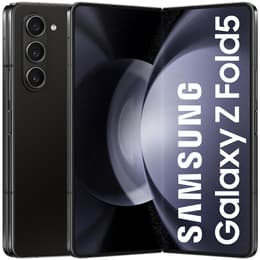

Galaxy Z Fold5 vs iPhone 16 Plus

Galaxy Z Fold5
Galaxy Z Fold5
Starting at

Refurbished price:A$759.00

Versus A$1,194.95 new

See options
iPhone 16 Plus
iPhone 16 Plus
Starting at

Refurbished price:A$918.00

Versus A$1,599.00 new

See options

Ratings

The Samsung Galaxy Z Fold5, released in August 2023, and the Apple iPhone 16 Plus, a more recent offering from late 2025 or early 2026, represent distinct approaches to modern smartphone design. The Galaxy Z Fold5 stands out with its innovative foldable form factor, transforming from a compact device into a larger tablet-like screen, running on the Android operating system. In contrast, the iPhone 16 Plus maintains a traditional smartphone design, offering a large, singular display and operating on Apple's iOS platform. These fundamental differences in design and operating system cater to varied user preferences and usage scenarios.

Scores

Durability

When considering the long-term usability of these devices, their respective release timelines and software support policies are key factors.

  • Release Timeline: The Galaxy Z Fold5 was introduced in August 2023, making it a device that has been on the market for some time. The iPhone 16 Plus, being a more recent release from late 2025 or early 2026, benefits from a newer starting point in its lifecycle.
  • Software Longevity: The Galaxy Z Fold5 is eligible for four major Android OS upgrades and five years of security patches, meaning its last major OS update is expected to be Android 17, likely around late 2026 or 2027. Apple typically provides major iOS updates for its iPhones for approximately five to seven years, suggesting the iPhone 16 Plus will receive software support for a longer duration.
  • Durability Considerations: The Galaxy Z Fold5 features an IPX8 water resistance rating and an improved hinge design compared to its predecessors. However, foldable displays, made from flexible materials, are generally more susceptible to scratches and creases than the traditional glass screens found on devices like the iPhone 16 Plus. While foldable technology has advanced significantly, traditional slab phones are often considered more robust against drops and general wear and tear. The iPhone 16 Plus, with its Ceramic Shield front and traditional design, is built to withstand everyday use.

Performance

Both devices are equipped with powerful internal components designed to handle demanding applications and multitasking, though they approach performance within their respective ecosystems.

  • Processing Power: The Galaxy Z Fold5 is powered by a processor optimized for its Android ecosystem, enabling smooth operation across various applications and efficient multitasking, especially when utilizing its dual-screen capabilities. The iPhone 16 Plus features Apple's A18 chipset, which is designed to deliver responsive performance for a wide range of tasks, from everyday browsing to graphically intensive gaming and advanced AI features.
  • Multitasking and Responsiveness: With 12 GB of RAM, the Galaxy Z Fold5 is well-suited for extensive multitasking, allowing users to run multiple applications simultaneously on its large internal display without significant slowdowns. The iPhone 16 Plus, expected to feature 8GB of RAM, is optimized by iOS to manage applications efficiently, providing a fluid user experience even with numerous apps open.
  • Storage Options: The Galaxy Z Fold5 offers storage configurations up to 1 TB, providing ample space for large files, applications, and media. The iPhone 16 Plus is available with storage options up to 512 GB, which is sufficient for most users' needs.
  • Battery Behavior: The Galaxy Z Fold5, with its 4400mAh battery, offers decent battery life, often lasting a full day of moderate use. The iPhone 16 Plus is noted for its extended battery performance, with user reports suggesting it can easily last into a second day for many, and offering up to 27 hours of video playback.

Memory (GB)

12 GB

8 GB

Screen quality

The display experience is a primary differentiator between these two smartphones, owing to their distinct form factors.

  • Display Technology and Size: The Galaxy Z Fold5 features a 7.6-inch Dynamic AMOLED 2X main display when unfolded, offering a large canvas for productivity and media consumption. It also has a 6.2-inch Dynamic AMOLED cover display for single-handed use. The iPhone 16 Plus comes with a 6.7-inch Super Retina XDR OLED display, providing a vibrant and expansive viewing area in a traditional form.
  • Resolution and Clarity: The Z Fold5's main display has a resolution of 2176 x 1812 pixels, while its cover screen is 904 x 2316 pixels. The iPhone 16 Plus offers a resolution of 2796 x 1290 pixels at 460 pixels per inch, ensuring sharp text and detailed images.
  • Brightness and Refresh Rate: Both displays on the Galaxy Z Fold5 support a 120Hz refresh rate for smooth scrolling and animations, with the main display reaching a peak brightness of 1750 nits for good outdoor visibility. The iPhone 16 Plus features a 60Hz refresh rate, with a typical maximum brightness of 1000 nits and a peak outdoor brightness of 2000 nits, making it highly visible in bright conditions.

Audiovisual

Both devices offer capable camera systems, each with specific strengths tailored to their design and user base.

  • Rear Camera Systems: The Galaxy Z Fold5 is equipped with a versatile triple-camera setup, including a 50MP wide-angle lens with optical image stabilization, a 12MP ultrawide lens, and a 10MP telephoto lens capable of 3x optical zoom. The iPhone 16 Plus features an advanced dual-camera system with a 48MP main lens (f/1.6, OIS) that also enables 2x optical quality telephoto zoom, and an improved 12MP ultrawide lens (f/2.2) designed for better low-light performance.
  • Photography Features: The Galaxy Z Fold5 delivers good color reproduction and detail in well-lit conditions, with decent low-light capabilities. The iPhone 16 Plus introduces macro photography for the first time on a non-Pro model, allowing for detailed close-up shots. Both devices offer features like HDR and panorama.
  • Video Recording: The Z Fold5 supports video recording up to 8K at 30 frames per second and 4K at 60 frames per second. The iPhone 16 Plus is capable of spatial video recording, a feature that allows for three-dimensional video capture, and supports 4K Dolby Vision video recording at up to 60 frames per second.
  • Front-Facing Cameras: The Galaxy Z Fold5 has a 10MP camera on its cover screen and a 4MP under-display camera on its main screen, though the under-display camera's quality is noted as being less capable. The iPhone 16 Plus features a 12MP front-facing camera with autofocus.

Miscellaneous

Beyond core performance and display, several practical elements contribute to the overall user experience of these devices.

  • Connectivity: The Galaxy Z Fold5 supports 5G, Wi-Fi 6E, and Bluetooth 5.2, offering fast and reliable wireless connections. The iPhone 16 Plus is also expected to support Wi-Fi 6E and 5G connectivity, ensuring modern wireless standards.
  • Ports and Sensors: The Galaxy Z Fold5 utilizes a USB-C port for charging and data transfer and includes a side-mounted fingerprint scanner for secure authentication. The iPhone 16 Plus is expected to feature a USB-C port, aligning with current industry standards, and relies on Face ID for biometric security.
  • Physical Design and Handling: The Galaxy Z Fold5, when folded, measures 154.9 x 67.1 x 13.4 mm and weighs 253 grams, offering a compact yet substantial feel. When unfolded, it becomes a larger, thinner device at 154.9 x 130.1 x 6.1 mm. The iPhone 16 Plus has dimensions of 160.9 mm (height) x 77.8 mm (width) x 7.80 mm (depth) and weighs 199 grams, providing a large screen experience in a more traditional, lighter form factor.
  • Build Materials: The Galaxy Z Fold5 incorporates Armor Aluminum for its frame and hinge housing, contributing to its durability. The iPhone 16 Plus features an aluminum design with a Ceramic Shield front and color-infused glass back, enhancing its resistance to everyday impacts.

Screen size (in)

7.6

6.7

Network

5G

5G

SIM card

Physical SIM + eSIM

Physical SIM + eSIM

Carrier compatibility

Unlocked

Unlocked

The Samsung Galaxy Z Fold5 and the iPhone 16 Plus cater to different user priorities, primarily distinguished by their form factors and operating systems. User feedback for the Galaxy Z Fold5 often praises its innovative foldable design, which offers the versatility of a large screen for productivity and media consumption in a portable package. Its robust multitasking capabilities and improved hinge mechanism are frequently highlighted as strong points. However, some users express concerns about the long-term durability of the flexible display and the overall bulk when folded compared to traditional smartphones. The under-display camera's quality is also a common point of criticism.

For the iPhone 16 Plus, common praise points revolve around its consistent performance, extended battery life, and the reliability of the iOS ecosystem. Users appreciate the advancements in its camera system, including improved low-light performance and the introduction of macro photography. The traditional slab design is often favored for its perceived durability and straightforward user experience. Potential criticisms might include the absence of a high refresh rate display, which is present on many Android flagships, and the lack of a dedicated telephoto lens compared to some competitors.

Users prioritizing a versatile device that can transform from a standard smartphone into a larger screen for enhanced productivity and media consumption may find the Galaxy Z Fold5 well-suited to their needs. Its unique form factor and robust multitasking features are ideal for those who frequently switch between phone and tablet modes. Conversely, users who value a consistent, long-lasting battery experience, a highly refined camera system with new features like macro photography, and the streamlined simplicity of the iOS ecosystem in a traditional, durable design will likely lean towards the iPhone 16 Plus. Both devices offer compelling experiences, and choosing between them often comes down to a preference for an innovative foldable design versus a refined, traditional smartphone experience. For those considering either device, exploring quality-assured refurbished options can provide a sustainable choice.

See all articles

Our recent comparisons