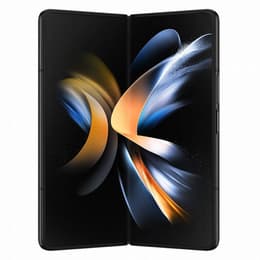
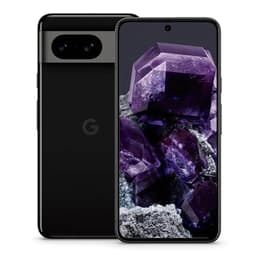

Galaxy Z Fold4 vs Google Pixel 8

Galaxy Z Fold4
Galaxy Z Fold4
Starting at

Refurbished price:A$734.00

Versus A$3,628.00 new

See options
Google Pixel 8
Google Pixel 8
Starting at

Refurbished price:A$463.00

Versus A$1,245.00 new

See options

Ratings

The Samsung Galaxy Z Fold4, released in August 2022, and the Google Pixel 8, launched in October 2023, represent distinct approaches to modern smartphone design and functionality. The Z Fold4 offers a unique foldable form factor, transforming from a traditional smartphone into a larger tablet-like display, while the Pixel 8 maintains a more conventional slab design. Both devices operate on the Android platform, with the Pixel 8 benefiting from Google's direct software integration and extended update commitment, contrasting with Samsung's One UI experience on the Z Fold4.

Scores

Durability

When considering the long-term usability of these devices, their release timelines and software support policies are key factors. The Pixel 8, being a newer device, offers a significantly longer period of guaranteed software updates.

  • Software Longevity: The Google Pixel 8 is notable for its commitment to seven years of operating system and security updates from its release, extending its software lifespan considerably. The Samsung Galaxy Z Fold4, released earlier, is eligible for up to four major Android OS updates and five years of security updates. This means the Pixel 8 will receive software support for a longer duration than the Z Fold4.
  • Repairability: The Google Pixel 8 generally receives decent repairability scores, with some sources indicating a score of 7 out of 10, suggesting that self-repairs are possible for those with some experience. Other assessments give it a moderate repairability score of 5.5 out of 10, noting that while the screen is relatively easy to remove, the battery can be challenging due to adhesives. Information regarding the specific repairability score for the Galaxy Z Fold4 is less commonly cited, but foldable devices often present more complex repair challenges due to their intricate hinge mechanisms and dual-screen designs.
  • Practical Lifespan: Users of the Galaxy Z Fold4 have reported varying experiences with durability, particularly concerning the inner screen protector peeling and potential screen issues over extended use, sometimes requiring replacements. The Pixel 8, while generally robust with Gorilla Glass Victus on both front and back, has had some user reports of paint chipping from minor drops.

Release year

2022

2023

Compatible with latest Update

Yes

Yes

Operating system

Android

Android

Foldable

Yes

No

Performance

The performance of both the Galaxy Z Fold4 and the Pixel 8 is tailored to their respective designs and intended user experiences, impacting how they handle daily tasks and demanding applications.

  • Processing Power: The Galaxy Z Fold4 is equipped with a processor that delivers consistent performance, handling demanding applications and multitasking smoothly without significant overheating. The Pixel 8 features a current-generation processor designed for efficient AI-driven tasks and a responsive user experience.
  • Multitasking Capabilities: The Z Fold4 excels in multitasking due to its large foldable display, allowing users to run multiple applications simultaneously with ease, akin to a mini-tablet. The Pixel 8, with its traditional form factor, offers solid multitasking for a standard smartphone, benefiting from its optimized Android experience and sufficient RAM.
  • Battery Behavior: The Galaxy Z Fold4's battery life is generally considered good, with users reporting it can last through a full day of heavy usage and potentially into a second day with moderate use, showing improvements over its predecessor. The Pixel 8's battery life is often described as good but not exceptional, typically providing 8-10 hours of screen time with mixed usage, though heavy users might need an afternoon charge. Some Pixel 8 users have noted faster battery drain when using mobile data.

Memory (GB)

12 GB

8 GB

Screen quality

The display experience is a primary differentiator between these two devices, with the Galaxy Z Fold4 offering a unique foldable screen and the Pixel 8 providing a high-quality traditional panel.

  • Display Technology and Size: The Galaxy Z Fold4 features a 7.6-inch foldable Dynamic AMOLED 2X main display and a 6.2-inch Dynamic AMOLED cover display, both offering a 120Hz refresh rate for smooth visuals. The Pixel 8 has a 6.2-inch OLED display with a 120Hz refresh rate. The Z Fold4's larger inner screen provides an expansive viewing area for media and productivity.
  • Resolution and Clarity: The Z Fold4's main display has a resolution of 2176x1812 pixels, while its cover screen is 904x2316 pixels. The Pixel 8 offers a 1080x2400 pixel resolution, resulting in sharp and clear visuals for everyday use.
  • Brightness and Viewing Experience: Both devices offer vibrant colors and deep blacks characteristic of OLED technology. The Pixel 8 boasts a peak brightness of 2000 nits, making it highly visible in bright outdoor conditions. The Z Fold4's displays also offer ample brightness, with users noting improved brightness and calibration over previous foldable generations.

Resolution

1812 x 2176

1080 x 2400

Screen type

Foldable Dynamic AMOLED 2X

OLED

Audiovisual

Both the Galaxy Z Fold4 and the Pixel 8 offer capable camera systems, though they approach image processing and overall photographic experience from different perspectives.

  • Camera System Configuration: The Galaxy Z Fold4 features a triple rear camera setup with a 50MP main sensor, a 12MP ultrawide, and a 10MP telephoto lens with 3x optical zoom. It also has a 10MP cover screen selfie camera and a 4MP under-display camera on the main screen. The Pixel 8 has a dual rear camera system, including a 50MP main sensor and a 12MP ultrawide lens with autofocus. Its front camera is 10.5MP.
  • Photography Performance: The Z Fold4's main camera delivers good point-and-shoot results with warm, vibrant shots and improved low-light performance compared to its predecessor. The Pixel 8 is highly regarded for its excellent computational photography, producing balanced tones, good detail in shadows, and strong low-light capabilities across its main and ultrawide cameras.
  • Video Recording and Features: Both phones offer strong video recording capabilities. The Pixel 8 provides competitive video capture with good stabilization up to 4K 60fps and clean sound recording. The Z Fold4 also records high-quality video, with its foldable form factor offering unique shooting angles in Flex Mode.

Main camera

50 megapixels

50 megapixels

Front camera

4 megapixels

10.5 megapixels

Miscellaneous

Beyond the core features, several practical elements contribute to the overall user experience of the Galaxy Z Fold4 and the Pixel 8, influencing daily convenience and device handling.

  • Connectivity and Ports: Both devices support 5G connectivity, modern Wi-Fi standards (Wi-Fi 6E for Z Fold4, Wi-Fi 7 for Pixel 8), and Bluetooth 5.3. The Pixel 8 uses a USB Type-C 3.2 port, while the Z Fold4 features a USB Type-C 3.2 port. Neither device includes a 3.5mm headphone jack.
  • Biometric Security: The Galaxy Z Fold4 incorporates a side-mounted fingerprint sensor. The Google Pixel 8 utilizes an in-display optical fingerprint sensor and offers face recognition.
  • Build Materials and Dimensions: The Z Fold4 is constructed with Armor Aluminum and features Gorilla Glass Victus+ on its cover screen and rear panel, weighing 263 grams. When folded, it measures 155.1 x 67.1 x 14.2-15.8 mm. Unfolded, it is 155.1 x 130.1 x 6.3 mm. The Pixel 8 has a glass front and back (Gorilla Glass Victus) with an aluminum frame, weighing 187 grams and measuring 150.5 x 70.8 x 8.9 mm. The Z Fold4 is significantly heavier and thicker when folded due to its design.

Weight

263 oz

187 oz

Screen size (in)

7.6

6.2

Network

5G

5G

SIM card

Physical SIM + eSIM

Physical SIM + eSIM

Carrier compatibility

Unlocked

Unlocked

The Samsung Galaxy Z Fold4 and the Google Pixel 8 cater to different user preferences, each excelling in distinct areas. The Z Fold4 is often praised by users for its expansive inner display, which transforms the device into a versatile tool for multitasking, media consumption, and even light productivity, feeling like a mini-tablet in the pocket. Its ability to run multiple apps simultaneously and its unique form factor are frequently highlighted as major advantages. However, some users have noted concerns regarding the durability of the inner screen protector and the overall weight of the device.

The Google Pixel 8 receives consistent acclaim for its camera performance, with users appreciating its ability to capture excellent photos in various conditions, particularly in low light, thanks to its advanced computational photography. The clean Android experience and the promise of extended software updates are also significant draws. Criticisms sometimes revolve around its battery life, which, while generally adequate, may not meet the demands of heavy users, especially when relying on mobile data. Some users have also reported minor build quality issues like paint chipping.

Users prioritizing a large, adaptable screen for productivity and immersive media will find the Galaxy Z Fold4 well-suited to their needs. Its unique folding design offers a distinct advantage for those who desire a tablet-like experience in a portable form factor. Conversely, individuals who value a top-tier camera system, a streamlined software experience, and a compact, traditional smartphone design will likely prefer the Google Pixel 8. For those seeking an eco-friendly alternative, both devices are available as quality-assured refurbished options, providing a sustainable choice for acquiring advanced technology.


See all articles

Our recent comparisons