
Compare models

Galaxy Z Flip7 vs Google Pixel 6a

  • 1-year warranty
  • Free standard shipping
  • Free 30-day returns
Galaxy Z Flip7
Starting at

Refurbished price:A$800.00

Versus A$1,799.00 new

See options
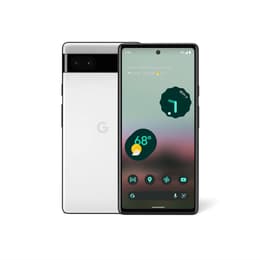
Google Pixel 6a
Starting at

Refurbished price:A$311.00

Versus A$569.00 new

See options

Differences at a glance

The Samsung Galaxy Z Flip7 (2025) and the Google Pixel 6a (2022) represent two entirely different approaches to modern smartphone design, contrasting a contemporary foldable flip phone with a conventional mid-range candybar device. While both run on the Android operating system, they cater to distinct eras of hardware engineering and user preferences. Choosing between them involves balancing physical form factor innovations against traditional reliability and software simplicity.

Available Models

Colour

Storage

Scores

Durability

These devices occupy different places on the release timeline, influencing their remaining software support window and expected practical longevity in daily use.

  • Release timeline and support: The Galaxy Z Flip7 launched in 2025 with modern software architecture, whereas the Google Pixel 6a arrived in 2022, meaning its official major operating system update window is closer to its conclusion.
  • Build durability: The Pixel 6a relies on a rigid structure with an IP67 water-resistance rating, while the Galaxy Z Flip7 features a complex folding hinge mechanism that requires careful handling despite modern protective materials.
  • Expected lifespan: Users selecting the Galaxy Z Flip7 can anticipate extended software longevity, whereas the Pixel 6a functions best as a quality-assured refurbished option for those needing reliable short-to-medium-term communication tools.

Release year

2025

2022

Foldable

Yes

No

Performance

Internal hardware configurations dictate how each phone handles everyday multitasking, app loading speeds, and sustained power consumption.

  • Multitasking and memory: The Galaxy Z Flip7 includes ample random access memory for running demanding background tasks smoothly, whereas the Pixel 6a provides standard memory allocations suited for routine daily apps.
  • Storage capacity: Samsung offers expansive internal storage tiers starting at larger capacities, while Google's device utilizes a fixed storage size that suits users who rely heavily on cloud storage services.
  • Battery behavior: The Galaxy Z Flip7 incorporates a split battery system designed to manage power across two screens, while the Pixel 6a relies on a traditional single cell that generally sustains standard daily usage before requiring a recharge.

Screen quality

Display construction is one of the most significant points of divergence between these two particular models.

  • Panel technology: The Galaxy Z Flip7 features a flexible dynamic display that folds completely in half alongside a functional exterior cover screen, while the Pixel 6a utilizes a traditional flat organic light-emitting diode panel.
  • Refresh rate and smoothness: Samsung supports a high refresh rate for fluid scrolling and animations, whereas the Pixel 6a is capped at a standard refresh rate for everyday viewing.
  • Outdoor visibility: Both screens offer sufficient peak brightness levels for legible outdoor visibility, though the Z Flip7 benefits from advanced panel coatings that reduce glare under direct sunlight.

Resolution

1080x2520

1080 x 2400

Audiovisual

Optics and media playback hardware shape how each device captures daily memories and handles entertainment.

  • Camera systems: The Galaxy Z Flip7 pairs a high-resolution main sensor with an ultra-wide lens and unique folding angles for hands-free framing, while the Pixel 6a utilizes a dual-rear camera setup backed by computational photography processing.
  • Video and low light: Both phones handle standard 4K video recording capably, though Samsung benefits from newer sensor technology for managing challenging lighting conditions.
  • Audio output: Stereo speaker setups on both devices deliver clear sound for casual media consumption, though neither includes a physical headphone jack.

Miscellaneous

Physical dimensions and connectivity standards govern how comfortably each smartphone fits into pockets, bags, and modern network environments.

  • Form factor and handling: The Galaxy Z Flip7 folds into a compact square that easily slips into small pockets, whereas the Pixel 6a follows a standard slim rectangular profile that requires standard pocket depth.
  • Biometric security: Samsung implements side-mounted fingerprint recognition and facial scanning, while Google relies on an optical under-display fingerprint sensor.
  • Connectivity: Both models provide modern 5G cellular capabilities, Wi-Fi connectivity, and near-field communication chips for contactless payments.

Weight

188 oz

250 oz

Screen size (in)

6.9

6.1

SIM card

Physical SIM + eSIM

Physical SIM + eSIM

Carrier compatibility

Unlocked

Unlocked

What the community thinks

Community discussions highlight distinct user sentiments for each device. Owners of the Galaxy Z Flip7 frequently praise its compact pocketability, flexible hinge utility, and vibrant cover display that reduces the need to unfold the phone constantly. At the same time, some users note the physical crease on the main screen and shorter battery endurance under heavy usage as routine trade-offs of the folding design. Conversely, Pixel 6a users often commend its clean software interface, reliable everyday snapshot photography, and comfortable handling, though criticisms occasionally target its standard screen refresh rate and slower charging speeds.

Users prioritizing a compact, pocket-friendly footprint and modern display technology may prefer the Galaxy Z Flip7, while users looking for a straightforward, traditional smartphone experience often lean toward the Pixel 6a. For consumers aiming to make an eco-friendly purchase, choosing a quality-assured refurbished option from Back Market allows buyers to acquire either device sustainably while reducing electronic waste. Ultimately, the right choice depends entirely on whether your daily routine benefits more from a foldable form factor or a conventional candybar design.