Google Pixel 6a vs iPhone 13 mini

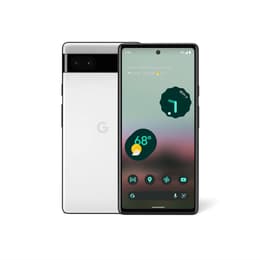
Google Pixel 6a
Google Pixel 6a
Starting at

Refurbished price:A$236.00

Versus A$569.00 new

See options
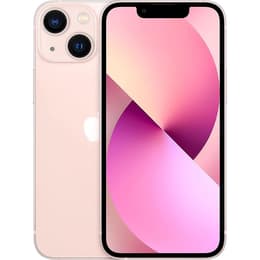
iPhone 13 mini
iPhone 13 mini
Starting at

Refurbished price:A$368.00

Versus A$1,049.00 new

See options

Ratings

The Google Pixel 6A, released in July 2022, and the iPhone 13 Mini, launched in September 2021, are two distinct smartphones offering different operating system experiences in relatively compact form factors. While the Pixel 6A runs on Android and emphasizes computational photography and Google's software ecosystem, the iPhone 13 Mini operates on iOS, focusing on a premium user experience within a smaller design. These devices cater to users with varying preferences for size, software, and camera capabilities.

Scores

Durability

The longevity of a smartphone is influenced by its release timeline, software support, and ease of repair.

  • Release Timeline: The iPhone 13 Mini was released in September 2021, making it approximately 10 months older than the Google Pixel 6A, which launched in July 2022. The iPhone 13 Mini was discontinued in September 2023, while the Pixel 6A is still available.
  • Software Support: The Google Pixel 6A is expected to receive OS updates until at least July 2025 and security updates until at least July 2027. The iPhone 13 Mini, launched with iOS 15, is compatible with current iOS versions and is expected to receive software support for several more years, with some users anticipating support until around 2026/2027.
  • Repairability: The Google Pixel 6A generally scores well for repairability, with a rating of 7/10 by some experts, noting that components like the battery and display are relatively accessible. In contrast, the iPhone 13 Mini has a lower repairability score, around 4/10, due to the use of adhesive for the back cover and battery, and the need for specialized tools and disassembly for screen replacement.

Release year

2022

2021

Compatible with latest Update

Yes

Yes

Foldable

No

No

Performance

Both devices offer capable performance for daily tasks, though they approach it with different hardware and software optimizations.

  • Processor Capabilities: The Google Pixel 6A is powered by Google's Tensor chip, which enables smooth handling of demanding applications and efficient processing for features like computational photography. The iPhone 13 Mini features a powerful processor that delivers fluid performance across iOS applications, gaming, and multitasking.
  • System Responsiveness: Users generally report that both phones offer a responsive experience. The Pixel 6A's 60Hz display is noted by some users as feeling fluid despite the refresh rate, while the iPhone 13 Mini's optimized iOS ensures smooth transitions and quick app loading.
  • Battery Behavior: The Pixel 6A has a larger battery capacity at 4,410 mAh, often providing extended usage times, with some users reporting it can last up to two days with moderate use. The iPhone 13 Mini, with a 2,406 mAh battery, is optimized for efficiency and can typically last a full day under moderate use, though heavy users might require more frequent charging.

Memory (GB)

6 GB

4 GB

Screen quality

The visual experience on these devices is shaped by their display technology, resolution, and physical dimensions.

  • Display Technology and Clarity: The Google Pixel 6A features a 6.1-inch OLED display with a resolution of 2400 x 1080 pixels, offering vibrant colors and deep blacks. The iPhone 13 Mini sports a smaller 5.4-inch Super Retina XDR OLED display with a resolution of 2340 x 1080 pixels, resulting in a higher pixel density for sharp visuals.
  • Brightness Levels: Both phones offer good brightness. The Pixel 6A's OLED screen provides adequate brightness for various lighting conditions. The iPhone 13 Mini's Super Retina XDR display achieves a typical brightness of 800 nits and can reach up to 1200 nits for HDR content, ensuring clear visibility even in bright outdoor environments.
  • Refresh Rate: Both devices feature a standard 60Hz refresh rate. While some users might prefer higher refresh rates, the software optimization on both phones contributes to a generally smooth scrolling and interaction experience.

Resolution

1080 x 2400

1080 x 2340

Screen type

OLED

Super Retina XDR OLED

Audiovisual

Both smartphones offer capable camera systems, leveraging their respective software and hardware for image processing.

  • Rear Camera System: The Google Pixel 6A features a dual-camera system with a 12.2-megapixel main sensor and a 12-megapixel ultrawide lens. It is known for its computational photography, producing detailed and color-accurate photos, especially in everyday conditions. The iPhone 13 Mini also has a dual 12-megapixel camera system, comprising a wide and an ultrawide lens, which excels in capturing natural colors and offers features like Sensor-shift optical image stabilization for improved low-light performance and video stability.
  • Low-Light and Everyday Photography: The Pixel 6A's camera performs well in various lighting, with its Night Sight mode enhancing low-light shots. The iPhone 13 Mini also delivers strong low-light performance and consistent results in everyday photography, often praised for its reliable image quality.
  • Video Recording Quality: Both phones are capable of recording 4K video. The Pixel 6A can record 4K at up to 60 frames per second, with good stabilization and audio capture. The iPhone 13 Mini offers Cinematic mode for video recording and HDR video recording with Dolby Vision up to 4K at 60 fps, known for its smooth and high-quality video output.

Main camera

12.2 megapixels

12 megapixels

Front camera

8 megapixels

12 megapixels

Miscellaneous

Beyond core features, several practical elements differentiate these two devices in terms of connectivity, physical design, and user interaction.

  • Connectivity Options: Both the Google Pixel 6A and the iPhone 13 Mini support 5G networks, offering faster mobile data speeds. They also include modern Wi-Fi standards and Bluetooth for wireless connections.
  • Port Types and Sensors: The Pixel 6A uses a USB-C port for charging and data transfer and features an in-display fingerprint sensor for biometric authentication. The iPhone 13 Mini utilizes Apple's proprietary Lightning connector and relies on Face ID for secure unlocking and authentication. Neither phone includes a traditional 3.5mm headphone jack.
  • Weight and Dimensions: The iPhone 13 Mini is notably smaller and lighter, weighing 141 grams with dimensions of 131.5 x 64.2 x 7.65 mm, making it highly suitable for one-handed use and pocketability. The Pixel 6A is larger and heavier at 178 grams, with dimensions of 152.2 x 71.8 x 8.9 mm, offering a slightly larger screen experience while still being manageable for many users.

Weight

250 oz

140 oz

Screen size (in)

6.1

5,4

SIM card

Physical SIM + eSIM

Physical SIM + eSIM

Carrier compatibility

Unlocked

Unlocked

User feedback for the Google Pixel 6A often highlights its strong camera performance, especially for its price point, and the clean Android experience. Many users appreciate its compact size relative to other Android phones and the efficiency of its processor for daily tasks. Common criticisms sometimes include the 60Hz display and occasional reports of the device warming up under heavy load.

The iPhone 13 Mini is frequently praised for its truly compact form factor, allowing for comfortable one-handed use and easy pocketability, a feature many users miss in current smartphone trends. Its performance and camera quality are also consistently well-regarded. However, a frequent concern among users is its battery life, which, while optimized, may not suffice for heavy usage throughout a full day without a recharge.

Users prioritizing a smaller, highly portable device with a premium build and a consistent iOS experience will find the iPhone 13 Mini well-suited to their needs. Those who value computational photography, a larger display within a still manageable size, and the Android ecosystem may lean toward the Google Pixel 6A. Both devices offer compelling features for their respective user bases. For those considering an eco-friendly alternative, both models are available as quality-assured refurbished options, providing a sustainable choice for consumers.
See all articles

Our recent comparisons