

Galaxy Z Flip5 vs Google Pixel 7

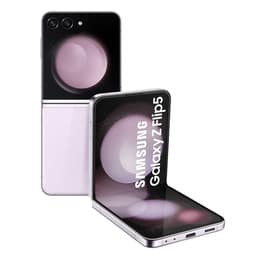
Galaxy Z Flip5
Galaxy Z Flip5
Starting at

Refurbished price:A$639.00

Versus A$1,892.00 new

See options
Google Pixel 7
Google Pixel 7
Starting at

Refurbished price:A$348.00

Versus A$879.00 new

See options

Ratings

The Samsung Galaxy Z Flip5, released in August 2023, and the Google Pixel 7, launched in October 2022, represent distinct approaches to the modern smartphone experience. While the Z Flip5 offers a unique foldable design that prioritizes portability and a secondary external display, the Pixel 7 focuses on a traditional slate form factor, emphasizing camera performance and a streamlined Android experience. Both devices run on the Android operating system, but they offer different user interfaces and software philosophies.

Scores

Durability

When considering the longevity of these devices, several factors come into play, including their release timelines, software support, and physical construction.

  • Release Timeline and Software Support: The Galaxy Z Flip5 was released in August 2023, while the Google Pixel 7 launched in October 2022. Samsung typically provides five years of security updates and four generations of OS upgrades for its flagship devices, including the Z Flip5. Google, known for its software support, also offers five years of security updates and three major Android version updates for the Pixel 7. This means the Z Flip5, being newer, will likely receive software support for a slightly longer period overall.
  • Physical Durability: The Galaxy Z Flip5 features an IPX8 water resistance rating, meaning it can withstand submersion in water, and a new hinge design that allows it to close without a gap. However, its foldable screen, while improved in durability, is still made of a softer material than traditional smartphone displays and may be more susceptible to scratches. The Pixel 7, with its traditional design, uses Gorilla Glass Victus on both the front and back for enhanced scratch and drop resistance, and carries an IP68 rating for dust and water resistance.
  • Expected Practical Lifespan: Both devices are built to last through several years of typical use. The Pixel 7's robust, non-folding design might offer a perception of greater long-term physical resilience for users who prioritize a traditional form factor. The Z Flip5's innovative foldable design, while more delicate in its display, offers a compact form factor when closed, protecting the main screen during transport. For those seeking an eco-friendly alternative, quality-assured refurbished options for both models can extend their practical lifespan and reduce electronic waste.

Release year

2023

2022

Compatible with latest Update

Yes

Yes

Foldable

Yes

No

Performance

The performance of a smartphone is crucial for daily tasks, app usage, and multitasking. Both the Galaxy Z Flip5 and the Google Pixel 7 offer capable performance, though with different underlying hardware philosophies.

  • Processor Capabilities: The Galaxy Z Flip5 is equipped with a current-generation processor designed for high performance, enabling it to handle demanding applications and multitasking smoothly. The Pixel 7 features Google's custom-designed processor, which is optimized for artificial intelligence and machine learning tasks, contributing to a smooth and fast real-world user experience, even if benchmark scores might not always reflect its perceived speed.
  • Memory and Storage: Both devices come with 8GB of RAM, which is sufficient for most users to run multiple applications simultaneously without significant slowdowns. Storage options for the Z Flip5 include 256GB and 512GB, while the Pixel 7 offers 128GB and 256GB variants.
  • Battery Behavior: The Galaxy Z Flip5 has a 3700 mAh battery, which generally provides all-day power for moderate use, though heavy users might find themselves needing to charge nightly. The Pixel 7 features a 4355 mAh battery, offering comparable all-day battery life for many users, though some reports indicate it can get warm during extended demanding tasks like gaming, which can affect battery performance.

Memory (GB)

8 GB

8 GB

Screen quality

The display is a primary interaction point for any smartphone, and these two devices offer distinct viewing experiences.

  • Display Technology and Resolution: The Galaxy Z Flip5 features a 6.7-inch foldable Dynamic AMOLED 2X main display with a Full HD+ resolution (1080 x 2640 pixels), providing vibrant colors and deep blacks. It also boasts a larger 3.4-inch Super AMOLED cover screen with a 720 x 748 pixel resolution, offering expanded functionality when the phone is closed. The Google Pixel 7 comes with a 6.3-inch OLED display, also with a Full HD+ resolution (1080 x 2400 pixels), known for its clarity and vibrant output.
  • Refresh Rate and Brightness: The Z Flip5's main display offers an adaptive refresh rate of up to 120Hz, contributing to smooth scrolling and fluid animations. The Pixel 7 features a 90Hz refresh rate, which also provides a smooth visual experience for most users. In terms of brightness, the Pixel 7 can reach up to 1000 nits in typical use and a peak of 1400 nits, enhancing visibility in bright outdoor conditions. The Z Flip5's main screen is also noted for being bright and responsive.
  • Viewing Experience: The Z Flip5's foldable nature allows for a compact form factor when closed, and its larger cover screen provides quick access to information and widgets without needing to open the device. When unfolded, its 6.7-inch display offers an immersive viewing area. The Pixel 7 provides a traditional, flat screen experience, which some users may prefer for its consistent surface and perceived durability.

Resolution

1080 x 2640

1080 x 2400

Screen type

Foldable Dynamic AMOLED 2X

AMOLED

Audiovisual

Both smartphones offer capable camera systems, but they approach photography with different strengths and features.

  • Rear Camera Systems: The Samsung Galaxy Z Flip5 features a dual-camera setup on the rear, consisting of a 12MP wide-angle lens with optical image stabilization (OIS) and a 12MP ultra-wide-angle lens with a 123-degree field of view. The Google Pixel 7 also has a dual-camera system, with a 50MP wide-angle main lens with OIS and a 12MP ultra-wide-angle lens with a 114-degree field of view. The Pixel 7's larger main sensor contributes to its strong image quality.
  • Photography Performance: The Pixel 7 is widely praised for its excellent camera performance, particularly in low-light conditions, leveraging strong computational photography to produce detailed and well-exposed images. The Z Flip5's camera, while producing good images with vibrant colors in bright conditions, does not include a dedicated telephoto lens, relying on digital zoom. The Z Flip5's camera benefits from improved image processing due to its newer chipset, even though the hardware is similar to its predecessor.
  • Video and Unique Features: Both devices are capable of recording video at up to 4K resolution at 60 frames per second, with good stabilization. The Z Flip5's foldable design allows for unique photography angles and hands-free selfies using the higher-quality main cameras via its cover screen. The Pixel 7 offers features like Magic Eraser and Photo Unblur, which enhance photos through software.

Main camera

12 megapixels

50 megapixels

Front camera

10 megapixels

10.8 megapixels

Miscellaneous

Beyond the core features, several practical elements differentiate the user experience of these two smartphones.

  • Connectivity and Ports: Both the Galaxy Z Flip5 and the Google Pixel 7 support 5G connectivity, ensuring fast mobile data speeds. The Z Flip5 supports Wi-Fi 6E and Bluetooth 5.3, while the Pixel 7 supports Wi-Fi and Bluetooth 5.2. Both devices utilize a USB-C port for charging and data transfer. Neither phone includes a traditional 3.5mm headphone jack.
  • Biometric Security: The Galaxy Z Flip5 features a side-mounted fingerprint sensor integrated into the power button, offering quick and reliable unlocking. The Google Pixel 7 uses an under-display optical fingerprint scanner, which some users have reported as occasionally inconsistent, though it has seen improvements through software updates. The Pixel 7 also includes Face Unlock for convenient access.
  • Design and Handling: The Z Flip5's defining characteristic is its foldable clamshell design, which allows it to fold into a compact form factor (85.1 x 71.9 x 15.1 mm when folded). When unfolded, it measures 165.1 x 71.9 x 6.9 mm and weighs 187g. The Pixel 7 has a traditional slate design, measuring 155.6 x 73.2 x 8.7 mm and weighing 197g. The Pixel 7's slightly curved frame is noted for comfortable handling.

Weight

187 oz

212 oz

Screen size (in)

6.7

6.3

SIM card

Physical SIM + eSIM

Physical SIM + eSIM

Carrier compatibility

Unlocked

Unlocked

The Samsung Galaxy Z Flip5 and Google Pixel 7 cater to different user preferences, each excelling in distinct areas. User feedback for the Z Flip5 often praises its innovative foldable design, the utility of its larger cover screen for quick interactions, and its compact portability. Common criticisms include the main screen's perceived fragility compared to traditional phones and the absence of a telephoto camera.

The Google Pixel 7 is frequently lauded for its exceptional camera performance, particularly its computational photography capabilities and low-light imaging. Users also appreciate its clean Android software experience and consistent performance for everyday tasks. Some common concerns include the under-display fingerprint scanner's occasional inconsistency and the phone's tendency to warm up during intensive use.

Users prioritizing a highly portable device with a unique form factor and a versatile external display for quick interactions may find the Galaxy Z Flip5 well-suited to their needs. Its ability to fold in half makes it easy to carry and offers new ways to interact with the device. Conversely, users who prioritize a top-tier camera experience, a streamlined software interface, and a robust, traditional smartphone design will likely lean towards the Google Pixel 7. Both devices offer a quality experience, and choosing between them often comes down to whether a user values the innovative design and portability of a foldable or the camera prowess and software focus of a traditional flagship. For those considering either device, exploring quality-assured refurbished options can be a sustainable choice.

See all articles

Our recent comparisons