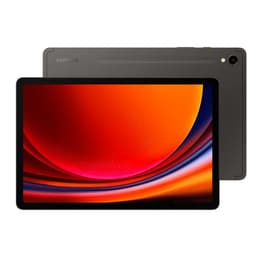

Galaxy Tab S9 (11.0", 2023) vs iPad Pro (2024, M4 series)

Galaxy Tab S9 (11.0", 2023)
Starting at

Refurbished price:A$869.00

Versus A$2,427.00 new

See options
iPad Pro (2024, M4 series)
Starting at

Refurbished price:A$1,359.00

Versus A$1,617.83 new

See options

The Samsung Galaxy Tab S9, released in 2023, and the Apple iPad Pro M4 Series, launched in 2024, represent leading tablets from their respective ecosystems. While both offer premium tablet experiences, they diverge in their operating systems, display technologies, and core hardware philosophies. The Galaxy Tab S9 runs on Android, offering a versatile and open platform, whereas the iPad Pro M4 operates on iPadOS, known for its optimized app ecosystem and tight integration with Apple's services.

Scores

Durability

When considering the long-term usability of these devices, several factors contribute to their expected lifespan, including software support and physical durability.

  • Software Longevity: The Galaxy Tab S9 is expected to receive four major Android OS updates, extending its software support to Android 17, along with five years of security updates. The iPad Pro M4, running iPadOS, typically benefits from a longer software support window, often receiving updates for five to seven years or more, which can extend its functional life.
  • Repairability: Both tablets present challenges for repair due to their construction. The Galaxy Tab S9 has a moderate repairability score, with its battery being relatively accessible, though screen removal is delicate due to adhesive. The iPad Pro M4 also has a moderate repairability score, with improved battery access compared to previous models, but its ultra-thin design and strong adhesive make screen removal a high-risk process.
  • Physical Durability: The Galaxy Tab S9 features an aluminum body and boasts an IP68 rating for dust and water resistance, offering robust protection against environmental elements. The iPad Pro M4 also utilizes an aerospace-grade aluminum body, contributing to its thin yet sturdy build, though it does not carry an official IP rating for water and dust resistance.

Release year

2023

2024

Compatible with latest Update

Yes

Yes

Operating system

Android

iPadOS

Performance

Both tablets are engineered for demanding tasks, but their underlying architectures lead to different performance characteristics in real-world usage.

  • Processing Power: The Galaxy Tab S9 handles demanding applications and multitasking smoothly, providing a responsive experience for gaming and media editing. The iPad Pro M4, with its advanced internal chip, delivers exceptional performance, making it well-suited for intensive creative workflows, high-fidelity gaming, and complex professional applications.
  • Multitasking and Responsiveness: Users of the Galaxy Tab S9 will find it capable of managing multiple applications simultaneously without significant slowdowns, offering a fluid experience for productivity and entertainment. The iPad Pro M4 excels in multitasking, allowing for seamless transitions between numerous open applications and handling heavy workloads with consistent responsiveness, particularly benefiting from its higher RAM configurations in top-tier models.
  • Battery Behavior: The Galaxy Tab S9 typically provides a full day of mixed usage, with reported screen-on times ranging from 5 to 10 hours depending on the intensity of tasks. The iPad Pro M4 is designed to offer up to 10 hours of web browsing or video playback on a single charge, with many users reporting that it often exceeds this estimate in practical use.

Memory (GB)

12 GB

8 GB

Screen quality

The visual experience on both tablets is a highlight, though they employ distinct display technologies to achieve their impressive clarity and color.

  • Display Technology and Clarity: The Galaxy Tab S9 features an 11-inch Dynamic AMOLED 2X display, providing deep blacks, vibrant colors, and excellent contrast. The iPad Pro M4 introduces an 11-inch Ultra Retina XDR display, which is a Tandem OLED panel, offering exceptional color accuracy, true blacks, and a high contrast ratio, making it suitable for professional creative work.
  • Brightness and Outdoor Visibility: The Galaxy Tab S9's AMOLED display offers good brightness, enhancing visibility in various lighting conditions. The iPad Pro M4's Ultra Retina XDR display achieves a maximum SDR brightness of 1000 nits and a peak HDR brightness of 1600 nits, ensuring excellent visibility even in bright outdoor environments and delivering a superior HDR viewing experience.
  • Refresh Rate and Smoothness: Both tablets feature a 120Hz adaptive refresh rate, known as ProMotion on the iPad Pro, which ensures smooth scrolling, fluid animations, and responsive interactions. This dynamic adjustment helps balance visual smoothness with battery efficiency.

Resolution

1600 x 2560

2420 x 1668

Screen type

Dynamic AMOLED 2X

Ultra Retina XDR display

Pixel density

280ppp

264ppp

Audiovisual

While tablets are not typically primary photography devices, both offer capable camera systems for video calls, document scanning, and casual photography.

  • Camera System Capabilities: The Galaxy Tab S9 includes a 13MP main camera on the rear and a 12MP ultrawide front-facing camera, suitable for everyday use and video conferencing. The iPad Pro M4 features a 12MP Wide camera on the rear, complemented by an Adaptive True Tone flash and a LiDAR Scanner, and a 12MP TrueDepth ultrawide front camera positioned for landscape video calls.
  • Photography and Video Performance: The Galaxy Tab S9's cameras are generally considered adequate for basic photography and 4K/30fps video recording, though they may not match the quality of dedicated smartphone cameras. The iPad Pro M4's camera system, while not its primary focus, is capable of capturing detailed photos and 4K ProRes video, with the LiDAR Scanner enhancing augmented reality applications and low-light autofocus.
  • Audio Experience: Both devices offer a strong audio experience. The Galaxy Tab S9 features a quad-speaker system that delivers loud and clear audio for media consumption. The iPad Pro M4 also boasts a four-speaker sound system, providing rich and immersive audio, which enhances the experience for video calls, movies, and music.

Miscellaneous

Beyond core performance, several practical features and design elements differentiate these two premium tablets.

  • Connectivity and Ports: The Galaxy Tab S9 supports Wi-Fi and optional 5G connectivity, featuring a USB-C port for charging and data transfer. The iPad Pro M4 offers Wi-Fi 6E and Bluetooth 5.3, with cellular models supporting 5G, and includes a versatile USB-C port with Thunderbolt/USB 4 capabilities for high-speed data transfer and external display support.
  • Biometric Security: For secure unlocking and authentication, the Galaxy Tab S9 incorporates an in-display fingerprint sensor. The iPad Pro M4 utilizes Face ID, Apple's facial recognition technology, for secure and convenient unlocking.
  • Design and Handling: The Galaxy Tab S9 has an 11-inch display and a balanced design, making it comfortable for extended use. The iPad Pro M4, particularly the 11-inch model, is remarkably thin and light, contributing to its portability and ease of handling, though some users note that its thinness can be less noticeable when paired with accessories like a keyboard.

Weight

129 oz

444 oz

Screen size (in)

11.0

11

Network

Wi-Fi

Wi-Fi

Carrier compatibility

Unlocked

Without SIM Port

User feedback for the Galaxy Tab S9 often praises its vibrant AMOLED display, the inclusion of the S Pen, and its robust build quality with IP68 water resistance. Some users appreciate the flexibility of the Android ecosystem and Samsung's DeX mode for a desktop-like experience. Criticisms sometimes point to battery life being less than its predecessor due to the upgraded display, and the camera system, while functional, not being a standout feature.

The iPad Pro M4 receives high acclaim for its stunning Ultra Retina XDR OLED display, its exceptional processing power, and its thin, lightweight design. Users frequently highlight its capabilities for creative work, video editing, and demanding applications, especially when paired with accessories like the Apple Pencil Pro. Some common concerns include the camera quality not being on par with flagship smartphones and the iPadOS software, while powerful, sometimes feeling restrictive for certain desktop-class workflows.

Users prioritizing an open ecosystem, included stylus, and robust water resistance may find the Galaxy Tab S9 well-suited to their needs. Those who value cutting-edge display technology, unparalleled processing power for creative tasks, and a highly optimized app ecosystem might lean towards the iPad Pro M4. Both devices offer premium tablet experiences, and choosing between them often comes down to individual preference for operating system and specific workflow requirements. For those seeking a quality-assured refurbished option, both models may become available, offering an eco-friendly alternative to purchasing new.


See all articles

Our recent comparisons