iPad Air 3 (2019, A12 series) vs iPad Pro (2017, A10 series)

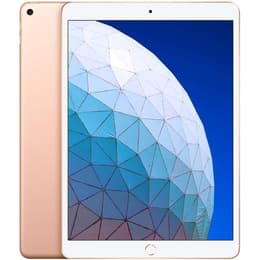
iPad Air 3 (2019, A12 series)
Starting at

Refurbished price:A$247.00

Versus A$739.00 new

See options
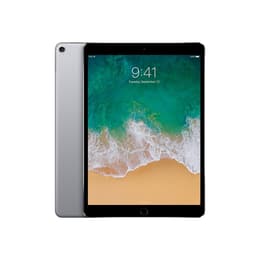
iPad Pro (2017, A10 series)
Starting at

Refurbished price:A$274.00

Versus A$739.00 new

See options

Ratings

The iPad Air 2019 and the iPad Pro 2017 are both versatile tablets from Apple, offering distinct capabilities for different user needs. While the iPad Air 2019, released in March 2019, features a newer processor, the iPad Pro 2017, launched in June 2017, distinguishes itself with a more advanced display and camera system. Both devices operate on Apple's iPadOS, providing a consistent software experience.

Scores

Durability

When considering the longevity of these tablets, several factors come into play, primarily their release timelines and Apple's typical software support.

  • Release Timeline: The iPad Pro 2017 was released in June 2017, making it older than the iPad Air 2019, which launched in March 2019. This difference in release date directly impacts their expected software support duration.
  • Software Longevity: Apple typically provides major iPadOS updates for about 5-6 years from a device's release. Given its later release, the iPad Air 2019 is likely to receive software updates for a longer period than the iPad Pro 2017, potentially extending its practical lifespan for users who prioritize the latest software features and security updates.
  • Practical Lifespan: Both models are built with durable aluminum unibody designs. While the iPad Pro 2017 was a premium device at its launch, the newer internal components of the iPad Air 2019 may offer a slight edge in long-term performance for demanding applications as software requirements evolve.

Release year

2019

2017

Compatible with latest Update

Yes

No

Operating system

iPadOS

iPadOS

Minimum system requirements (iPadOS)

iPadOS 18

iPadOS 17

Performance

The performance of these two iPads is influenced by their respective processors and RAM configurations, impacting how smoothly they handle various tasks.

  • Processing Power: The iPad Air 2019 is equipped with a newer generation processor, which generally translates to improved efficiency and faster execution of tasks. The iPad Pro 2017 features a powerful processor from its era, designed for demanding professional workflows.
  • Multitasking and Responsiveness: The iPad Pro 2017 comes with 4GB of RAM, offering robust capabilities for running multiple applications simultaneously and handling complex projects. The iPad Air 2019, with 3GB of RAM, provides a responsive experience for everyday use, web browsing, and most applications, though it may show a slight difference in very heavy multitasking scenarios compared to the Pro model.
  • Battery Behavior: Both tablets are designed to offer up to 10 hours of web surfing on Wi-Fi. User experiences suggest the iPad Pro 2017 can achieve impressive battery life, sometimes exceeding 13 hours for web browsing. The iPad Air 2019 also delivers a full day of usage for many users.

Memory (GB)

3 GB

4 GB

Processor

Apple A12 Bionic

Apple A10X Fusion

Screen quality

The display is a significant differentiator between these two models, particularly for visual tasks and overall user interaction.

  • Display Technology: Both devices feature a 10.5-inch IPS LCD Retina display with a resolution of 2224 x 1668 pixels, resulting in a pixel density of 264 pixels per inch. Both displays are fully laminated, support True Tone technology for adaptive white balance, and offer a wide color (P3) gamut for accurate color reproduction.
  • Refresh Rate: A key distinction is the iPad Pro 2017's ProMotion technology, which enables an adaptive refresh rate of up to 120Hz. This results in noticeably smoother scrolling, more fluid animations, and enhanced responsiveness, especially when using the Apple Pencil. The iPad Air 2019 has a standard 60Hz refresh rate.
  • Brightness: The iPad Pro 2017 offers a higher peak brightness of 600 nits, making it more visible in bright outdoor conditions compared to the iPad Air 2019's 500 nits brightness.

Resolution

2224 x 1668

2224 x 1668

True Tone

Yes

Yes

Promotion

No

Yes

Screen type

Retina display

Retina display

Pixel density

264ppp

264ppp

Brightness

500 nits brightness

600 nits brightness max

Sound quality

Speakers

Stereo speakers

Four speaker audio

Audiovisual

While tablets are not typically primary photography devices, both models offer capable camera systems for various uses, from video calls to document scanning.

  • Rear Camera System: The iPad Pro 2017 features a more advanced 12-megapixel rear camera with an f/1.8 aperture and optical image stabilization (OIS), capable of recording 4K video at 30 frames per second. This camera system is comparable to that found in the iPhone 7. The iPad Air 2019 has an 8-megapixel rear camera with an f/2.4 aperture, recording 1080p HD video at 30 frames per second.
  • Front Camera Performance: Both tablets are equipped with a 7-megapixel front-facing camera with an f/2.2 aperture, supporting 1080p HD video recording at 30 frames per second. This makes both suitable for clear video calls and selfies.
  • Photography Use Cases: The iPad Pro 2017's superior rear camera is better suited for capturing detailed photos and 4K videos, and for tasks like scanning documents where image quality is crucial. The iPad Air 2019's camera is functional for general use but may not offer the same level of detail or low-light performance.

Miscellaneous

Beyond core specifications, several practical features contribute to the overall user experience and device utility.

  • Connectivity and Ports: Both models support Wi-Fi 802.11a/b/g/n/ac and offer cellular options with Gigabit-class LTE. The iPad Air 2019 includes Bluetooth 5.0, a slight upgrade from the iPad Pro 2017's Bluetooth 4.2. Both devices feature a Lightning port for charging and data transfer, and notably, both retain a 3.5mm headphone jack.
  • Security and Accessories: Both tablets utilize Touch ID for secure authentication via the home button. They also support the first-generation Apple Pencil and Apple's Smart Keyboard accessories, enhancing their utility for productivity and creative tasks.
  • Design and Handling: Both the iPad Air 2019 and iPad Pro 2017 share very similar physical dimensions and weight, measuring 250.6 x 174.1 x 6.1 mm. The Wi-Fi models weigh around 456-469g, making them comfortable for extended use.

Weight

464 oz

469 oz

Width

17.41 in

17.41 in

Height

25.06 in

25.06 in

Depth

0.61 in

0.61 in

Screen size (in)

10.5

10.5

Network

Wi-Fi + 4G

Wi-Fi

Carrier compatibility

Unlocked

Without SIM Port

Wi-Fi version

Wi-Fi 6 802.11a/b/g/n/ac

Wi-Fi 6 802.11a/b/g/n/ac

Bluetooth version

Bluetooth 5.0

Bluetooth 4.2

Face ID

No

No

Touch ID

Yes

Yes

Connector

Lightning connector

Lightning connector

The iPad Air 2019 and iPad Pro 2017 each present a compelling package, catering to slightly different user priorities. User feedback often highlights the iPad Pro 2017's display as a significant advantage, particularly its ProMotion 120Hz refresh rate, which many find enhances the fluidity of interaction, especially for drawing and fast-paced content. Its more capable camera system is also frequently praised for its versatility. However, some users note that the iPad Pro 2017's older processor might feel less future-proof compared to newer models for very demanding applications over time.

Conversely, the iPad Air 2019 is often lauded for its more modern processor, which provides a strong balance of performance and efficiency for a wide range of tasks. Its slightly newer release date also means it benefits from a longer expected period of software updates. Criticisms sometimes point to its standard 60Hz display as a step down from the ProMotion experience, particularly for those accustomed to higher refresh rates.

Users who prioritize a smoother visual experience, especially for creative work with the Apple Pencil or for gaming, may find the iPad Pro 2017 well-suited to their needs due to its ProMotion display and more advanced camera. For those who value a newer processor for general productivity, web browsing, and a longer software support window, the iPad Air 2019 presents a strong option. Both devices offer a robust tablet experience, and choosing a quality-assured refurbished option can be an eco-friendly alternative for either model.


See all articles

Our recent comparisons