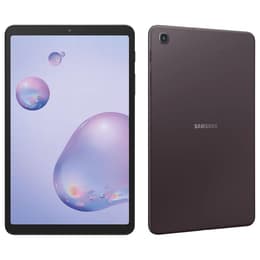
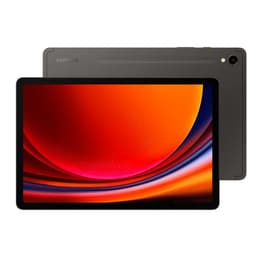

Galaxy Tab A (8.4", 2020) vs Galaxy Tab S9 (11.0", 2023)

Galaxy Tab A (8.4", 2020)
See options
Galaxy Tab S9 (11.0", 2023)
Starting at

Refurbished price:A$869.00

Versus A$2,427.00 new

See options

The Samsung Galaxy Tab A 8.4 (2020) and the Samsung Galaxy Tab S9 11.0 (2023) represent distinct offerings within Samsung's tablet lineup, separated by several years of technological advancement. The Tab A 8.4, released in March 2020, is a compact device designed for everyday media consumption and basic tasks, running on the Android operating system. In contrast, the Galaxy Tab S9, launched in August 2023, is a larger, more powerful tablet built for demanding applications, creative work, and immersive entertainment, also powered by Android. The primary differentiators lie in their display technology, processing capabilities, and overall build quality.

Scores

Durability

When considering the longevity of these tablets, their release dates and software support policies are key factors.

  • Software Updates: The Galaxy Tab A 8.4 (2020) launched with Android 9 or 10 and received updates up to Android 11, fulfilling its promised two major OS updates. As of 2026, it is unlikely to receive further major Android version upgrades, though security patches might continue for a limited time. The Galaxy Tab S9 (2023), released with Android 13, is promised four major OS updates and five years of security updates, extending its software support significantly further into the future, potentially supporting Android 17 by 2025.
  • Physical Durability: The Tab A 8.4 features a plastic back and glass front, offering standard durability for its class. The Galaxy Tab S9, however, boasts an Armor Aluminum frame and IP68 dust and water resistance, making it more resilient to environmental factors. This enhanced protection contributes to a longer practical lifespan, especially for users who frequently use their device in varied environments.
  • Repairability: While specific repairability scores for the Tab A 8.4 are not widely available, its construction is generally simpler. The Galaxy Tab S9 has a moderate repairability score, with accessible components like the battery, though screen removal can be a delicate process due to adhesive use.

Release year

2020

2023

Compatible with latest Update

No

Yes

Operating system

Android

Android

Performance

The performance capabilities of these two tablets reflect the generational gap and their intended use cases.

  • Processing Power: The Galaxy Tab A 8.4 (2020) is equipped with an octa-core processor, which handles everyday tasks like web browsing, email, and video streaming adequately. However, users have reported that the Android user interface can be sluggish at times, and it is not designed for demanding applications or high-end gaming. The Galaxy Tab S9 (2023) features a current-generation flagship processor, specifically optimized for Galaxy devices, which delivers robust performance. This allows for smooth multitasking, rapid app loading, and a seamless experience even with graphically intensive games and productivity software.
  • Memory and Storage: The Tab A 8.4 comes with 3GB of RAM and 32GB of internal storage, expandable via microSD up to 512GB. This configuration is suitable for light usage but can become a bottleneck with multiple apps open or large media libraries. The Galaxy Tab S9 offers significantly more memory, with options for 8GB or 12GB of RAM, and internal storage starting at 128GB or 256GB, expandable up to 1TB with a microSD card. This ample memory and storage capacity support more intensive multitasking and storage of extensive files and applications.
  • Battery Performance: The Tab A 8.4 has a 5,000 mAh battery, providing approximately 10-12 hours of video playback on a single charge. The Galaxy Tab S9 houses a larger 8,400 mAh battery, which, despite its more powerful components and higher-resolution display, is designed to last through a full day of work or study, with users reporting 5-8 hours of screen-on time under heavy use.

Memory (GB)

3 GB

12 GB

Processor

Exynos 7904

Qualcomm SM8550-AC Snapdragon 8 Gen 2

Screen quality

The visual experience differs significantly between these two tablets, primarily due to advancements in display technology.

  • Display Technology and Resolution: The Galaxy Tab A 8.4 (2020) features an 8.4-inch TFT LCD display with a resolution of 1920 x 1200 pixels, resulting in a pixel density of 270 pixels per inch (ppi). This provides a clear picture suitable for reading and video consumption. The Galaxy Tab S9 (2023) steps up to an 11-inch Dynamic AMOLED 2X display with a resolution of 2560 x 1600 pixels, offering a slightly higher pixel density of 274 ppi. The AMOLED technology delivers vibrant colors, deep blacks, and excellent contrast, enhancing the viewing experience for all types of content.
  • Refresh Rate and Brightness: The Tab A 8.4 has a standard refresh rate, which is typical for its release year and price point. The Galaxy Tab S9 features a 120Hz refresh rate, providing noticeably smoother scrolling and more fluid animations, which is particularly beneficial for gaming and fast-paced content. The Tab S9's Dynamic AMOLED 2X display also offers higher peak brightness, improving visibility in bright outdoor conditions compared to the Tab A 8.4's LCD panel.
  • Screen Size and Viewing Experience: The smaller 8.4-inch screen of the Tab A 8.4 makes it highly portable and comfortable for one-handed use, ideal for e-reading and casual browsing. The larger 11-inch display of the Galaxy Tab S9 provides a more expansive canvas for productivity, creative tasks, and immersive media consumption, making it well-suited for users who prioritize screen real estate.

Resolution

1200 x 1920

1600 x 2560

Screen type

TFT LCD

Dynamic AMOLED 2X

Pixel density

270ppp

280ppp

Audiovisual

The camera systems and audio experiences on these tablets cater to different user expectations and needs.

  • Camera Capabilities: The Galaxy Tab A 8.4 (2020) includes an 8MP rear camera and a 5MP front camera. These cameras are functional for basic photography and video calls, with the front camera performing decently in mixed lighting for video conferencing. However, the photo quality is generally considered average, and video recording at 1080p lacks optical image stabilization. The Galaxy Tab S9 (2023) features a 13MP rear camera and a 12MP ultrawide front camera. This setup offers sharper images with accurate colors in good lighting, and the ultrawide front camera is excellent for video calls, capable of keeping the user centered. While not designed to replace a smartphone camera, it provides a more capable imaging experience for a tablet.
  • Video Recording Quality: Both tablets are capable of recording video, with the Tab A 8.4 supporting 1080p at 30 frames per second. The Galaxy Tab S9 offers higher quality video recording, including 4K at 60 frames per second, providing more detailed and smoother video capture.
  • Audio Experience: The Tab A 8.4 is equipped with dual speakers, but some users have described their output as harsh and tinny, suggesting that headphones might offer a better listening experience. The Galaxy Tab S9 features quad speakers tuned by AKG with Dolby Atmos support, delivering a richer, fuller, and more immersive audio experience for media consumption and calls. The microphone quality on the Tab S9 is also noted for being clean with minimal background noise, which is beneficial for virtual meetings.

Miscellaneous

Beyond core performance and display, several practical features differentiate these two Samsung tablets.

  • Connectivity Standards: The Galaxy Tab A 8.4 (2020) supports Wi-Fi 5 (802.11 a/b/g/n/ac) and Bluetooth 5.0. Some users reported issues with 2.4GHz Wi-Fi performance. The Galaxy Tab S9 (2023) features more advanced connectivity with Wi-Fi 6E and Bluetooth 5.3, offering faster and more stable wireless connections. Both models offer LTE connectivity options for on-the-go internet access.
  • Ports and Sensors: The Tab A 8.4 includes a USB-C 2.0 port for charging and data transfer, along with a 3.5mm headphone jack. It has basic sensors like an accelerometer. The Galaxy Tab S9 comes with a USB-C 3.2 port, which offers faster data transfer speeds and supports external display output, but it lacks a 3.5mm headphone jack. It includes an on-screen fingerprint scanner for secure authentication, in addition to facial recognition.
  • Design and Build Materials: Weighing 309g and measuring 7.1mm thick, the Tab A 8.4 is a lightweight and compact device with a plastic and glass construction. The Galaxy Tab S9 is heavier at 498g and thinner at 5.9mm, featuring a more premium Armor Aluminum frame and glass front. The Tab S9 also includes an IP68 rating for dust and water resistance, a feature absent on the Tab A 8.4.
  • Stylus Support: A notable addition to the Galaxy Tab S9 is the included S Pen, which is IP68 rated and offers a natural, accurate, and lag-free writing and drawing experience with pressure sensitivity. The Tab A 8.4 does not support an active stylus.

Weight

309 oz

129 oz

Screen size (in)

8.4

11.0

Network

Wi-Fi

Wi-Fi

Carrier compatibility

Without SIM Port

Unlocked

Connector

USB Type-C

USB Type-C

The Samsung Galaxy Tab A 8.4 (2020) and Galaxy Tab S9 11.0 (2023) cater to different user needs and expectations, reflecting their respective release timelines and specifications. Users generally praise the Tab A 8.4 for its compact size, portability, and suitability for basic media consumption and e-reading. However, common criticisms include its sometimes sluggish performance, particularly with the user interface, and less-than-ideal Wi-Fi connectivity on the 2.4GHz band. Its speakers have also been noted as tinny.

The Galaxy Tab S9, on the other hand, receives widespread acclaim for its vibrant Dynamic AMOLED 2X display, powerful performance for demanding tasks and gaming, and its included, highly functional S Pen. Its robust build with IP68 rating and superior audio experience are also frequently highlighted as strengths. Some users have noted that while battery life is good, it might not always reach the advertised maximum under heavy use.

Users prioritizing a highly portable device for casual browsing, video streaming, and e-reading, where advanced performance and features are not critical, may find the Galaxy Tab A 8.4 well-suited to their needs. Its smaller form factor is ideal for easy handling and transport. Conversely, users who require a powerful tablet for productivity, creative applications, immersive entertainment, or demanding gaming will likely prefer the Galaxy Tab S9. Its larger, high-quality display, faster processor, and S Pen support make it a versatile tool for more intensive use cases.

For those considering either tablet, exploring quality-assured refurbished options can provide an eco-friendly alternative to purchasing new, extending the life cycle of these devices.

See all articles

Our recent comparisons