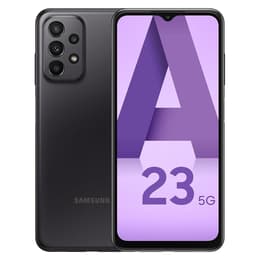
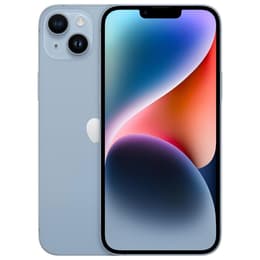

Galaxy A23 5G vs iPhone 14 Plus

Galaxy A23 5G
Galaxy A23 5G
Starting at

Refurbished price:A$219.00

Versus A$457.00 new

See options
iPhone 14 Plus
iPhone 14 Plus
Starting at

Refurbished price:A$480.00

Versus A$1,249.00 new

See options

Ratings

The Samsung Galaxy A23 5G, released in late 2022, and the iPhone 14 Plus, launched in October 2022, represent distinct approaches to the modern smartphone experience. While both offer large displays and 5G connectivity, they cater to different user preferences through their respective operating systems and hardware philosophies. The Galaxy A23 5G runs on Android, offering extensive customization, while the iPhone 14 Plus operates on iOS, known for its integrated ecosystem and streamlined user experience.

Scores

Durability

When considering the long-term usability of these devices, their release timelines and software support policies are key differentiators.

  • Release and Software Support: The Samsung Galaxy A23 5G, released in September 2022, typically receives two major Android OS upgrades and four years of security updates, with security patches initially quarterly and then biannually. It launched with Android 12 and has since been updated to Android 15. The iPhone 14 Plus, released in October 2022, benefits from Apple's longer software support, generally receiving 5-6 years of major iOS updates from its launch.
  • Durability Features: The iPhone 14 Plus features a Ceramic Shield front cover and an aluminum design, offering enhanced drop protection and an IP68 rating for water and dust resistance, allowing submersion up to 6 meters for 30 minutes. The Galaxy A23 5G incorporates Corning Gorilla Glass 5 for screen protection and a plastic back and frame.
  • Practical Lifespan: Users prioritizing extended software longevity and robust water resistance may find the iPhone 14 Plus more aligned with their needs. For those who value a device that receives consistent security updates over several years within the Android ecosystem, the Galaxy A23 5G offers a solid commitment.

Release year

2022

2022

Compatible with latest Update

Yes

Yes

Operating system

Android

iOS

Foldable

No

No

Performance

The performance of both devices impacts daily tasks, from app usage to multitasking and gaming.

  • Processing Power: The iPhone 14 Plus is equipped with a powerful processor that handles demanding applications and graphics-intensive games with smooth responsiveness. The Galaxy A23 5G features a current-generation processor designed for efficient 5G connectivity and capable performance for everyday tasks and moderate gaming.
  • Multitasking and Storage: The iPhone 14 Plus comes with 6GB of RAM, contributing to fluid multitasking and app switching. It offers storage options of 128GB, 256GB, or 512GB, though it does not support expandable storage. The Galaxy A23 5G is available with 4GB, 6GB, or 8GB of RAM, and provides 64GB or 128GB of internal storage, which can be expanded significantly via a microSD card up to 1TB.
  • Battery Behavior: The iPhone 14 Plus is noted for its exceptional battery life, with many users reporting it can last through a full day of heavy use, and often two days for moderate usage. The Galaxy A23 5G features a large 5000 mAh battery, which also provides extended usage times, often lasting a full day for most users.

Memory (GB)

4 GB

6 GB

Screen quality

The visual experience on both smartphones is shaped by their display technologies and specifications.

  • Display Technology and Clarity: The iPhone 14 Plus features a 6.7-inch Super Retina XDR OLED display, offering deep blacks, vibrant colors, and a high resolution of 2778 x 1284 pixels at 458 ppi, resulting in sharp and detailed visuals. The Samsung Galaxy A23 5G has a 6.6-inch PLS LCD display with a resolution of 2408 x 1080 pixels, providing clear visuals for general use.
  • Brightness and Refresh Rate: The iPhone 14 Plus achieves a typical brightness of 800 nits and a peak HDR brightness of 1200 nits, ensuring good visibility in various lighting conditions. It operates at a standard 60Hz refresh rate. The Galaxy A23 5G offers a 120Hz refresh rate, which contributes to smoother scrolling and a more fluid visual experience, with a typical brightness of around 430 nits, boosting to about 510 nits in auto mode.
  • Viewing Experience: Users who prioritize a smoother scrolling experience and fluid animations might prefer the higher refresh rate of the Galaxy A23 5G. Those who value superior contrast, color accuracy, and higher peak brightness for HDR content will find the OLED display of the iPhone 14 Plus more appealing.

Resolution

1080 x 2408

1284 x 2778

Screen type

PLS LCD

Super Retina XDR OLED

Audiovisual

Both devices offer camera systems capable of capturing photos and videos, though with different configurations and capabilities.

  • Rear Camera Systems: The iPhone 14 Plus features a dual-camera system with a 12MP main sensor (f/1.5 with sensor-shift optical image stabilization) and a 12MP ultrawide sensor (f/2.4 with a 120° field of view). It excels in everyday photography and offers improved low-light performance compared to its predecessor. The Galaxy A23 5G comes with a quad-camera setup, including a 50MP main sensor (f/1.8 with OIS), a 5MP ultrawide, a 2MP macro, and a 2MP depth sensor. The 50MP main camera often produces detailed images in good lighting.
  • Front Camera and Video Recording: The iPhone 14 Plus includes a 12MP TrueDepth front camera with autofocus and a wider aperture (f/1.9), leading to better low-light selfies and improved detail. It supports 4K HDR video recording up to 60 frames per second, along with Cinematic mode and Action mode for stabilized video. The Galaxy A23 5G has an 8MP front camera and records video at 1080p at 30 frames per second across all its cameras.
  • Audio Experience: The iPhone 14 Plus provides stereo speakers for a more immersive audio experience. The Galaxy A23 5G typically features a single bottom-firing speaker.

Main camera

50 megapixels

12 megapixels

Front camera

8 megapixels

12 megapixels

Miscellaneous

Beyond core features, several practical elements contribute to the overall user experience of these smartphones.

  • Connectivity and Ports: Both devices support 5G connectivity. The iPhone 14 Plus uses a Lightning port for charging and data transfer and supports Wi-Fi 6 and Bluetooth 5.3. It also features dual eSIM support in some regions. The Galaxy A23 5G includes a USB-C 2.0 port, a 3.5mm headphone jack, Wi-Fi 5, and Bluetooth 5.1.
  • Biometrics and Sensors: The iPhone 14 Plus relies on Face ID for secure facial recognition. It also includes a proximity sensor, accelerometer, gyroscope, barometer, and dual ambient light sensors. The Galaxy A23 5G features a side-mounted fingerprint sensor for authentication, along with an accelerometer, gyroscope, and virtual proximity sensor.
  • Design and Handling: The iPhone 14 Plus measures 160.8 x 78.1 x 7.8 mm and weighs 203g, with an aluminum frame and glass back. The Galaxy A23 5G measures 165.4 x 76.9 x 8.4 mm and weighs 197g, featuring a plastic back and frame.

Weight

197 oz

203 oz

Screen size (in)

6.6

6,7

Network

5G

5G

SIM card

Physical SIM

Physical SIM + eSIM

Carrier compatibility

Unlocked

Unlocked

User feedback for the iPhone 14 Plus frequently highlights its exceptional battery life as a major advantage, with many appreciating the large OLED display for media consumption. Common criticisms often point to the 60Hz refresh rate, which some users find less fluid compared to devices with higher refresh rates, and the continued use of the Lightning port. The camera system, particularly the improved selfie camera, generally receives praise for its consistent performance.

For the Samsung Galaxy A23 5G, users often commend its 120Hz display for smooth interactions and its long-lasting 5000 mAh battery. The inclusion of expandable storage and a 3.5mm headphone jack are also frequently cited as positive aspects. Some users have noted that performance can occasionally feel less responsive with lower RAM configurations, and the ultrawide camera's quality might not match the main sensor.

Users prioritizing a large, vibrant OLED display, robust video capabilities, and a highly integrated software ecosystem with extended update support will likely find the iPhone 14 Plus well-suited to their needs. Its strong battery performance makes it ideal for those who need a device to last through long periods of use. Conversely, users who value a smoother scrolling experience from a higher refresh rate display, the flexibility of expandable storage, and the versatility of the Android operating system may lean towards the Samsung Galaxy A23 5G. It also offers a compelling option for those seeking an eco-friendly, quality-assured refurbished alternative.

See all articles

Our recent comparisons