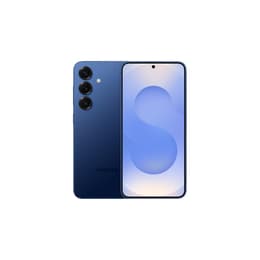


Galaxy S25 vs Google Pixel 7 Pro

Galaxy S25
Galaxy S25
Starting at

Refurbished price:A$852.00

Versus A$1,399.00 new

See options
Google Pixel 7 Pro
Google Pixel 7 Pro
Starting at

Refurbished price:A$520.00

Versus A$1,219.00 new

See options

Ratings

The Samsung Galaxy S25, released in February 2025, and the Google Pixel 7 Pro, launched in October 2022, represent different generations within the premium smartphone segment. While both devices offer high-end Android experiences, the Galaxy S25 benefits from more recent hardware advancements and extended software support, whereas the Pixel 7 Pro stands out with its established computational photography and a distinct software approach.

Scores

Durability

When considering the practical lifespan of these devices, several factors come into play, including software support, physical durability, and the age of the components.

  • Software Longevity: The Samsung Galaxy S25 launched with Android 15 and is guaranteed to receive seven years of OS upgrades and security updates, extending its support through 2032. This commitment ensures the device remains current and secure for a significantly longer period. In contrast, the Google Pixel 7 Pro, released with Android 13, typically receives three major OS updates (up to Android 16) and five years of security updates, meaning its official software support will conclude sooner than the S25.
  • Physical Durability: The Galaxy S25 features an aluminum frame and Gorilla Glass Victus 2 on both the front and back, providing robust protection against drops and scratches. It also carries an IP68 rating for dust and water resistance. The Pixel 7 Pro also has an aluminum frame and Gorilla Glass Victus for its display and back panel, along with an IP68 rating. However, some durability tests for the Pixel 7 Pro indicated that its polished metal camera bar is susceptible to scratches, and the device showed notable flex during bend tests, potentially compromising its water resistance over time.
  • Expected Practical Lifespan: Users prioritizing the longest possible software and security updates will find the Galaxy S25 a more future-proof option. While both devices are built to withstand daily use, the S25's newer protective glass and the Pixel 7 Pro's noted susceptibility to camera bar scratches and body flex suggest the S25 might maintain its aesthetic and structural integrity more readily over an extended period.

Release year

2025

2022

Foldable

No

No

Performance

Performance is a key area where newer technology often provides an advantage, impacting everything from app responsiveness to multitasking capabilities and battery efficiency.

  • Processing Power: The Samsung Galaxy S25 is equipped with a current-generation processor, manufactured on a 3nm process. This advanced chipset provides substantial performance headroom, ensuring demanding applications, complex multitasking, and graphics-intensive gaming run smoothly and efficiently. The Google Pixel 7 Pro, powered by its second-generation Tensor chip, offers capable performance for everyday tasks and handles most applications with ease, but it represents an older generation of mobile processing technology.
  • Multitasking and Storage: Both devices come with 12GB of RAM, which is ample for fluid multitasking and switching between numerous applications without significant slowdowns. The Galaxy S25 offers internal storage options of 128GB and 256GB, while the Pixel 7 Pro provides more varied choices, including 128GB, 256GB, and 512GB.
  • Battery Behavior: The Galaxy S25 houses a 4000 mAh battery, designed to last a full day with mixed usage and offering up to 29 hours of video playback. The Pixel 7 Pro features a larger 5000 mAh battery. Real-world battery endurance for both devices depends on usage patterns, but the S25's newer, more efficient processor contributes to optimized power consumption, allowing it to achieve comparable or better screen-on times despite a smaller battery capacity in some scenarios.

Memory (GB)

12 GB

12 GB

Screen quality

The display is a primary interface for smartphones, and both the Galaxy S25 and Pixel 7 Pro offer high-quality viewing experiences with distinct characteristics.

  • Display Technology and Clarity: The Samsung Galaxy S25 features a 6.2-inch Dynamic LTPO AMOLED 2X display with a 2340x1080 (FHD+) resolution, resulting in approximately 416 pixels per inch. The Google Pixel 7 Pro sports a larger 6.7-inch LTPO OLED curved-edge display with a higher QHD+ resolution of 3120x1440 pixels, yielding a sharper 512 pixels per inch. Both technologies deliver deep blacks and vibrant colors, characteristic of OLED panels.
  • Brightness and Refresh Rate: The Galaxy S25 boasts a peak brightness of 2600 nits, offering excellent visibility even in bright outdoor conditions. The Pixel 7 Pro also provides strong brightness, though typically lower than the S25's peak. Both devices feature a 120Hz adaptive refresh rate, which allows for smooth scrolling and responsive interactions. The LTPO technology in both enables the refresh rate to dynamically adjust, optimizing power consumption.
  • Viewing Experience: Users who prefer a more compact device will appreciate the S25's 6.2-inch screen, while the Pixel 7 Pro's larger 6.7-inch display offers a more expansive canvas for media consumption and productivity. The Pixel 7 Pro's higher resolution provides a slightly crisper image, particularly noticeable with fine details.

Resolution

1080x2340

1440 x 3120

Audiovisual

Both the Samsung Galaxy S25 and Google Pixel 7 Pro are recognized for their advanced camera systems, though they approach photography with different strengths, blending hardware capabilities with computational enhancements.

  • Rear Camera Systems: The Galaxy S25 features a triple rear camera setup, including a 50MP wide-angle main sensor with optical image stabilization (OIS), a 12MP ultrawide camera with a 120-degree field of view, and a 10MP telephoto lens offering 3x optical zoom. The Pixel 7 Pro also has a triple rear camera system: a 50MP wide main camera with OIS, a 12MP ultrawide camera with a wider 125.8-degree field of view and autofocus (enabling Macro Focus), and a 48MP telephoto lens providing 5x optical zoom and up to 30x Super Res Zoom.
  • Photography Performance: The Galaxy S25 benefits from newer sensor technology and Samsung's ProVisual Engine, which includes AI-driven optimizations for enhanced detail, color reproduction, and low-light performance. The Pixel 7 Pro excels in computational photography, leveraging its Tensor chip for features like Magic Eraser, Photo Unblur, and exceptional low-light performance with Night Sight. Its ultrawide camera's autofocus also enables a dedicated Macro Focus mode for close-up shots.
  • Video Recording and Front Camera: Both devices support high-quality video recording. The Galaxy S25 can record up to 8K at 30fps and 4K at 30/60fps, with 10-bit HDR video. The Pixel 7 Pro records 4K video at 30 or 60fps on all its cameras, including the front-facing 10.8MP ultrawide camera, and offers features like Cinematic Blur for video. The S25 has a 12MP front-facing camera.

Miscellaneous

Beyond core performance and camera capabilities, several practical elements contribute to the overall user experience and device utility.

  • Connectivity and Ports: The Samsung Galaxy S25 supports the latest connectivity standards, including 5G, Wi-Fi 7, and Bluetooth 5.4, offering faster and more reliable wireless connections. The Google Pixel 7 Pro supports 5G, Wi-Fi 6E, and Bluetooth 5.2. Both devices utilize a USB Type-C port for charging and data transfer and lack a traditional 3.5mm headphone jack.
  • Biometrics and Build Materials: The Galaxy S25 incorporates an ultrasonic in-screen fingerprint sensor for secure unlocking. The Pixel 7 Pro features an under-display optical fingerprint scanner and also offers Face Unlock for convenient access. The S25 uses an aluminum frame with Gorilla Glass Victus 2 on both the front and back. The Pixel 7 Pro also has an aluminum frame and Gorilla Glass Victus.
  • Dimensions and Handling: The Galaxy S25 is a more compact device, measuring 146.9 x 70.5 x 7.2 mm and weighing 162g. The Pixel 7 Pro is larger and heavier at 162.9 x 76.6 x 8.9 mm and 212g. Users preferring a smaller, lighter phone for one-handed use will find the S25 more manageable, while the Pixel 7 Pro's larger size might appeal to those who prefer a more substantial device.

Weight

162 oz

212 oz

Screen size (in)

6.2

67

SIM card

Physical SIM + eSIM

Physical SIM + eSIM

Carrier compatibility

Unlocked

Unlocked

The Samsung Galaxy S25 and Google Pixel 7 Pro cater to slightly different user priorities, reflecting their respective release timelines and design philosophies. User feedback for the Galaxy S25 often praises its cutting-edge performance, vibrant display, and the significant commitment to long-term software support, which ensures the device remains relevant and secure for many years. Some users appreciate its refined design and advanced AI features. Criticisms, though less frequent due to its newer status, sometimes point to incremental hardware upgrades over its immediate predecessor, with the main improvements being internal and software-driven.

The Google Pixel 7 Pro, while an older model, is frequently lauded for its exceptional camera capabilities, particularly its computational photography features like Magic Eraser and Night Sight, which consistently produce high-quality images. Users also value its clean Android experience and timely software updates (for its generation). Common criticisms have included concerns about the durability of its camera bar and some reports of the device flexing under pressure, suggesting that a protective case is highly recommended for long-term physical integrity. Its battery life, while generally good, is sometimes noted as being less consistent than some newer flagships.

Users prioritizing the absolute latest in mobile technology, extended software longevity, and a compact yet powerful device will find the Samsung Galaxy S25 well-suited to their needs. Its newer processor and longer support window make it a strong choice for those seeking a device that will remain current for the longest possible time. Conversely, individuals who place a premium on computational photography, a pure Android experience, and unique camera features may lean towards the Google Pixel 7 Pro. It continues to deliver a strong camera performance and a smooth software experience, even as an older model.

For those considering either device, exploring quality-assured refurbished options can provide an eco-friendly alternative, offering access to these advanced smartphones while contributing to a more sustainable consumption model.


See all articles

Our recent comparisons