Galaxy S25 vs Galaxy S25+

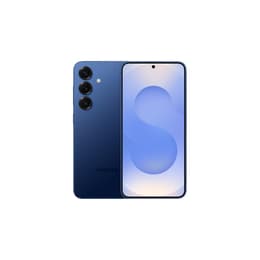
Galaxy S25
Galaxy S25
Starting at

Refurbished price:A$852.00

Versus A$1,399.00 new

See options
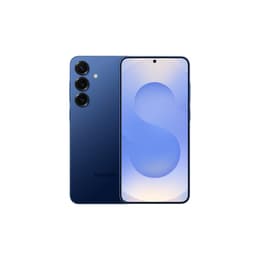
Galaxy S25+
Galaxy S25+
Starting at

Refurbished price:A$919.00

Versus A$1,699.00 new

See options

The Samsung Galaxy S25 and Galaxy S25 Plus, both released in February 2025, represent Samsung's flagship Android smartphone offerings. While sharing a common foundation in their operating system and core features, these devices primarily differentiate themselves through variations in screen size, battery capacity, and overall physical dimensions.

Scores

Durability

When considering the longevity of a smartphone, both software support and physical resilience play significant roles. The Galaxy S25 and S25 Plus offer a consistent experience in these areas.

  • Software Longevity: Both the Galaxy S25 and S25 Plus launched with Android 15 and One UI 7, and Samsung has committed to providing seven years of OS and security updates for the S25 series. This extended support ensures that both devices will receive new features and security patches well into the future, with support expected to end around 2032.
  • Physical Durability: Both models feature an aluminum body and a glass back, with Corning Gorilla Glass Victus 2 protecting both the front display and rear panel. They also share an IP68 rating for dust and water resistance, allowing submersion in up to 1.5 meters of water for 30 minutes.
  • Repairability: While specific repairability scores can vary, the general construction and materials used across both models suggest a similar ease of repair.

Release year

2025

2025

Operating system

Android

Android

Foldable

No

No

Performance

The performance of the Galaxy S25 and S25 Plus is largely consistent, driven by identical core components, though battery behavior differs due to physical size.

  • Processing Power: Both the Galaxy S25 and S25 Plus are powered by the same current-generation processor, the Snapdragon 8 Elite for Galaxy, which is manufactured using a 3 nm process. This ensures smooth handling of demanding applications, efficient multitasking, and responsive gaming experiences.
  • Multitasking Capability: Both models come with 12GB of RAM as standard, providing ample capacity for running multiple applications simultaneously without noticeable slowdowns.
  • Battery Behavior: The Galaxy S25 features a 4,000mAh battery, while the Galaxy S25 Plus is equipped with a larger 4,900mAh battery. This difference translates to the S25 Plus generally offering longer usage times, with users reporting it can last through a full day of heavy use. The S25 Plus also supports faster 45W wired charging compared to the S25's 25W wired charging.

Memory (GB)

12 GB

12 GB

Screen quality

The visual experience on both devices is vibrant and clear, though the Galaxy S25 Plus offers a more expansive and detailed display.

  • Display Technology and Clarity: Both smartphones feature a Dynamic AMOLED 2X display with a 120Hz adaptive refresh rate, ensuring smooth scrolling and responsive interactions. The Galaxy S25 has a 6.2-inch display with a 2340 x 1080 pixel resolution (FHD+), resulting in approximately 416 pixels per inch (ppi). The Galaxy S25 Plus, on the other hand, offers a larger 6.7-inch display with a 3120 x 1440 pixel resolution (QHD+), providing a sharper visual experience with around 513 ppi.
  • Brightness and Outdoor Visibility: Both models boast a peak brightness of 2600 nits, making them easily visible even in direct sunlight.
  • Viewing Experience: The larger screen of the Galaxy S25 Plus provides approximately 20% more screen area, which can enhance the immersion for video consumption, gaming, and multitasking. The increased resolution on the Plus model also contributes to a more detailed and crisp image.

Resolution

1080x2340

1440x3120

Audiovisual

The camera systems on the Galaxy S25 and S25 Plus are identical, providing a consistent photography and videography experience across both devices.

  • Camera System Capabilities: Both the Galaxy S25 and S25 Plus are equipped with a triple rear camera setup, featuring a 50MP main wide camera with optical image stabilization (OIS), a 12MP ultra-wide camera, and a 10MP telephoto camera with 3x optical zoom. They also share a 12MP front-facing camera with autofocus.
  • Photography Performance: Users can expect clean 12-megapixel stills from the main camera with good detail, wide dynamic range, and vibrant colors. Both phones perform well in low-light conditions with automatic night mode, producing photos with balanced processing and good highlight retention. The ultra-wide lens on both models effectively captures sweeping landscapes without significant image warping.
  • Video Recording Quality: Both models are capable of recording video in 8K resolution at up to 30 frames per second (fps), and offer stabilization at lower resolutions and frame rates. The front-facing camera supports 4K video recording at 60fps.
  • Audio Experience: Both S25 models include stereo speakers with Dolby Atmos support, delivering clear audio with some bass. The Plus model's speakers are slightly louder.

Miscellaneous

Beyond core performance and display, several practical elements distinguish the user experience of these two smartphones.

  • Connectivity: Both the Galaxy S25 and S25 Plus support 5G connectivity, along with Wi-Fi 7 and Bluetooth 5.3, ensuring fast and reliable wireless connections. The Galaxy S25 Plus also includes Ultra Wideband (UWB) support, which is not present on the base S25 model.
  • Physical Characteristics: The Galaxy S25 measures 146.9 x 70.5 x 7.2 mm and weighs 162 grams, making it a more compact and lighter option. The Galaxy S25 Plus is larger and heavier, measuring 158.4 x 75.8 x 7.3 mm and weighing 190 grams. This size difference impacts one-handed usability, with the S25 being more comfortable for single-hand operation.
  • Biometric Security: Both devices feature an ultrasonic in-display fingerprint scanner for secure unlocking and authentication. They also support face recognition.
  • Charging and Ports: Both models utilize a USB-C port for charging and data transfer. The Galaxy S25 supports 25W wired charging, while the S25 Plus supports faster 45W wired charging. Both also support wireless charging.

Weight

162 oz

190 oz

Screen size (in)

6.2

6.7

Network

5G

5G

SIM card

Physical SIM + eSIM

Physical SIM + eSIM

Carrier compatibility

Unlocked

Unlocked

User feedback often highlights the Galaxy S25's appeal for its compact form factor and ease of one-handed use. Its smaller size is frequently praised by those who prefer a more pocketable device. However, some users note that its 4,000mAh battery, while optimized, may require more frequent charging for heavy use compared to its larger sibling.

The Galaxy S25 Plus is generally lauded for its larger, higher-resolution display and significantly longer battery life, making it a preferred choice for media consumption and extended usage. Its larger size and weight are sometimes mentioned as a trade-off for these benefits, potentially making one-handed operation less comfortable for some users.

Users prioritizing portability and a device that is comfortable for one-handed operation may find the Galaxy S25 well-suited to their needs. Conversely, users who prioritize an immersive viewing experience, extended battery life, and faster charging will likely lean towards the Galaxy S25 Plus. Both devices offer a consistent software experience with long-term support and identical camera systems. For those seeking a quality-assured refurbished option, both the Galaxy S25 and S25 Plus are available, providing a sustainable choice for consumers.

See all articles

Our recent comparisons