
Compare models

Galaxy S24 Ultra vs Google Pixel 9a

  • 1-year warranty
  • Free standard shipping
  • Free 30-day returns
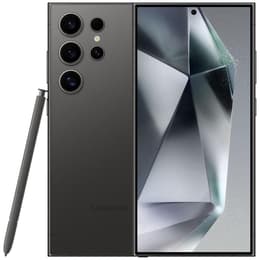
Galaxy S24 Ultra
Starting at

Refurbished price:A$819.00

Versus A$1,852.00 new

See options
Google Pixel 9a
Starting at

Refurbished price:A$586.44

Versus A$719.76 new

See options

Differences at a glance

The Samsung Galaxy S24 Ultra (2024) and the Google Pixel 9a (2025) represent distinct approaches to modern smartphone engineering, catering to different user preferences and handling styles. While the Galaxy S24 Ultra functions as a feature-rich productivity powerhouse running Android, the Google Pixel 9a focuses on streamlined everyday intelligence and simplicity running Android. Both devices deliver modern mobile experiences, but their underlying specifications and physical designs appeal to contrasting priorities.

Available Models

Colour

Storage

Scores

Durability

When examining hardware longevity and software support, both smartphones offer robust multi-year lifespans backed by extended manufacturer updates, though their build materials differ in impact resistance.

  • Software Support Window: The Google Pixel 9a benefits from an extended seven-year update commitment, matching the long-term software lifecycle provided by the Galaxy S24 Ultra's multi-year update policy.
  • Build Durability: The Galaxy S24 Ultra incorporates a titanium frame and advanced glass protection designed to resist scratching, whereas the Pixel 9a utilizes a streamlined composite back designed for everyday resilience.
  • Repair Accessibility: Both manufacturers provide structured repair pathways and parts availability, ensuring that choosing a quality-assured refurbished option from Back Market remains a sustainable and practical way to extend device longevity.

Release year

2024

2025

Operating system

Android

Android

Foldable

No

No

Performance

Daily responsiveness and multitasking capabilities vary based on internal hardware configuration and software optimization between the two devices.

  • App Loading and Multitasking: The Galaxy S24 Ultra handles demanding mobile games and heavy productivity applications simultaneously thanks to its higher memory capacity, while the Pixel 9a manages everyday tasks and multitasking smoothly with its balanced hardware configuration.
  • Battery Behavior: Both models integrate large batteries capable of lasting through a full day of typical mixed usage, though the Pixel 9a manages power efficiently for standard messaging and web browsing tasks.
  • System Fluidity: Navigation, web browsing, and switching between open applications feel instantaneous on both smartphones due to responsive current-generation processing architectures.

Screen quality

Display characteristics differ significantly in size, format, and peak brightness levels to accommodate varying media consumption preferences.

  • Panel Technology: Both devices feature vibrant OLED displays with deep contrast levels and rich colors, though the Galaxy S24 Ultra offers a larger 6.8-inch panel compared to the Pixel 9a's more compact 6.3-inch screen.
  • Outdoor Visibility: High peak brightness capabilities on both screens ensure clear readability under direct sunlight during outdoor navigation or photography sessions.
  • Refresh Rate Smoothness: Both models support adaptive refresh rates reaching up to 120Hz, delivering smooth scrolling through web pages, documents, and social media feeds.

Resolution

1440 x 3120

1080x2424

Screen type

Dynamic LTPO AMOLED 2X

P-OLED

Audiovisual

Photography and media recording suites approach imaging from different engineering angles, balancing hardware versatility with automated software processing.

  • Lens Versatility: The Galaxy S24 Ultra features a quad-camera array including dedicated long-range telephoto lenses for distant subjects, while the Pixel 9a utilizes a streamlined dual-lens setup focused on primary wide-angle and ultra-wide shots.
  • Computational Photography: Google's processing software excels at balanced exposure and natural skin tones in everyday snapshots, whereas Samsung's system emphasizes fine detail capture and flexible zoom ranges.
  • Video and Audio Quality: Both smartphones record stable high-resolution video with clear internal microphone capture suitable for voice notes, video calls, and casual clip creation.

Miscellaneous

Physical dimensions, handling characteristics, and auxiliary hardware features define the ergonomic day-to-day experience of each device.

  • Physical Handling: The Pixel 9a offers a lighter, more compact footprint that suits single-handed operation, whereas the Galaxy S24 Ultra provides a wider, boxier chassis to accommodate its integrated stylus and expansive screen.
  • Biometric Security: Both models provide responsive biometric authentication through secure in-display fingerprint sensors and facial recognition capabilities.
  • Connectivity Standards: Complete modern connectivity suites on both devices include 5G compatibility, fast Wi-Fi standards, and near-field communication for mobile payments.

Weight

232 oz

186 oz

Screen size (in)

6.8

6.3

Network

5G

5G

SIM card

Physical SIM + eSIM

Physical SIM + eSIM

Carrier compatibility

Unlocked

Unlocked

What the community thinks

User feedback from community discussions highlights distinct preferences for each device based on everyday habits. Owners of the Galaxy S24 Ultra frequently praise its expansive display space, versatile zoom photography, and integrated stylus for note-taking, though some note its heavier physical weight in the hand. Conversely, Pixel 9a users regularly commend its comfortable single-handed ergonomics, reliable battery longevity, and straightforward software interface, while occasionally noting the absence of optical zoom hardware.

Users prioritizing productivity tools, large screen estate, and flexible camera focal lengths will find the Galaxy S24 Ultra well-suited to their requirements. Meanwhile, users who value a lighter physical footprint, comfortable handling, and streamlined software will lean toward the Google Pixel 9a. Exploring a quality-assured refurbished option through Back Market provides an eco-friendly alternative for acquiring either device while supporting sustainable technology choices.