
Galaxy S21 FE 5G vs Motorola Razr 40 Ultra

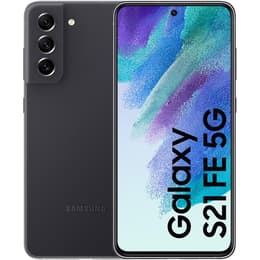
Galaxy S21 FE 5G
Galaxy S21 FE 5G
Starting at

Refurbished price:A$328.00

Versus A$1,252.00 new

See options
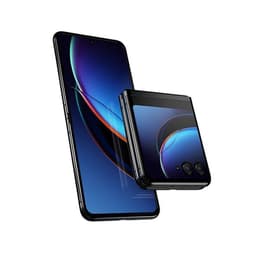
Motorola Razr 40 Ultra
See options

The Samsung Galaxy S21 FE 5G, released in January 2022, and the Motorola Razr 40 Ultra, launched in June 2023, represent distinct approaches to modern smartphone design. While the Galaxy S21 FE offers a traditional slab form factor with a focus on core flagship features, the Razr 40 Ultra stands out with its innovative foldable clamshell design and prominent external display. Both devices operate on the Android platform, providing a familiar software experience, but cater to different user preferences regarding form factor and interaction.

Scores

Durability

When considering the long-term usability of these devices, their release timelines and software support policies are key factors. The Galaxy S21 FE, being an earlier release, has a slightly shorter remaining software support window compared to the more recent Razr 40 Ultra.

  • Software Longevity: The Samsung Galaxy S21 FE launched with Android 12 and is expected to receive four major Android OS updates, extending its support to Android 16, along with five years of security updates. The Motorola Razr 40 Ultra, released with Android 13, is promised three major Android OS upgrades, also bringing it up to Android 16, and four years of bi-monthly security updates. This means both devices are projected to receive their final major OS update around the same time, despite their different release dates.
  • Physical Durability: The Galaxy S21 FE features Gorilla Glass Victus on its display and an IP68 rating for dust and water resistance, offering robust protection against everyday elements. The Razr 40 Ultra, with its foldable design, uses Gorilla Glass Victus on its cover display and an aluminum frame, alongside an IP52 rating for splash resistance. While the Razr 40 Ultra's hinge mechanism is designed for durability with a minimal crease, some users have reported concerns about the internal screen protector peeling or developing hairline cracks over extended use.
  • Practical Lifespan: For users prioritizing maximum software updates, both devices offer comparable long-term OS support. However, the traditional design of the S21 FE might offer a perceived advantage in physical resilience for those concerned about the moving parts of a foldable device.

Release year

2022

2023

Compatible with latest Update

Yes

Yes

Operating system

Android

Android

Foldable

No

Yes

Performance

Both smartphones are equipped with capable processors designed to handle a variety of tasks, though they belong to different generations of chip architecture, influencing their overall responsiveness and power efficiency.

  • Processing Power: The Galaxy S21 FE is powered by a processor that delivers strong performance for daily applications, multitasking, and even demanding games, ensuring a smooth user experience. The Motorola Razr 40 Ultra features a more recent generation processor, providing enhanced speed and efficiency, particularly noticeable in graphic-intensive applications and seamless multitasking.
  • Battery Behavior: The Galaxy S21 FE houses a 4500mAh battery, which for some users provides all-day power with moderate usage, though heavy use or consistent 120Hz refresh rates and 5G connectivity can lead to more frequent charging. The Razr 40 Ultra has a 3800mAh battery, which, despite its smaller capacity, often delivers a full day of use, especially when leveraging its efficient external display for quick interactions.
  • System Responsiveness: Both devices offer fluid navigation and quick app loading. The Razr 40 Ultra's newer processor generally provides a slight edge in sustained high-performance tasks and overall system snappiness, while the S21 FE remains highly responsive for most users.

Memory (GB)

8 GB

8 GB

Screen quality

The display experience on these two devices differs significantly, primarily due to the Razr 40 Ultra's unique foldable form factor and dual-screen setup, offering distinct advantages for different use cases.

  • Display Technology and Clarity: The Samsung Galaxy S21 FE features a 6.4-inch Dynamic AMOLED 2X display, known for its vibrant colors, deep blacks, and excellent clarity with a Full HD+ resolution. The Motorola Razr 40 Ultra boasts a 6.9-inch foldable pOLED main display with a similar Full HD+ resolution, offering rich colors and sharp visuals. Its standout feature is the large 3.6-inch pOLED external cover display, which is highly functional and can run full applications, providing a unique interaction method when the phone is closed.
  • Brightness and Refresh Rate: Both phones offer high refresh rates for smooth scrolling and responsive interactions. The S21 FE has an adaptive 120Hz refresh rate and a 240Hz touch sampling rate in game mode, along with good brightness for outdoor visibility. The Razr 40 Ultra's main display features an adaptive refresh rate up to 165Hz, while its external display supports up to 144Hz, both providing a very fluid visual experience.
  • Viewing Experience: The S21 FE provides a consistent, expansive viewing area ideal for media consumption and productivity. The Razr 40 Ultra's main screen offers an immersive experience when unfolded, while its large external display allows for quick glances, notifications, and even full app usage without needing to open the device, catering to users who value quick, discreet interactions.

Resolution

1080 x 2340

1080 x 2640

Screen type

Dynamic AMOLED 2X

Foldable LTPO AMOLED

Audiovisual

Both the Galaxy S21 FE and the Razr 40 Ultra offer versatile camera systems, each with strengths that cater to different photographic needs and user styles.

  • Rear Camera Capabilities: The Galaxy S21 FE features a triple-camera setup including a 12MP wide-angle lens with optical image stabilization (OIS), a 12MP ultrawide lens, and an 8MP telephoto lens capable of 3x optical zoom. This configuration provides flexibility for various shots, from expansive landscapes to distant subjects. The Razr 40 Ultra comes with a dual-camera system on the rear, comprising a 12MP main sensor with a wide f/1.5 aperture and OIS, alongside a 13MP ultrawide lens that also functions for macro photography.
  • Photography Performance: The S21 FE is known for producing vibrant and detailed photos, especially in well-lit conditions, with its scene optimization software enhancing colors. Its telephoto lens is a notable advantage for zooming. The Razr 40 Ultra's main camera performs well in good lighting, capturing bright and detailed images, and its wider aperture assists in low-light scenarios. However, some users note that the Razr 40 Ultra's camera performance, particularly in challenging lighting, may not match the best traditional smartphones.
  • Video and Selfie Quality: Both devices support 4K video recording at 60 frames per second from their main cameras. For selfies, the S21 FE has a 32MP front camera, capable of 4K video recording. The Razr 40 Ultra also features a 32MP internal selfie camera, which uses pixel binning for its output, and its external display can be used for high-quality selfies with the main rear cameras.

Main camera

12 megapixels

12 megapixels

Front camera

32 megapixels

32 megapixels

Miscellaneous

Beyond their core functionalities, both the Galaxy S21 FE and the Razr 40 Ultra offer a range of features that enhance user experience, from connectivity to physical design elements.

  • Connectivity and Ports: Both smartphones support 5G connectivity for fast mobile data. The Galaxy S21 FE includes Wi-Fi 6, while the Razr 40 Ultra supports the newer Wi-Fi 6E standard, offering potentially faster and more stable wireless connections. Both devices utilize a USB-C port for charging and data transfer, and neither includes a traditional headphone jack.
  • Biometric Security and Sensors: For secure unlocking, the S21 FE features an optical in-display fingerprint sensor. The Razr 40 Ultra integrates a side-mounted fingerprint sensor into its power button. Both phones also offer face recognition. Standard sensors like accelerometers, gyroscopes, and proximity sensors are present on both devices.
  • Design and Handling: The Galaxy S21 FE is a conventional slab phone, weighing 177g and measuring 7.9mm thick, offering a comfortable and familiar in-hand feel. The Razr 40 Ultra, as a foldable, is significantly more compact when closed (88.4 x 74 x 15.1mm) and lighter at around 184.5g to 188.5g, making it highly pocketable. When unfolded, it is very thin at 6.99mm. The Razr 40 Ultra's build materials include Gorilla Glass Victus and an aluminum frame, with some variants offering a vegan leather finish, providing a distinct tactile experience.

Weight

177 oz

1 oz

Screen size (in)

6.4

6.9

Network

5G

5G

SIM card

Physical SIM

Dual Physical SIM

Carrier compatibility

Unlocked

Unlocked

The Samsung Galaxy S21 FE 5G and the Motorola Razr 40 Ultra cater to different user priorities, reflecting their distinct designs and feature sets. The Galaxy S21 FE is often praised for its consistent performance, vibrant display, and reliable camera system, particularly its telephoto lens, making it a solid choice for users seeking a traditional smartphone experience with flagship-level capabilities. Some common criticisms, however, include mixed reports on battery life, especially with heavy usage, and occasional heating under load.

Conversely, the Motorola Razr 40 Ultra receives significant acclaim for its innovative foldable design and the highly functional, large external display, which allows for extensive interaction without opening the phone. Its compact form factor when closed is a major draw for users valuing portability. While its performance is generally strong, some users note that the camera, while capable, might not compete with the best traditional smartphones, and there are occasional concerns about the long-term durability of the internal screen.

Users prioritizing a robust, conventional smartphone with a strong all-around feature set and a proven track record may find the Galaxy S21 FE 5G more aligned with their needs. Those who value a unique, compact form factor, an innovative external display for quick interactions, and a modern aesthetic will likely lean towards the Motorola Razr 40 Ultra. Both devices offer compelling features, and choosing between them often comes down to whether a traditional slab or a cutting-edge foldable design better suits one's daily usage and style preferences. For those considering either device, exploring quality-assured refurbished options can be an eco-friendly alternative to extend their lifecycle.

See all articles

Our recent comparisons