
Galaxy S21 5G vs Motorola Razr 40 Ultra

Galaxy S21 5G
Galaxy S21 5G
Starting at

Refurbished price:A$317.00

Versus A$1,369.00 new

See options
Motorola Razr 40 Ultra
See options

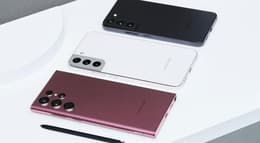
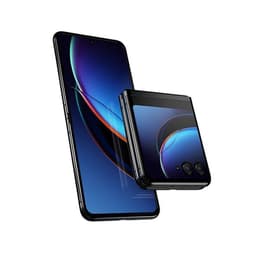
The Samsung Galaxy S21 5G, released in January 2021, is a traditional slab-style smartphone, offering a premium experience within a conventional design. In contrast, the Motorola Razr 40 Ultra, launched in June 2023, presents a modern take on the foldable clamshell form factor. The primary distinctions between these two devices lie in their physical design, release timelines, and the Razr 40 Ultra's innovative large external display. Both smartphones operate on the Android platform, though the Razr 40 Ultra benefits from a more recent version of the operating system at its launch.

Scores

Durability

The durability and expected lifespan of these devices differ significantly due to their release dates and form factors.

  • Software Support: The Galaxy S21 5G, released in January 2021, received four major Android OS updates, with its final major update (Android 15) delivered in early 2025. Its last security update was in November 2025, and as of February 2026, it no longer receives software updates. The Motorola Razr 40 Ultra, launched in June 2023, is promised three years of Android OS updates and four years of bi-monthly security updates, extending its software longevity further into the future.
  • Physical Resilience: The Galaxy S21 5G features a Gorilla Glass Victus front, a plastic back, and an aluminum frame, with an IP68 rating for dust and water resistance. Its repairability score is noted to be around 7.5/10 by some, indicating relative ease of disassembly, though the battery can be challenging to remove. However, iFixit gave it a 4/10, citing a fragile screen and sticky battery. The Motorola Razr 40 Ultra incorporates Gorilla Glass Victus for its external display, a 7000 series aluminum frame, and a vegan leather finish on certain models. It carries an IP52 rating, offering splash resistance rather than full water immersion protection. Its repairability is considered challenging, scoring 4/10, due to the complexity of its folding mechanism and the use of strong adhesives.
  • Folding Mechanism: The Razr 40 Ultra's foldable design introduces a hinge mechanism and a flexible inner screen, which, while advanced, can present different durability considerations compared to a rigid display. Some durability tests have shown the cover screen to be susceptible to shattering under certain pressures.

Release year

2021

2023

Compatible with latest Update

Yes

Yes

Operating system

Android

Android

Foldable

No

Yes

Performance

Both smartphones deliver capable performance, but the newer Razr 40 Ultra benefits from a more recent generation of internal components.

  • Processing Power: The Galaxy S21 5G was equipped with a high-end processor at its release, enabling smooth operation for everyday tasks, demanding applications, and mobile gaming. The Motorola Razr 40 Ultra features a more advanced processor, providing a highly responsive user experience and efficient handling of intensive applications and multitasking.
  • Memory and Storage: The Galaxy S21 5G typically comes with 8GB of RAM and offers storage options of 128GB or 256GB. The Razr 40 Ultra is available with 8GB or 12GB of RAM and 256GB or 512GB of internal storage, offering more headroom for demanding users and larger app libraries.
  • Battery Behavior: The Galaxy S21 5G houses a 4000 mAh battery, generally providing a full day of use for moderate users, though heavy usage may necessitate more frequent charging. The Motorola Razr 40 Ultra has a 3800 mAh battery, which, in user tests, typically provides around 4.5 hours of screen-on time. This might require a top-up during the day for users with intensive usage patterns, a common characteristic for devices with a foldable form factor.

Memory

8 GB

8 GB

Screen quality

The display experience on these two devices is a key differentiator, primarily due to the Razr 40 Ultra's foldable design and dual screens.

  • Main Display Technology: The Galaxy S21 5G features a 6.2-inch Dynamic AMOLED 2X display, known for its vibrant colors, deep blacks, and excellent contrast. It offers a resolution of 1080 x 2400 pixels and an adaptive refresh rate of up to 120Hz for smooth scrolling and responsiveness. The Motorola Razr 40 Ultra's main screen is a larger 6.9-inch foldable LTPO AMOLED panel with a resolution of 1080 x 2640 pixels. This display boasts a high refresh rate of up to 165Hz, contributing to an exceptionally fluid visual experience.
  • Brightness and Clarity: Both devices offer bright displays suitable for outdoor visibility. The Galaxy S21 5G can reach a peak brightness of 1300 nits. The Razr 40 Ultra's main display can achieve a peak brightness of 1400 nits, ensuring good readability in various lighting conditions.
  • Unique External Display: A standout feature of the Razr 40 Ultra is its 3.6-inch external AMOLED display, which has a resolution of 1056 x 1066 pixels and a 144Hz refresh rate. This secondary screen is highly functional, allowing users to interact with apps, view notifications, and even take photos without opening the phone. The Razr 40 Ultra's main foldable screen does have a visible crease, which is typical for this form factor.

Resolution

1080 x 2400

1080 x 2640

Screen type

Dynamic AMOLED 2X

Foldable LTPO AMOLED

Audiovisual

Both smartphones offer capable camera systems, but they cater to slightly different photographic needs and experiences.

  • Rear Camera Systems: The Galaxy S21 5G is equipped with a versatile triple-camera setup on the rear, comprising a 12MP wide-angle lens, a 12MP ultrawide lens, and a 64MP telephoto lens with 3x hybrid optical zoom. This configuration allows for a range of photographic styles, from expansive landscapes to detailed zoomed-in shots. The Motorola Razr 40 Ultra features a dual-camera system on its rear, consisting of a 12MP wide-angle lens with a bright f/1.5 aperture and optical image stabilization (OIS), alongside a 13MP ultrawide lens with autofocus. It lacks a dedicated telephoto lens.
  • Photography Performance: The Galaxy S21 5G was praised at its launch for sharp photos, effective low-light performance, and improved focus, with the ability to record 8K video. While still capable, some users in 2024 noted its camera might not match the sharpness of newer devices. The Razr 40 Ultra's main camera performs well in good lighting and can capture quality images in low-light conditions, though it may struggle with capturing fast-moving subjects. Its ultrawide camera is generally considered to be of lesser quality and can produce washed-out images.
  • Front Camera and Video: The Galaxy S21 5G includes a 10MP front camera. The Motorola Razr 40 Ultra features a higher-resolution 32MP front camera. A notable advantage of the Razr 40 Ultra is the ability to use its main rear cameras for high-quality selfies and vlogging, utilizing the large external display as a viewfinder. Both devices are capable of recording 4K video.

Main camera

12 megapixels

12 megapixels

Front camera

10 megapixels

32 megapixels

Miscellaneous

Beyond core features, several practical elements distinguish these two smartphones in daily use.

  • Connectivity and Ports: Both devices support 5G connectivity, ensuring access to faster mobile networks. The Galaxy S21 5G supports Wi-Fi 6 and Bluetooth 5.0/5.1. The Motorola Razr 40 Ultra offers more advanced connectivity with Wi-Fi 6e and Bluetooth 5.3. Both phones utilize a USB-C port for charging and data transfer.
  • Biometric Security: The Galaxy S21 5G incorporates an in-display fingerprint sensor for secure unlocking. The Razr 40 Ultra features a side-mounted fingerprint sensor, integrated into the power button.
  • Form Factor and Handling: The Galaxy S21 5G is a compact traditional smartphone, measuring 151.7 x 71.2 x 7.9 mm and weighing 171g, making it comfortable for one-handed use. The Motorola Razr 40 Ultra, when unfolded, is taller and thinner at 170.83 x 73.95 x 6.99 mm, but folds down to a compact 88.42 x 73.95 x 15.1 mm, weighing 188.5g. Its foldable nature allows for a smaller footprint when carried in a pocket or bag.

Weight

169 oz

1 oz

Screen size (in)

6.2

6.9

Network

5G

5G

SIM card

Physical SIM + eSIM

Dual Physical SIM

Carrier compatibility

Unlocked

Unlocked

The Samsung Galaxy S21 5G and Motorola Razr 40 Ultra cater to different user preferences, primarily due to their distinct form factors and release timelines. The Galaxy S21 5G, upon its release, was widely praised for its balanced size, robust performance, and a versatile camera system that delivered sharp photos and good low-light capabilities. Users appreciated its vibrant display and the overall smooth Android experience. However, some common criticisms included its plastic back, which some perceived as less premium than glass, and battery performance that, while generally lasting a day, could be strained by heavy use.

The Motorola Razr 40 Ultra stands out for its innovative foldable design and its highly functional large external display, which users find enhances daily usability by reducing the need to constantly open the phone. Its smooth performance and unique compact form factor when folded are frequently highlighted as strong advantages. On the other hand, common points of concern for the Razr 40 Ultra include its camera performance, which, while good, is often noted as not matching the capabilities of leading traditional flagship smartphones, and its IP52 splash resistance rating, which offers less protection than the higher water resistance found on many non-foldable devices.

Users prioritizing a traditional, compact smartphone experience with a proven camera system and a higher water resistance rating may find the Galaxy S21 5G well-suited to their needs. Conversely, individuals who value a unique, compact foldable design, a highly interactive external display, and a more recent software update commitment will likely lean towards the Motorola Razr 40 Ultra. Both devices, whether new or as quality-assured refurbished options, offer distinct advantages for different user profiles, enabling informed and sustainable choices.

See all articles

Our recent comparisons