
Galaxy S21 5G vs iPhone SE (2020)

Galaxy S21 5G
Galaxy S21 5G
Starting at

Refurbished price:A$318.00

Versus A$1,369.00 new

See options
iPhone SE (2020)
iPhone SE (2020)
Starting at

Refurbished price:A$108.00

Versus A$529.00 new

See options

Ratings

The Samsung Galaxy S21 5G, released in January 2021, and the Apple iPhone SE 2020, launched in April 2020, represent distinct approaches to smartphone design and functionality. While the Galaxy S21 offers a modern, expansive display and a versatile camera system running on Android, the iPhone SE 2020 provides a compact form factor with a classic design and Apple's iOS ecosystem. These differences cater to varying user preferences, particularly concerning screen size, operating system experience, and camera capabilities.

Scores

Durability

The practical lifespan of a smartphone is influenced by its release timeline, software support, and physical durability.

  • Release Timeline and Software Support: The Galaxy S21 5G, released in early 2021, typically receives several years of Android operating system updates and security patches from Samsung. The iPhone SE 2020, launched in April 2020, benefits from Apple's extended software support, often receiving iOS updates for five to six years from its release, with iOS 26.3 available as of March 2026. This suggests the iPhone SE 2020 may offer a slightly longer period of active software support from its manufacturer compared to the Galaxy S21 5G, given its earlier release.
  • Durability Features: The Galaxy S21 5G features Corning Gorilla Glass Victus on its display and an IP68 rating for dust and water resistance, indicating robust protection against environmental elements. The iPhone SE 2020, while also offering IP67 dust and water resistance, uses Ion-Strengthened Glass for its display. Both devices are designed to withstand splashes and dust, but the Galaxy S21's higher IP rating and newer glass technology suggest a marginal advantage in overall resilience.
  • Repairability: The Galaxy S21 5G has been noted for a relatively high repairability score, with some assessments giving it 7.5/10 or 7.75/10, citing an easily removable back plate and replaceable parts. However, its battery can be challenging to remove due to strong adhesive. The iPhone SE 2020 received a repairability score of 6/10, with common components like the display and battery being relatively straightforward to replace, though its glass back is less practical to repair.

Release year

2021

2020

Compatible with latest Update

Yes

Yes

Operating system

Android

iOS

Foldable

No

No

Performance

Performance in both devices is driven by their respective chipsets, impacting app responsiveness, multitasking, and gaming experiences.

  • Processing Power: The Galaxy S21 5G is equipped with a current-generation processor (Exynos 2100 or Snapdragon 888 depending on region), which provides a significant boost in CPU, GPU, and AI processing capabilities, ensuring smooth operation for demanding applications and multitasking. The iPhone SE 2020 features the Apple A13 Bionic chip, known for its strong performance, allowing it to handle intensive games and applications with fluidity.
  • Multitasking and Storage: With 8GB of RAM, the Galaxy S21 5G offers ample memory for seamless multitasking and switching between numerous applications. It comes with 128GB or 256GB of internal storage, though it lacks a microSD card slot for expansion. The iPhone SE 2020 includes 3GB of RAM, which is sufficient for typical daily usage and multitasking within the iOS environment, and is available with 64GB, 128GB, or 256GB storage options without expansion.
  • Battery Behavior: The Galaxy S21 5G houses a 4000 mAh battery, generally providing all-day power for average users, though heavy use of features like the 120Hz display or 5G connectivity can lead to faster depletion. The iPhone SE 2020 has a smaller 1821 mAh battery, which often requires more frequent charging for users with high screen-on time or demanding applications.

Memory (GB)

8 GB

3 GB

Screen quality

The visual experience on these devices differs significantly due to their display technologies and designs.

  • Display Technology and Resolution: The Galaxy S21 5G features a 6.2-inch Dynamic AMOLED 2X display with a Full HD+ resolution (1080 x 2400 pixels), offering vibrant colors, deep blacks, and excellent contrast. The iPhone SE 2020 utilizes a 4.7-inch IPS LCD display with a resolution of 1334 x 750 pixels, providing accurate colors and good viewing angles, though it does not match the contrast levels of an OLED panel.
  • Brightness and Refresh Rate: The Galaxy S21 5G boasts a peak brightness of 1300 nits, ensuring good visibility even in bright outdoor conditions, and an adaptive 120Hz refresh rate for smooth scrolling and responsive interactions. The iPhone SE 2020 offers a peak brightness of 625 nits and a standard 60Hz refresh rate, which is adequate for most daily tasks but less fluid than higher refresh rate displays.
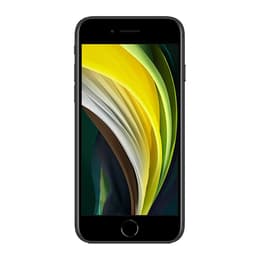
  • Screen Size and Design: The Galaxy S21 5G provides a larger, nearly edge-to-edge display with minimal bezels, offering an immersive viewing experience for media consumption and productivity. The iPhone SE 2020 retains a more traditional design with a smaller screen and prominent bezels above and below the display, which some users prefer for one-handed use and the presence of a physical home button.

Resolution

1080 x 2400

750 x 1334

Screen type

Dynamic AMOLED 2X

Retina IPS LCD

Audiovisual

Both smartphones offer capable camera systems, though with different configurations and strengths.

  • Rear Camera System: The Galaxy S21 5G features a versatile triple-camera setup on the rear, including a 12MP main lens, a 12MP ultrawide lens, and a 64MP telephoto lens, providing flexibility for various shooting scenarios. It includes optical image stabilization on the main and telephoto cameras. The iPhone SE 2020 has a single 12MP wide-angle rear camera with optical image stabilization, relying heavily on its powerful processor for image processing.
  • Photography Performance: The Galaxy S21 5G delivers good quality photos with natural colors and offers features like Director's View and an improved Night mode, enhancing its performance in diverse lighting conditions. The iPhone SE 2020 excels in well-lit conditions, producing sharp and detailed images, and its portrait mode works effectively for human subjects. However, it lacks a dedicated Night mode and generally struggles in low-light environments compared to devices with more advanced sensors or computational photography features.
  • Video Recording and Audio: Both devices are capable of recording high-quality video. The Galaxy S21 5G offers advanced video features and excellent stabilization, even at higher zoom levels. The iPhone SE 2020 can record 4K video at up to 60 frames per second, with good stabilization, though its low-light video performance is not as strong. Both phones provide decent microphone quality for calls and recordings, and stereo speakers for media consumption.

Main camera

12 megapixels

12 megapixels

Front camera

10 megapixels

7 megapixels

Miscellaneous

Beyond core features, several practical elements differentiate these two devices in daily use.

  • Connectivity and Ports: The Galaxy S21 5G supports 5G connectivity, Wi-Fi 6, and Bluetooth 5.0/5.2, offering faster network speeds and modern wireless communication. It uses a USB-C port for charging and data transfer. The iPhone SE 2020 supports 4G LTE, Wi-Fi 6, and Bluetooth 5.0, but does not include 5G capabilities. It features Apple's proprietary Lightning connector.
  • Biometric Security: The Galaxy S21 5G incorporates an in-display ultrasonic fingerprint sensor and facial recognition for secure unlocking. The iPhone SE 2020 relies on the Touch ID fingerprint sensor integrated into its physical home button, which many users find reliable and convenient.
  • Physical Design and Handling: The Galaxy S21 5G has dimensions of 151.7 x 71.2 x 7.9 mm and weighs 169 grams, offering a relatively compact yet expansive feel with its larger screen. The iPhone SE 2020 is smaller and lighter at 138.4 x 67.3 x 7.3 mm and 148 grams, making it particularly suitable for users who prefer a device that is easy to handle with one hand and fits comfortably in smaller pockets.

Weight

169 oz

148 oz

Screen size (in)

6.2

4.7

Network

5G

4G

SIM card

Physical SIM + eSIM

Physical SIM + eSIM

Carrier compatibility

Unlocked

Unlocked

Connector

USB-C

Lightning

User feedback for the Samsung Galaxy S21 5G often praises its vibrant display, smooth performance, and versatile camera system, particularly its ability to capture detailed photos and videos. Common criticisms sometimes point to its battery life under heavy usage and the absence of expandable storage. Users generally appreciate its modern design and the inclusion of 5G connectivity.

The iPhone SE 2020 is frequently lauded for its powerful processing capabilities, compact size, and the familiarity of its classic iPhone design with Touch ID. However, its smaller, lower-resolution LCD screen with large bezels and its battery life are often cited as drawbacks. Its camera performs well in good lighting but lacks advanced features like a dedicated Night mode.

Users prioritizing a large, high-refresh-rate display, a multi-lens camera system, and 5G connectivity may find the Samsung Galaxy S21 5G better suited to their needs. Its Android operating system also offers more customisation options. Conversely, individuals who prefer a smaller, more pocketable device, appreciate the physical home button with Touch ID, and are deeply integrated into the Apple ecosystem may lean towards the iPhone SE 2020. Both devices offer a quality-assured refurbished option, providing a sustainable choice for consumers.

See all articles

Our recent comparisons