
Galaxy S20 FE vs iPhone 8

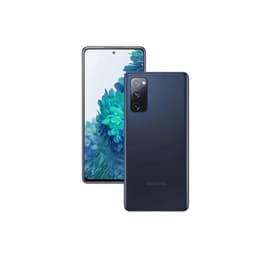
Galaxy S20 FE
Galaxy S20 FE
Starting at

Refurbished price:A$268.29

Versus A$578.00 new

See options
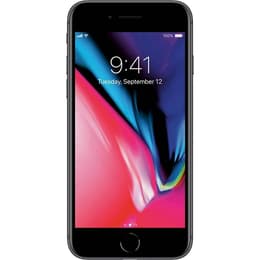
iPhone 8
iPhone 8
Starting at

Refurbished price:A$154.00

Versus A$409.00 new

See options

Ratings

The Samsung Galaxy S20 FE (Fan Edition), released in October 2020, and the Apple iPhone 8, launched in September 2017, represent distinct approaches to smartphone design and functionality from their respective eras. While both devices offer a complete smartphone experience, the Galaxy S20 FE provides a more modern feature set with a versatile camera system and a high-refresh-rate display, contrasting with the iPhone 8's more compact form factor and traditional design.

Scores

Durability

When considering the long-term usability of these devices, their release timelines and software support policies are key factors.

  • Software Longevity: The iPhone 8, released in 2017, received major iOS updates up to iOS 16. It no longer receives new major operating system versions, though it may still get security patches for a period. The Galaxy S20 FE, launched in 2020, was promised three major Android OS upgrades and five years of security patches, with its final security update expected around October 2025. This means the Galaxy S20 FE has a more recent software support cutoff.
  • Practical Lifespan: Users of the iPhone 8 might encounter app compatibility issues over time as developers update their applications to require newer iOS versions. The Galaxy S20 FE, having received more recent OS updates, is likely to maintain broader app compatibility for a longer duration.
  • Durability Features: Both devices offer a degree of water and dust resistance; the Galaxy S20 FE is rated IP68, while the iPhone 8 is rated IP67. The Galaxy S20 FE features Gorilla Glass 3 on the front, and the iPhone 8 has a glass front and back.

Release year

2020

2017

Compatible with latest Update

No

No

Operating system

Android

iOS

Foldable

No

No

Performance

The performance capabilities of these two smartphones reflect their different generations and underlying architectures.

  • Processing Power: The Galaxy S20 FE, with its more recent processor, handles demanding applications and multitasking with greater fluidity. Users will experience faster app loading times and smoother transitions between tasks. The iPhone 8, while still capable for everyday use, may show signs of slower performance with newer, more resource-intensive applications due to its older generation processor.
  • Multitasking and Responsiveness: The Galaxy S20 FE typically comes with more RAM, contributing to a more seamless multitasking experience, allowing users to switch between multiple open applications without significant slowdowns. The iPhone 8's lower RAM capacity means it may need to reload apps more frequently when switching between them.
  • Battery Behavior: The Galaxy S20 FE features a substantially larger battery capacity (4500 mAh) compared to the iPhone 8 (1821 mAh), generally translating to longer usage times on a single charge for the S20 FE, even with its higher refresh rate display. Heavy users of the iPhone 8 may find themselves needing to charge more frequently throughout the day.

Memory (GB)

6 GB

2 GB

Screen quality

The visual experience offered by these devices differs significantly due to advancements in display technology and design trends.

  • Display Technology and Clarity: The Galaxy S20 FE features a 6.5-inch Super AMOLED display, known for its vibrant colors, deep blacks, and high contrast. The iPhone 8 has a smaller 4.7-inch IPS LCD Retina HD display, which provides accurate colors but does not achieve the same level of contrast or true black as an AMOLED panel.
  • Refresh Rate and Smoothness: A key differentiator is the refresh rate; the Galaxy S20 FE offers a 120Hz refresh rate, resulting in noticeably smoother scrolling and more fluid animations. The iPhone 8 has a standard 60Hz refresh rate.
  • Brightness and Viewing Experience: Both displays offer sufficient brightness for indoor use, but the Galaxy S20 FE's AMOLED panel generally performs better in bright outdoor conditions. The larger screen size of the S20 FE also provides a more immersive viewing experience for media consumption and gaming.

Resolution

1080 x 2400

750 x 1334

Screen type

Super AMOLED

Retina IPS LCD

Audiovisual

The camera systems of these two phones reflect different design philosophies and technological advancements over time.

  • Rear Camera Versatility: The Galaxy S20 FE boasts a triple-camera setup on the rear, including a 12MP wide-angle lens, a 12MP ultra-wide lens, and an 8MP telephoto lens with 3x optical zoom, offering greater flexibility for various shooting scenarios. The iPhone 8 features a single 12MP wide-angle rear camera.
  • Photography Performance: The S20 FE's main camera captures detailed and vibrant photos, with an improved Night Mode for low-light conditions. The iPhone 8's single camera is capable of producing good quality images in well-lit environments, with optical image stabilization, but its low-light performance is less robust.
  • Video Recording and Audio: Both devices can record 4K video at 60 frames per second. The Galaxy S20 FE offers stereo speakers for a more immersive audio experience, a feature also present in the iPhone 8.

Main camera

12 megapixels

12 megapixels

Front camera

32 megapixels

7 megapixels

Miscellaneous

Beyond core features, several practical elements contribute to the overall user experience of these smartphones.

  • Connectivity Options: The Galaxy S20 FE supports modern connectivity standards, including 5G (in some variants) and newer Wi-Fi standards, offering faster data speeds where available. The iPhone 8 supports LTE and Wi-Fi 802.11ac.
  • Ports and Biometrics: The Galaxy S20 FE uses a USB-C port for charging and data transfer, a widely adopted standard. The iPhone 8 utilizes Apple's proprietary Lightning port. For security, the S20 FE features an under-display optical fingerprint sensor, while the iPhone 8 uses a front-mounted Touch ID fingerprint sensor integrated into its home button.
  • Design and Handling: The Galaxy S20 FE has a larger 6.5-inch screen and a plastic back with a matte finish, which can offer a secure grip and resist fingerprints. The iPhone 8, with its 4.7-inch display and glass back, provides a more compact and traditional feel, though the glass can be prone to fingerprints. Both devices support wireless charging.

Weight

190 oz

148 oz

Screen size (in)

6.5

4.7

Network

4G

4G

SIM card

Physical SIM

Physical SIM

Carrier compatibility

Unlocked

Unlocked

The Samsung Galaxy S20 FE and the iPhone 8 cater to different user preferences, largely due to their generational gap and distinct operating systems.

Users often praise the Galaxy S20 FE for its vibrant 120Hz AMOLED display, versatile camera system with optical zoom, and robust battery life, making it a strong contender for those who consume a lot of media or enjoy mobile photography. Some criticisms have pointed to its plastic back, which some users perceive as less premium than glass, and the eventual end of its software update cycle.

The iPhone 8 is frequently lauded for its compact size, reliable performance for everyday tasks, and the familiarity of its iOS ecosystem. Its physical home button with Touch ID is also a preferred feature for some users. Common concerns for the iPhone 8 revolve around its smaller, lower-refresh-rate display, single rear camera, and the fact that it no longer receives major iOS updates, which can impact long-term app compatibility and security.

Users prioritizing a modern, expansive display, a flexible camera setup, and extended battery life for media consumption and diverse photography needs may find the Galaxy S20 FE more aligned with their requirements. Conversely, individuals who prefer a smaller, more traditional smartphone design, value the simplicity of iOS, and primarily use their device for essential tasks might lean towards the iPhone 8. Both devices, particularly as quality-assured refurbished options, offer a sustainable choice for consumers looking to extend the life cycle of electronic products.

See all articles

Our recent comparisons