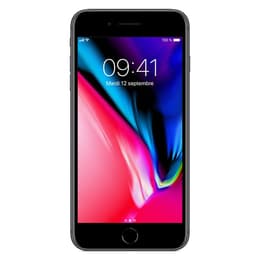

Galaxy S10 vs iPhone 8 Plus

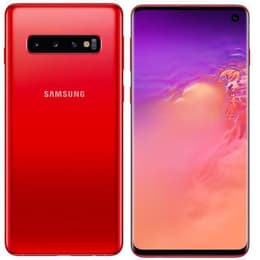
Galaxy S10
Galaxy S10
Starting at

Refurbished price:A$359.00

Versus A$849.00 new

See options
iPhone 8 Plus
iPhone 8 Plus
Starting at

Refurbished price:A$203.92

Versus A$499.00 new

See options

Ratings

The Samsung Galaxy S10, released in March 2019, and the Apple iPhone 8 Plus, launched in September 2017, represent distinct approaches to smartphone design and functionality from their respective eras. While both devices offer robust performance and camera capabilities, the Galaxy S10 introduced a more modern, all-screen design and a versatile multi-camera system, running on the Android operating system. In contrast, the iPhone 8 Plus maintains a classic Apple aesthetic with its physical home button and operates within the familiar iOS ecosystem.

Scores

Durability

When evaluating the long-term usability of these devices, their release timelines and software support are key considerations.

  • Release Timeline and Age: The Galaxy S10 was released in March 2019, making it approximately one and a half years newer than the iPhone 8 Plus, which launched in September 2017. This difference in age can impact how long each device remains fully compatible with new applications and services.
  • OS Support Duration: The Galaxy S10 received its last major Android OS update with Android 12 (One UI 4.1), and security updates for the original models concluded in March 2023. The iPhone 8 Plus concluded its major iOS updates with iOS 16 (iOS 16.7.15 as of March 2026) but continues to receive security patches. This means the iPhone 8 Plus may still receive critical security updates for a period, while the Galaxy S10's official support has largely ended.
  • Physical Durability: Both phones feature glass backs and aluminum frames. The Galaxy S10 incorporates Gorilla Glass 6 on the front and Gorilla Glass 5 on the rear, offering a slightly more advanced level of screen protection compared to the iPhone 8 Plus's Ion-strengthened glass, which is comparable to Gorilla Glass 5. The Galaxy S10 also boasts an IP68 rating for dust and water resistance, providing slightly better protection than the iPhone 8 Plus's IP67 rating.

Release year

2019

2017

Compatible with latest Update

No

No

Operating system

Android

iOS

Foldable

No

No

Performance

The performance of these two smartphones is influenced by their respective hardware and software optimizations, leading to different real-world experiences.

  • Processing Power: The Galaxy S10, with its newer generation processor, handles demanding applications and multitasking smoothly. The iPhone 8 Plus, powered by its own hexa-core processor, still offers a responsive experience for everyday tasks and many applications.
  • Multitasking Capability: The Galaxy S10 typically features more RAM, allowing it to manage a greater number of applications open in the background without needing to reload them frequently, contributing to a seamless multitasking experience. The iPhone 8 Plus, with less RAM, is optimized by its operating system to manage resources efficiently, providing a fluid user experience despite the lower specification.
  • Storage Options: The Galaxy S10 offers a base storage of 128GB and includes a microSD card slot for expandable storage, providing flexibility for users who need more space. The iPhone 8 Plus comes with fixed storage options up to 256GB, without the possibility of expansion.
  • Battery Behavior: The Galaxy S10 features a 3400 mAh battery, while the iPhone 8 Plus has a 2691 mAh battery. Actual battery life for both devices depends significantly on usage patterns and the current health of the battery, which naturally degrades over time. Users of both models have reported that a battery replacement can significantly extend daily usability.

Memory (GB)

8 GB

3 GB

Screen quality

The display technology and design present notable differences between these two smartphones, impacting the visual experience.

  • Display Technology and Clarity: The Galaxy S10 features a 6.1-inch Dynamic AMOLED display with a resolution of 1440x3040 pixels, offering vibrant colors, deep blacks, and high contrast. The iPhone 8 Plus uses a 5.5-inch IPS LCD panel with a 1080x1920 pixel resolution, known for its accurate color reproduction and good viewing angles. The higher resolution of the Galaxy S10 results in a sharper and more detailed image.
  • Brightness and Viewing Experience: Both devices offer sufficient brightness for typical indoor use. The Galaxy S10's AMOLED technology generally provides better visibility in bright outdoor conditions due to its inherent contrast. The iPhone 8 Plus includes True Tone technology, which adjusts the display's color temperature to match ambient lighting, providing a more natural viewing experience.
  • Refresh Rate and Smoothness: Both the Galaxy S10 and the iPhone 8 Plus feature a standard 60Hz refresh rate, meaning the smoothness of scrolling and animations is comparable between the two.

Resolution

1440 x 3040

1080 x 1920

Screen type

Dynamic AMOLED

Retina IPS LCD

Audiovisual

The camera systems of the Galaxy S10 and iPhone 8 Plus offer distinct capabilities for photography and videography.

  • Rear Camera Versatility: The Galaxy S10 features a triple-camera setup, including a 12MP wide-angle, a 12MP telephoto, and a 16MP ultrawide lens, providing greater versatility for various shooting scenarios. The iPhone 8 Plus has a dual-camera system with a 12MP wide-angle and a 12MP telephoto lens.
  • Photography Performance: In good lighting, both phones capture detailed images. The Galaxy S10 generally offers better low-light performance and more dynamic range due to its newer sensor technology and variable aperture. The iPhone 8 Plus is often praised for its color accuracy and natural skin tones, particularly in portrait shots. The S10's ultrawide lens allows for broader landscape and group shots.
  • Video Recording and Front Camera: Both devices are capable of recording 4K video at 60 frames per second. The Galaxy S10 also offers advanced features like super slow-motion video. For selfies and video calls, the Galaxy S10 has a 10MP front camera, while the iPhone 8 Plus features a 7MP front camera.

Main camera

12 megapixels

12 megapixels

Front camera

10 megapixels

7 megapixels

Miscellaneous

Beyond core specifications, several practical elements differentiate the user experience of these two devices.

  • Connectivity and Ports: Both phones support 4G LTE and modern Wi-Fi standards (802.11 a/b/g/n/ac) and Bluetooth 5.0. The Galaxy S10 uses a USB-C port for charging and data transfer, and notably retains a 3.5mm headphone jack. The iPhone 8 Plus uses Apple's proprietary Lightning connector and does not have a headphone jack.
  • Biometric Security: The Galaxy S10 features an ultrasonic in-display fingerprint reader, allowing for a more seamless front design. The iPhone 8 Plus utilizes a physical home button with Touch ID for fingerprint recognition.
  • Design and Handling: The Galaxy S10 features a more contemporary design with slimmer bezels and a punch-hole camera cutout, resulting in a larger screen-to-body ratio. It weighs 157g and measures 149.9 x 70.4 x 7.8mm. The iPhone 8 Plus has a more traditional design with larger bezels, weighing 202g and measuring 158.4 x 78.1 x 7.5mm. Users often note the S10 feels more modern and comfortable in hand due to its size and curved edges, while the 8 Plus offers a reassuring heft.

Weight

157 oz

202 oz

Screen size (in)

6.1

5.5

Network

4G

4G

SIM card

Physical SIM

Physical SIM

Carrier compatibility

Unlocked

Unlocked

User sentiment for the Samsung Galaxy S10 often highlights its premium design, vibrant AMOLED display, and versatile triple-camera system as strong points. Many appreciate the inclusion of a headphone jack and expandable storage, features that have become less common in newer smartphones. Common criticisms revolve around its battery life, which can degrade over time, and the cessation of major Android software updates, potentially impacting long-term security and app compatibility.

The iPhone 8 Plus is frequently praised for its consistent and reliable performance, the quality of its dual camera system (especially for portraits), and the familiar, user-friendly iOS experience. Users often value its solid build quality and the continued provision of security updates. However, its older design with larger bezels and the LCD display are often cited as drawbacks compared to more modern devices.

Users prioritizing a modern, expansive display, a highly versatile camera setup, and the flexibility of the Android ecosystem with features like expandable storage and a headphone jack may find the Galaxy S10 well-suited to their needs. Those who value a consistent and intuitive user experience, strong long-term security support, and a robust, familiar design within the Apple ecosystem may lean toward the iPhone 8 Plus. Both devices, particularly as quality-assured refurbished options, offer a practical choice for different user preferences.

See all articles

Our recent comparisons