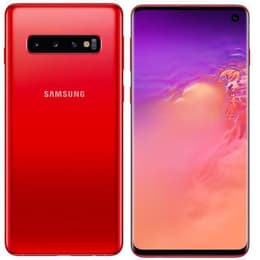
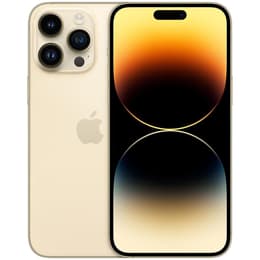

Galaxy S10 vs iPhone 14 Pro Max

Galaxy S10
Galaxy S10
Starting at

Refurbished price:A$359.00

Versus A$849.00 new

See options
iPhone 14 Pro Max
iPhone 14 Pro Max
Starting at

Refurbished price:A$726.00

Versus A$1,899.00 new

See options

Ratings

The Samsung Galaxy S10, released in March 2019, and the Apple iPhone 14 Pro Max, launched in September 2022, represent different generations and operating systems within the smartphone market. While the Galaxy S10 runs on Android, the iPhone 14 Pro Max operates on iOS. The primary differentiators lie in their release timelines, influencing software support, processing capabilities, and camera technology.

Scores

Durability

The longevity of a smartphone is influenced by its release date and the manufacturer's commitment to software and security updates. These two devices, separated by several years, offer different expectations in this regard.

  • Software Support: The Galaxy S10, released in March 2019, launched with Android 9 and received major operating system updates up to Android 12. Security updates for most Galaxy S10 models concluded in March 2023, with the S10 Lite receiving updates until March 2024. In contrast, the iPhone 14 Pro Max, released in September 2022 with iOS 16, benefits from Apple's typically longer software support cycle, extending its usability for several more years.
  • Physical Durability: Both devices feature glass front and back panels with metal frames and are rated for dust and water resistance (IP68). The iPhone 14 Pro Max incorporates Ceramic Shield on its front for enhanced drop protection. The Galaxy S10 received a repairability score of 3 out of 10 from iFixit, indicating challenges in repair due to extensive adhesive and soldered components.
  • Expected Lifespan: Users prioritizing the latest software features and security patches will find the iPhone 14 Pro Max offers a significantly longer supported lifespan. The Galaxy S10, while still functional, no longer receives official software updates, which can impact security and compatibility with newer applications.

Release year

2019

2022

Compatible with latest Update

No

Yes

Operating system

Android

iOS

Foldable

No

No

Performance

Performance is a key area where the generational gap between these two devices becomes evident, impacting everything from app responsiveness to battery endurance.

  • Processing Power: The iPhone 14 Pro Max features a significantly more advanced internal processor, enabling it to handle demanding applications, complex multitasking, and graphics-intensive games with considerable smoothness and efficiency. The Galaxy S10, while capable for its release era, provides sufficient performance for everyday tasks and moderate multitasking.
  • System Responsiveness: Users will experience faster app loading times and more fluid navigation on the iPhone 14 Pro Max due to its newer hardware and optimized software. The Galaxy S10 offers a responsive experience for general use, but may show signs of slower performance with newer, more resource-intensive applications.
  • Battery Performance: The iPhone 14 Pro Max is known for its excellent battery longevity, often providing over 13 hours of continuous use, making it suitable for extended periods away from a charger. The Galaxy S10, with its 3400 mAh battery, typically offers a full day of use for moderate users, though heavy usage may necessitate more frequent charging.

Memory (GB)

8 GB

6 GB

Screen quality

The display is a primary interface for any smartphone, and both devices offer high-quality viewing experiences with distinct characteristics.

  • Display Technology and Clarity: The Galaxy S10 features a 6.1-inch Dynamic AMOLED display with a QHD+ resolution (3040x1440 pixels), providing sharp images and vibrant colors. The iPhone 14 Pro Max boasts a larger 6.7-inch Super Retina XDR OLED display with a resolution of 2796x1290 pixels, also delivering excellent clarity and color accuracy.
  • Brightness and Refresh Rate: The iPhone 14 Pro Max offers significantly higher peak brightness, reaching up to 2000 nits for outdoor visibility, and features ProMotion technology for an adaptive refresh rate up to 120Hz, resulting in smoother scrolling and more fluid animations. The Galaxy S10 has a standard 60Hz refresh rate and a lower peak brightness, which is still adequate for most indoor and outdoor conditions.
  • Unique Display Features: The iPhone 14 Pro Max introduces the Dynamic Island, an interactive area around the front camera cutout that displays alerts and background activities. Both displays are protected by durable glass, with the iPhone 14 Pro Max featuring Ceramic Shield.

Resolution

1440 x 3040

1290 x 2796

Screen type

Dynamic AMOLED

LTPO Super Retina XDR OLED

Audiovisual

Camera capabilities have evolved significantly between the release of these two smartphones, offering different strengths for photography and videography.

  • Rear Camera Systems: The Galaxy S10 features a versatile triple-camera setup with a 12-megapixel main lens, a 12-megapixel telephoto lens with 2x optical zoom, and a 16-megapixel ultrawide lens. The iPhone 14 Pro Max elevates this with a 48-megapixel main sensor that uses pixel-binning for improved detail and low-light performance, alongside 12-megapixel ultrawide and 12-megapixel telephoto lenses offering 3x optical zoom.
  • Photography Performance: The Galaxy S10 was praised for its daylight photography, vibrant colors, and the introduction of a capable ultrawide lens for its time. The iPhone 14 Pro Max delivers enhanced low-light performance, greater detail, and improved image processing through its Photonic Engine.
  • Video Recording and Front Camera: Both devices are capable of recording 4K video at 60 frames per second. The iPhone 14 Pro Max includes advanced video features like Cinematic mode and Action mode for stabilized footage. For selfies, the Galaxy S10 has a 10-megapixel front camera, while the iPhone 14 Pro Max features a 12-megapixel front camera with autofocus, offering improved clarity and detail.

Main camera

12 megapixels

48 megapixels

Front camera

10 megapixels

12 megapixels

Miscellaneous

Beyond core features, several practical elements contribute to the overall user experience and daily functionality of these devices.

  • Connectivity and Ports: The Galaxy S10 supports 4G LTE, Wi-Fi 6, and Bluetooth 5.0, and notably includes a 3.5mm headphone jack and a USB-C port. The iPhone 14 Pro Max offers more modern connectivity with 5G support, Wi-Fi 6, and Bluetooth 5.3, utilizing a Lightning port for charging and data transfer.
  • Biometric Security: The Galaxy S10 features an ultrasonic in-display fingerprint sensor for secure unlocking. The iPhone 14 Pro Max relies on Face ID, Apple's facial recognition system, for biometric authentication.
  • Design and Handling: The Galaxy S10 is a more compact device, weighing 157 grams, making it easier for one-handed use. The iPhone 14 Pro Max is a larger and heavier device at 240 grams, offering a more expansive screen experience. Both devices feature premium build materials with glass and metal construction.

Weight

157 oz

120 oz

Screen size (in)

6.1

6.7

SIM card

Physical SIM

Physical SIM + eSIM

Carrier compatibility

Unlocked

Unlocked

Choosing between the Samsung Galaxy S10 and the iPhone 14 Pro Max involves weighing the benefits of a more recent, high-performance device against a still-capable, older model. User sentiment for the iPhone 14 Pro Max frequently highlights its exceptional battery life, powerful camera system, and the innovative Dynamic Island as significant advantages. Some users have noted that the Always-On Display can impact battery drain, though overall endurance remains strong.

The Galaxy S10, while a flagship in its time, is often praised for its vibrant display, the inclusion of a 3.5mm headphone jack, and its compact design. However, common criticisms revolve around its battery life for heavy users and its limited software update longevity, which has now concluded.

Users prioritizing cutting-edge performance, extended software support, advanced camera capabilities, and industry-leading battery life will find the iPhone 14 Pro Max well-suited to their needs. It offers a premium experience with modern features like 5G connectivity and the Dynamic Island. Conversely, individuals who prefer a more compact device, require a traditional headphone jack, and are content with an older operating system for basic smartphone functions might still find the Galaxy S10 a practical choice. For those seeking an eco-friendly alternative, quality-assured refurbished options for both models can provide a sustainable choice.
See all articles

Our recent comparisons