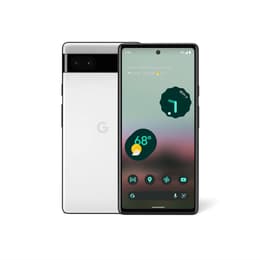


Google Pixel 6a vs Google Pixel 8 Pro

Google Pixel 6a
Google Pixel 6a
Starting at

Refurbished price:A$236.00

Versus A$569.00 new

See options
Google Pixel 8 Pro
Google Pixel 8 Pro
Starting at

Refurbished price:A$565.00

Versus A$1,859.00 new

See options

Ratings

The Google Pixel 6a, released in July 2022, and the Google Pixel 8 Pro, launched in October 2023, represent different segments within Google's smartphone lineup. While both devices offer a clean Android experience, the Pixel 8 Pro introduces significant advancements in processing power, camera capabilities, and display technology, reflecting its position as a more advanced device. The Pixel 6a, on the other hand, focuses on delivering core Pixel features in a more compact form factor.

Scores

Durability

The practical lifespan of a smartphone is heavily influenced by its software support and physical durability. These two Pixel models offer differing commitments in terms of updates and are built with distinct material choices.

  • Software Longevity: The Pixel 6a was initially promised three years of OS updates and five years of security updates from its July 2022 release, meaning OS updates until at least July 2025 and security updates until at least July 2027. The Pixel 8 Pro, being a newer device, offers a significantly longer support window, with Google committing to seven years of OS updates, security updates, and feature drops from its October 2023 release, extending support until October 2030.
  • Physical Durability: The Pixel 6a features a plastic back, an aluminum frame, and Gorilla Glass 3 on the front. The Pixel 8 Pro utilizes more robust materials, with Gorilla Glass Victus 2 on both the front and back, and an aluminum frame. Both devices carry an IP rating for dust and water resistance, with the Pixel 6a rated at IP67 and the Pixel 8 Pro at IP68, indicating slightly better water immersion protection for the latter.
  • Repairability: While specific repairability scores can vary, the Pixel 6a's construction with a plastic back may offer a slightly simpler repair process for certain components compared to the glass-backed Pixel 8 Pro. However, both devices are designed with modern smartphone repair complexities.

Release year

2022

2023

Compatible with latest Update

Yes

Yes

Foldable

No

No

Performance

Performance differences between these two Pixel phones are notable, impacting how smoothly they handle various tasks, from everyday applications to more demanding operations.

  • Processing Power: The Pixel 6a is equipped with an earlier generation of Google's custom processor, which provides responsive performance for daily tasks like browsing, social media, and light gaming. The Pixel 8 Pro features a newer, more advanced processor designed for enhanced speed and efficiency. This allows it to handle demanding applications, complex multitasking, and graphically intensive games with greater ease and smoother frame rates.
  • Multitasking and Responsiveness: With 6GB of RAM, the Pixel 6a manages multiple applications adequately, though some users might notice apps reloading more frequently when switching between many open programs. The Pixel 8 Pro comes with 12GB of RAM, providing substantial headroom for extensive multitasking and ensuring applications remain active in memory for longer, contributing to a more fluid overall user experience.
  • Storage Options: The Pixel 6a is available with 128GB of internal storage. The Pixel 8 Pro offers a wider range of storage configurations, including 128GB, 256GB, 512GB, and 1TB, catering to users with larger storage needs for apps, photos, and videos.

Memory (GB)

6 GB

12 GB

Screen quality

The display is a primary interface for smartphone interaction, and the Pixel 6a and Pixel 8 Pro offer distinct visual experiences due to differences in their screen technology and capabilities.

  • Display Technology and Size: The Pixel 6a features a 6.1-inch OLED display, providing deep blacks and good contrast for everyday viewing. The Pixel 8 Pro has a larger 6.7-inch LTPO OLED display, offering a more expansive viewing area.
  • Refresh Rate and Smoothness: The Pixel 6a's display operates at a standard 60Hz refresh rate, which is suitable for most content. The Pixel 8 Pro's display features an adaptive refresh rate that can scale from 1Hz to 120Hz. This higher and variable refresh rate contributes to noticeably smoother scrolling, more fluid animations, and a more responsive feel during interactions and gaming.
  • Brightness and Clarity: Both phones offer good clarity with their resolutions, but the Pixel 8 Pro's display is significantly brighter, with a peak brightness of up to 2400 nits. This enhanced brightness improves visibility in bright outdoor conditions and enhances HDR content viewing compared to the Pixel 6a.

Resolution

1080 x 2400

1344 x 2992

Screen type

OLED

LTPO OLED

Audiovisual

Camera performance is a hallmark of Pixel phones, and while both models deliver capable photography, the Pixel 8 Pro introduces a more versatile and advanced camera system.

  • Rear Camera System: The Pixel 6a features a dual-camera setup with a 12.2-megapixel main sensor and a 12-megapixel ultrawide sensor. It is known for producing consistent and detailed photos, especially in good lighting. The Pixel 8 Pro boasts a triple-camera system, including a 50-megapixel main sensor, a 48-megapixel ultrawide sensor, and a 48-megapixel telephoto lens with 5x optical zoom. This provides greater flexibility for different photographic scenarios, including distant subjects.
  • Low-Light and Video Quality: Both phones leverage Google's computational photography for strong low-light performance, though the Pixel 8 Pro's larger sensors and newer processing offer improved detail and reduced noise in challenging conditions. The Pixel 8 Pro also offers enhanced video recording capabilities, including higher resolution and frame rate options, along with advanced stabilization and audio features.
  • Front Camera and Features: The Pixel 6a includes an 8-megapixel front camera. The Pixel 8 Pro features a 10.5-megapixel front camera with autofocus, contributing to sharper selfies and improved video calls. The Pixel 8 Pro also benefits from more advanced software features, such as enhanced AI editing tools.

Main camera

12.2 megapixels

50 megapixels

Front camera

8 megapixels

10.5 megapixels

Miscellaneous

Beyond core performance and display, several other features contribute to the overall user experience and practical utility of these smartphones.

  • Connectivity and Ports: Both devices support 5G connectivity. The Pixel 6a supports Wi-Fi 6E and Bluetooth 5.2. The Pixel 8 Pro features newer standards, including Wi-Fi 7 and Bluetooth 5.3, offering potentially faster and more stable wireless connections. Both phones utilize a USB-C port for charging and data transfer and lack a traditional 3.5mm headphone jack.
  • Biometric Security and Sensors: Both models include an in-display fingerprint sensor for secure unlocking. The Pixel 8 Pro adds face unlock capabilities and a unique temperature sensor.
  • Design and Handling: The Pixel 6a is a more compact device, measuring 152.2 x 71.8 x 8.9 mm and weighing 178g, making it easier for one-handed use. The Pixel 8 Pro is larger and heavier at 162.6 x 76.5 x 8.8 mm and 213g, offering a more expansive screen but requiring a two-handed grip for many users. The Pixel 8 Pro also features a matte glass back, which users report is less prone to smudges than glossy finishes.

Weight

250 oz

213 oz

Screen size (in)

6.1

6.7

SIM card

Physical SIM + eSIM

Physical SIM + eSIM

Carrier compatibility

Unlocked

Unlocked

User feedback for the Pixel 6a often highlights its strong camera performance for its segment, clean Android software, and comfortable size as key advantages. Some users have noted the 60Hz display and occasional battery life concerns for heavy usage as areas for improvement. The Pixel 8 Pro generally receives praise for its exceptional camera system, bright and smooth display, and the promise of extended software support. Common discussions around the Pixel 8 Pro sometimes mention its larger size and weight, and some users have reported mixed experiences with battery longevity, though overall performance is highly regarded.

Users prioritizing a more compact device with reliable performance for everyday tasks and a capable camera without needing the latest features may find the Pixel 6a well-suited to their needs. Its smaller form factor and solid core experience make it a practical choice. Conversely, individuals who require a larger, more advanced display, superior camera versatility, and a longer commitment to software updates will likely lean towards the Pixel 8 Pro. Its enhanced processing power and additional features cater to users who engage in more demanding activities or value cutting-edge technology. Both devices offer a quality-assured refurbished option, providing an eco-friendly alternative for those seeking to make a sustainable choice.

See all articles

Our recent comparisons