Compare models
Galaxy A56 vs iPhone 14 Pro
- 1-year warranty
- Free standard shipping
- Free 30-day returns
Differences at a glance
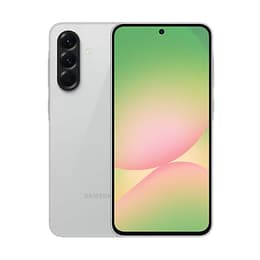
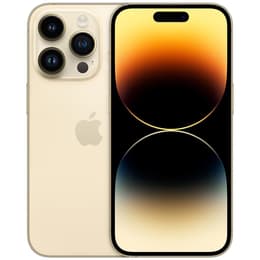
The Samsung Galaxy A56 (2025) and the Apple iPhone 14 Pro (2022) represent two distinct approaches to modern smartphone engineering, balancing different software ecosystems and hardware priorities. While the Galaxy A56 runs on Android and offers a more recent release window with a larger form factor, the iPhone 14 Pro utilizes iOS and emphasizes professional-grade materials and imaging capabilities in a compact footprint. Both devices cater to users seeking dependable daily performance, though they target distinct preferences regarding operating systems and physical dimensions.
Available Models
Colour
Storage (GB)
Scores
Durability
When evaluating long-term utility, both devices offer robust software support lifespans and durable build standards, though their release timelines and design philosophies differ. Choosing a quality-assured refurbished option provides a sustainable choice that extends device lifecycles while maintaining reliable daily functionality.
- Software support: The Galaxy A56 benefits from a newer launch year and an extended multi-year update schedule, whereas the iPhone 14 Pro commands a mature update history backed by long-term operating system support.
- Build durability: The Galaxy A56 incorporates reinforced glass and dependable dust and water resistance ratings, while the iPhone 14 Pro utilizes textured matte glass paired with a stainless steel frame for enhanced structural rigidity.
- Repairability: Both manufacturers provide structured service networks, though parts availability and repair procedures vary between the Android and iOS ecosystems.
Release year
2025
2022
Operating system
Android
iOS
Foldable
No
No
Performance
Day-to-day responsiveness and multitasking efficiency vary depending on internal hardware configurations and software optimization across both platforms. Both models handle standard applications, web browsing, and media streaming smoothly, but differ in thermal management and memory allocation.
- App loading and multitasking: Both devices switch between open apps seamlessly, with memory management tuned efficiently by their respective operating systems.
- Gaming and heavy tasks: Demanding games and graphics-heavy processes run fluidly, though sustained high-performance sessions handle thermal loads differently due to varying internal dimensions and cooling layouts.
- Battery behavior: The Galaxy A56 features a larger physical battery capacity capable of lasting through extended use periods, while the iPhone 14 Pro balances a smaller power cell with efficient hardware integration to manage daily endurance.
Screen quality
Display characteristics differ significantly in physical scale and panel technology, impacting media consumption, outdoor legibility, and visual clarity. Both screens support high refresh rates for smooth scrolling and responsive touch interaction.
- Panel technology and size: The Galaxy A56 features a larger expansive OLED display suited for immersive viewing, whereas the iPhone 14 Pro provides a more compact Super Retina XDR panel designed for single-handed navigation.
- Outdoor visibility: Both displays achieve high peak brightness levels to maintain sharp contrast and legibility under direct sunlight.
- Visual smoothness: Adaptive refresh rate technology on the iPhone 14 Pro scales dynamically depending on on-screen content, while the Galaxy A56 maintains a consistently high refresh rate for fluid visual transitions.
Resolution
1080x2340
1179 x 2556
Audiovisual
Imaging hardware and audio output capabilities cater to different multimedia creation and consumption preferences, spanning versatile multi-lens camera arrays and robust speaker systems.
- Photography systems: The Galaxy A56 offers a high-resolution primary sensor and dedicated ultra-wide options for everyday snapshots, while the iPhone 14 Pro integrates a triple-lens setup complete with a telephoto optical zoom lens and depth-sensing hardware for detailed portraits.
- Video recording: The iPhone 14 Pro provides advanced cinematic video modes and high-fidelity stabilization formats, whereas the Galaxy A56 delivers stable, clear video capture suitable for social sharing and personal archives.
- Media and audio output: Stereo speakers on both devices produce balanced sound output for hands-free calls and casual video playback without requiring external speakers.
Miscellaneous
Practical everyday features such as biometric security, connectivity standards, and physical handling characteristics define how each device integrates into daily routines.
- Biometric security: The Galaxy A56 utilizes an under-display optical fingerprint sensor alongside facial recognition, while the iPhone 14 Pro relies entirely on secure facial mapping housed within an interactive display cutout.
- Connectivity and ports: Both models support current-generation 5G networks and fast wireless standards, utilizing reversible USB-C or Lightning connectors respectively for charging and data transfer.
- Handling and ergonomics: The Galaxy A56 presents a wider, lighter profile suited for two-handed media consumption, whereas the iPhone 14 Pro feels heavier relative to its size due to its dense metal frame and glass construction.
Weight
198 oz
206 oz
Screen size (in)
6.7
6,1
Network
5G
5G
SIM card
Physical SIM + eSIM
Physical SIM + eSIM
Carrier compatibility
Unlocked
Unlocked
What the community thinks
User feedback from online communities highlights distinct preferences for each device based on ecosystem familiarity and hardware design. Users frequently praise the Galaxy A56 for its expansive screen real estate, reliable daily endurance, and current software release window. Conversely, users often commend the iPhone 14 Pro for its compact handling, robust build materials, and versatile zoom photography capabilities. Common discussions note that the iPhone 14 Pro's heavier frame can feel substantial during prolonged one-handed use, while some users mention that the Galaxy A56 lacks a dedicated optical zoom lens.
Users prioritizing a larger display, Android software customization, and a lighter physical profile will find the Galaxy A56 well-suited to their needs. Meanwhile, users preferring a compact ecosystem device, advanced zoom photography options, and premium frame materials may lean toward the iPhone 14 Pro. Choosing a quality-assured refurbished option for either model provides an eco-friendly alternative that aligns with sustainable technology consumption. Evaluating these core differences ensures a selection that matches individual daily requirements without unnecessary complexity.