Galaxy A14 vs Nokia X30

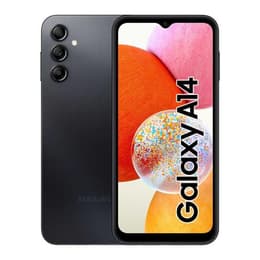
Galaxy A14
Galaxy A14
Starting at

Refurbished price:A$215.00

Versus A$390.00 new

See options
Nokia X30
Nokia X30
Starting at

Refurbished price:A$299.00

Versus A$965.00 new

See options

The Samsung Galaxy A14, released in January 2023, and the Nokia X30, launched in September 2022, are both Android smartphones offering distinct feature sets. While the Galaxy A14 often focuses on a larger display and extensive battery capacity, the Nokia X30 emphasizes a more robust build, a vibrant display, and a commitment to sustainable materials. Both devices operate on the Android platform, providing users with access to a wide ecosystem of applications and services.

Scores

Durability

When considering the long-term usability of these devices, their release timelines and software support policies are key factors.

  • Software Support: The Samsung Galaxy A14 5G, launched with Android 13, is expected to receive two major operating system updates, bringing it up to Android 15, and four years of security updates, extending support until 2027. The Nokia X30, released with Android 12, was initially promised three OS upgrades and three years of monthly security updates. However, recent information suggests that Android 14 may be its final major OS update, with security patches continuing.
  • Physical Durability: The Nokia X30 features an IP67 rating for dust and water resistance, allowing it to withstand submersion in up to one meter of water for 30 minutes, and its display is protected by Corning Gorilla Glass Victus. The Galaxy A14 does not carry an official IP rating, but its 5G variant has a repairability score of 8 out of 10, partly due to an easily replaceable battery with pull tabs.
  • Build Materials: The Nokia X30 is constructed with a 100% recycled aluminum frame and a 65% recycled plastic back, highlighting its eco-friendly design. The Galaxy A14 typically features a plastic build.

Release year

2023

2022

Compatible with latest Update

No

No

Operating system

Android

Android

Foldable

No

No

Performance

The performance of a smartphone is crucial for daily tasks, app usage, and multitasking efficiency.

  • Processing Power: The Samsung Galaxy A14 is equipped with an octa-core processor, which, depending on the region, can be an Exynos 1330, MediaTek Dimensity 700, or Helio G80. This hardware generally provides solid performance for everyday use. The Nokia X30 utilizes an octa-core Snapdragon 695 processor, which users report offers smooth performance for daily tasks and can handle light gaming.
  • Memory and Storage: The Galaxy A14 is available with 4GB, 6GB, or 8GB of RAM and 64GB or 128GB of internal storage, with the added benefit of expandable storage via a microSD card. The Nokia X30 comes with 6GB or 8GB of RAM and 128GB or 256GB of internal storage, but it does not offer expandable storage.
  • Battery Life: The Galaxy A14 houses a substantial 5000mAh battery, which often provides extended usage, lasting a full day or more for moderate users. The Nokia X30 has a 4200mAh battery, typically offering a full day of power for most users.

Memory (GB)

4 GB

8 GB

Screen quality

The display is a primary interface for smartphone interaction, influencing viewing comfort and clarity.

  • Display Technology: The Samsung Galaxy A14 features a 6.6-inch PLS LCD display. The Nokia X30 sports a 6.43-inch AMOLED display, which is known for producing deep blacks and vibrant colors, enhancing the visual experience.
  • Resolution and Refresh Rate: Both devices offer an FHD+ resolution (1080x2408 pixels for A14, 1080x2400 pixels for X30), providing clear visuals. The 5G variant of the Galaxy A14 and the Nokia X30 both feature a 90Hz refresh rate, contributing to smoother scrolling and a more fluid user experience compared to standard 60Hz displays.
  • Brightness and Protection: Users note that the Galaxy A14's LCD display can be dim in bright outdoor conditions. The Nokia X30's AMOLED display generally offers good brightness and is protected by Corning Gorilla Glass Victus for enhanced durability.

Resolution

1080 x 2408

1080 x 2400

Screen type

PLS LCD

AMOLED

Audiovisual

For capturing moments and communicating visually, the camera systems of these smartphones present different capabilities.

  • Rear Camera System: The Samsung Galaxy A14 5G includes a triple rear camera setup, featuring a 50MP main sensor, a 2MP macro lens, and a 2MP depth sensor. The 4G variant may include a 5MP ultrawide instead of a depth sensor. The Nokia X30 offers a dual rear camera system with a 50MP main sensor that includes Optical Image Stabilization (OIS) and a 13MP ultrawide sensor.
  • Photography Performance: The Galaxy A14's main camera performs adequately in well-lit environments, but its low-light performance is limited due to the absence of a dedicated night mode. The Nokia X30's main camera, with OIS, is noted for good performance in both daylight and low-light conditions.
  • Front Camera and Video: Both devices are capable of 1080p video recording. The Galaxy A14 has a 13MP front-facing camera, while the Nokia X30 features a 16MP front camera. Some Galaxy A14 users have reported issues with microphone quality during calls.

Main camera

50 megapixels

50 megapixels

Front camera

13 megapixels

16 megapixels

Miscellaneous

Beyond core features, several practical elements contribute to the overall user experience of a smartphone.

  • Connectivity and Ports: Both the Galaxy A14 (5G model) and Nokia X30 support 5G connectivity. The Galaxy A14 supports Wi-Fi 5 and Bluetooth 5.2 (5G model) or 5.1 (4G model), and includes a 3.5mm headphone jack and a USB-C port. The Nokia X30 features Wi-Fi 6 and Bluetooth 5.1, a USB-C port, but does not include a 3.5mm headphone jack.
  • Biometrics and Sensors: The Galaxy A14 incorporates a side-mounted fingerprint sensor. The Nokia X30 offers an in-display fingerprint sensor.
  • Physical Characteristics: The Galaxy A14 has dimensions of 167.7 x 78 x 9.1 mm and weighs around 201g. The Nokia X30 is slightly more compact and lighter, measuring 158.9 x 73.9 x 8 mm and weighing 185g. The Nokia X30's construction includes an aluminum frame and a recycled plastic back, contributing to a premium feel and enhanced durability.

Weight

201 oz

185 oz

Screen size (in)

6.6

6.43

Network

4G

5G

SIM card

Physical SIM

Dual Physical SIM

Carrier compatibility

Unlocked

Unlocked

User feedback for the Samsung Galaxy A14 often praises its large battery capacity, which provides extended usage, and its decent main camera performance in good lighting conditions. Its repairability has also been noted as a positive aspect. However, some users have expressed concerns regarding the screen's brightness in outdoor settings, potential performance lag, and microphone quality issues.

The Nokia X30 receives commendation for its premium build quality, featuring an AMOLED display that offers vibrant visuals, and its IP67 rating for dust and water resistance, contributing to its durability. The main camera, with Optical Image Stabilization, is also a frequent highlight for its performance in various lighting conditions. Criticisms sometimes point to its battery capacity being smaller than some competitors, the absence of a headphone jack or expandable storage, and recent uncertainty surrounding its promised operating system updates.

Users prioritizing extended battery life, expandable storage, and the convenience of a headphone jack may find the Samsung Galaxy A14 well-suited to their needs, especially if they are comfortable with an LCD display and a slightly larger device. Conversely, those who value a more compact design, a vibrant AMOLED display, enhanced durability with water resistance, and a focus on sustainable materials may lean towards the Nokia X30, provided they do not require a headphone jack or expandable storage. Both devices offer a pathway to Android smartphone ownership, and considering a quality-assured refurbished option for either model can be a sustainable choice.


See all articles

Our recent comparisons