
Compare models
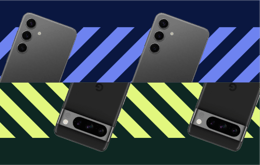
Galaxy A56 vs Google Pixel 7a
- 1-year warranty
- Free standard shipping
- Free 30-day returns
Differences at a glance
The Samsung Galaxy A56 (2025) and the Google Pixel 7a (2023) are popular mid-range smartphones designed to deliver reliable everyday performance without the complexity or high investment of flagship devices. While the Samsung Galaxy A56 offers a newer hardware generation and a larger viewing area, the Google Pixel 7a focuses on streamlined software integration and compact ergonomics. Both devices run on the Android operating system, though they feature different user interfaces and distinct update schedules that shape their long-term utility.
Available Models
Colour
Storage
Scores
Durability
Evaluating the lifespan and durability of these devices involves looking at their launch timeline, software support commitment, and overall structural resilience for daily use.
- Software Support and Longevity: The Galaxy A56 benefits from a newer release year, providing an extended window of major operating system upgrades and security patches compared to the earlier-generation Pixel 7a.
- Build and Repairability: Both models feature dust and water resistance ratings alongside robust frame constructions, though everyday repair availability varies by region for both manufacturers.
- Expected Lifespan: Users can expect several years of reliable daily service from both handsets, with the newer Samsung model retaining active software vendor support further into the future.
Release year
2025
2022
Operating system
Android
Android
Foldable
No
No
Performance
Underneath the surface, these smartphones handle everyday multitasking, app launching, and media consumption through distinct hardware configurations tailored to balanced efficiency.
- Multitasking and Responsiveness: Both devices handle standard web browsing, social media apps, and moderate multitasking smoothly with their respective memory configurations and processing units.
- Battery Behavior: The Galaxy A56 incorporates a larger capacity power cell paired with rapid charging support, whereas the Pixel 7a relies on adaptive battery management to sustain a typical day of standard mixed usage.
- Storage Management: Both options provide standard internal storage capacities suitable for average document and photo archiving, though neither offers physical card expansion.
Screen quality
Display characteristics differ significantly in physical dimensions and panel refresh capabilities, impacting daily viewing comfort and outdoor readability.
- Display Technology and Size: The Galaxy A56 features a larger expansive screen panel, while the Pixel 7a provides a more compact form factor that is easier to operate with a single hand.
- Refresh Rate and Smoothness: The Samsung model offers a higher refresh rate for smoother scrolling through menus and web pages, compared to the standard refresh rate tier of the Google counterpart.
- Outdoor Visibility: Both panels utilize bright display technology capable of maintaining legibility under direct sunlight, supported by automatic brightness adjustment sensors.
Resolution
1080 x 2340
1080 x 2400
Audiovisual
Camera hardware and audio output configurations cater to users who enjoy capturing everyday moments and consuming portable media on the go.
- Photography Capabilities: The Pixel 7a relies on computational photography algorithms for balanced low-light and everyday snapshots, while the Galaxy A56 utilizes a versatile multi-lens rear array including an ultra-wide sensor.
- Video and Audio Recording: Both phones capture clear high-definition video footage equipped with image stabilization features to reduce shake during handheld recording.
- Media Consumption: Built-in stereo speaker systems on both devices deliver adequate sound output for casual video playback and hands-free calling without requiring external headphones.
Miscellaneous
Practical everyday features, connectivity standards, and physical handling traits define how each device fits into various routines.
- Connectivity and Ports: Both models support modern 5G networks, Wi-Fi standards, and Bluetooth pairing, utilizing a reversible USB Type-C port for charging and data synchronization.
- Authentication Sensors: Secure unlocking is handled via responsive in-display fingerprint sensors and facial recognition capabilities on both smartphones.
- Physical Dimensions: The Galaxy A56 is noticeably larger and slightly heavier due to its expansive screen size, whereas the Pixel 7a offers a lighter, more pocket-friendly build profile.
Weight
200 oz
212 oz
Screen size (in)
6.7
6.3
Network
4G
5G
SIM card
Physical SIM + eSIM
Physical SIM + eSIM
Carrier compatibility
Unlocked
Unlocked
What the community thinks
Community discussions and user feedback indicate that the Google Pixel 7a receives frequent praise for its clean software interface, compact handling, and reliable point-and-shoot camera results, though some users note that its battery requires daily replenishment under heavy loads. Conversely, the Samsung Galaxy A56 is widely appreciated for its vibrant large display, modern design language, and solid battery endurance, though its larger footprint may not suit users who prefer smaller phones. Choosing between them depends largely on individual ergonomic preferences and software ecosystem familiarity.
Users prioritizing a compact device with streamlined software routines will find the Google Pixel 7a well-suited to their daily habits. Meanwhile, users prioritizing a larger viewing area, higher refresh rates, and an extended update timeline may lean toward the Samsung Galaxy A56. For those seeking a quality-assured refurbished option, both models are frequently available through sustainable choices like Back Market, enabling consumers to make eco-friendly purchasing decisions without compromising on functionality.